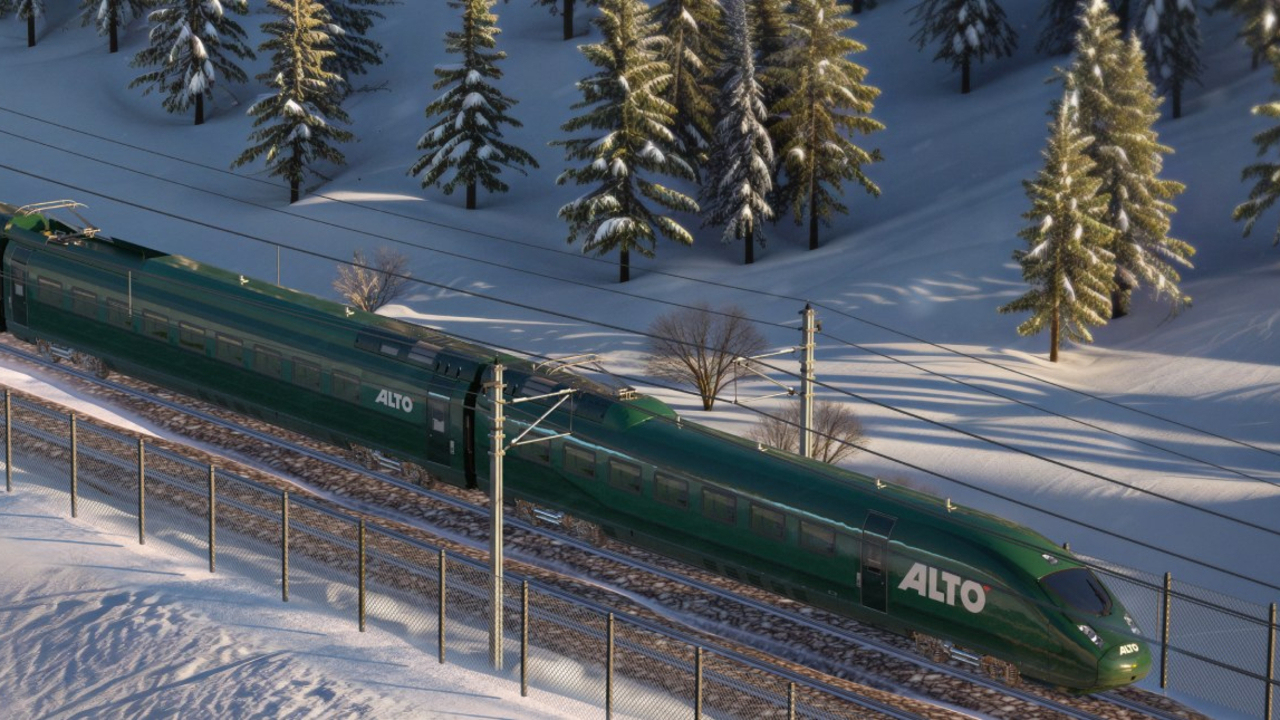
A high-speed rail station in downtown Ottawa could boost foot traffic and encourage revitalization efforts, business officials say, and is worth any shorter-term inconvenience or cost.
Across the street from the former Union Station at 2 Rideau St., Genevieve Dumas, general manager of the Fairmont Chateau Laurier, told OBJ that a high-speed rail station downtown “just makes sense.”
“We have a tunnel that is directly connected to the (former Union Station building). There are so many developments in the city in the next few years, with LeBreton Flats and the (Ottawa Senators) moving downtown, the Live Nation (venue) on the corner (of Rideau Street and Sussex Drive), all the major hotels in the area and the Rogers Centre (Ottawa). It just makes sense that the train would come downtown over having everybody drop at Tremblay and take a cab,” Dumas said.
Stepping off the high-speed train and into the heart of Ottawa’s downtown would be a more sustainable way to arrive in the city, Dumas argues.
“The arrival experience for people coming to Ottawa (would be better downtown). If they get dropped over (at Tremblay Station), they would need to take a cab and go on the highway. When you arrive in Toronto, you’re right there (in the heart of the city).
“Once you come in (to Ottawa) by train, imagine seeing the Rideau Canal, Chateau Laurier and Parliament. That’s the arrival experience into a capital city. If we want to be a capital city, let’s be one,” she said.
In an email to OBJ, Sarah Chown, managing partner of Metropolitain Brasserie on Sussex Drive, said having Alto’s Ottawa station downtown would help revitalization efforts.
“This, along with other developments and investments, will certainly boost the revitalization we are all in favour of. I would absolutely love to see the station downtown. A high speed rail station downtown would be a driver of more foot traffic and additional business for restaurants and retail businesses in the core and Rideau/ByWard Market areas. Not only that but it would also add great benefit for current and future residents of the area,” she said.
Kevin McHale, executive director of the Downtown BIA, said any project that will increase foot traffic in Ottawa’s downtown is a “good thing.”
“It should lead to increased tourism and increased purchasing,” McHale told OBJ on Thursday. “There have been conversations about trying to reactivate the old Union Station with this train. If it goes into a place like that, areas like the ByWard Market, Centretown and the whole downtown will all see a direct benefit of that back-and-forth traffic.”
Still, routing a high-speed rail system into Ottawa’s downtown would require major construction work, which could pose problems for businesses in the area.
McHale and Dumas both said that the short-term pain would be worth the long-term gain.
“In the next 25 years, we’re talking about half-a-million more people moving to Ottawa, so (this project has) got to happen. It’s going to hurt, but let’s make it work and let’s think about the future,” Dumas said.
“We’ve seen that when there’s construction sites or an office building is offline, there are still construction workers in those buildings, which does help bring activity down to the area. You serve customers in the moment to increase that number in the future. With any type of project that may be disruptive, you mitigate as best you can and support anyone who is impacted,” McHale said.
McHale added that, no matter where the station is located, it will need to have direct and reliable access to transit.
“The reality is that these things aren’t the easiest to route through. If downtown doesn’t work, then how do we make sure that all of our communities are connected to this project? How will the local transportation network connect?” McHale said.
Last week, officials at Ottawa Tourism, Invest Ottawa and the Ottawa Board of Trade — known jointly as Ottawa Unlimited — wrote a letter to Martin Imbleau, president and CEO of Alto, the Crown corporation behind the high-speed rail project that aims to connect Toronto to Quebec City.
The letter encouraged Alto to consider placing the Ottawa station in the city’s core.
“The station location decision, above all others, will have generational consequences for the National Capital Region and for the many surrounding communities and sectors whose prosperity it anchors,” wrote Sueling Ching, president and CEO of OBOT, Sonya Shorey, president and CEO of Invest Ottawa, and Michael Crockatt, president of Ottawa Tourism, in the letter.
The officials pointed out that Mayor Mark Sutcliffe has shown his support for a downtown station, and that the National Capital Commission has expressed “openness to collaborating with Alto” on a downtown station.
While the officials recognized the complexities involved, they called on Alto to complete a feasibility study around both the former Union Station at 2 Rideau St. and the existing Via Rail Station at 200 Tremblay Rd. that would include:
- Comparative ridership potential, catchment areas and end-to-end journey time forecasts for Alto users, including multimodal connectivity to LRT, bus, cycling and pedestrian networks at each location;
- Estimates of capital expenditures required for each scenario, including any infrastructure upgrades, approach alignments, tunnelling requirements or property acquisition costs;
- Technical assessment of operational costs and benefits, including services reliability, scheduling flexibility and long-term maintenance implications;
- Review of any other potential costs and benefits, including projected impacts on tourism volumes, hotel occupancies, convention and major event attraction, retail sales, the cultural economy, and broader downtown economic revitalization; and,
- A summary of the short- and long-term costs and benefits of these two station locations, presented in a manner accessible to the public and to decision-makers alike.