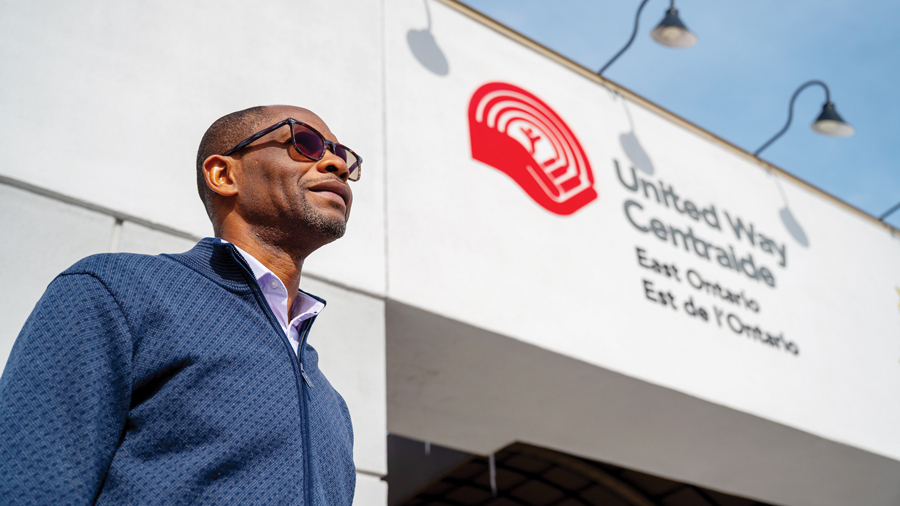

With so many large infrastructure projects underway across Ottawa, United Way East Ontario is working to ensure marginalized groups are provided opportunities to thrive during construction – and long into the future.
United Way’s director of community initiatives, Henry Akanko, has attended many city-building forums over the years and says they’re often focused heavily on infrastructure development for the city.
That’s vital, he says, but equally important is the opportunity to address issues of poverty and quality of life for all Ottawans through these ventures.
“At the core of all city-building conversations, everyone shares the same goal of making Ottawa a better place – a city where everyone wants to come live, work, and play,” Akanko says. “So, we need to broaden the conversation to also include those things that impact people’s lives directly.”
Akanko and his organization advocate for community wealth building strategies. That means:
- Empowering residents to determine the direction and well-being of their communities;
- Implementing progressive procurement policies that create opportunities for social enterprises, along with diverse-owned and small local businesses;
- Creating equitable employment opportunities for people who face barriers entering the labour market, such as Indigenous people, newcomers, and people with disabilities; and,
- Reducing wealth inequities for marginalized groups.

“We need to expand the conversation of enhancing and improving our city to work in lockstep with getting people out of poverty,” Akanko says.
For example, he explains that while the ongoing housing crisis requires infrastructure and affordable housing, developers should also work with employment services and training organizations when mapping out projects.
“There is a local shortage of people with expertise in the skilled trades,” he says. “So how do we incorporate an approach where developers are also providing opportunities for apprenticeship that target marginalized communities that traditionally have been excluded?”
That, Akanko adds, would not only address the skills gap in Ottawa – those who develop new skills would then be able to afford the affordable housing they helped build.
He also makes a case for progressive procurement practices.
It’s not about asking developers to give up requirement controls in big contracts, Akanko says. It’s about setting aside small parts of those contracts to create opportunities for social enterprises, along with diverse-owned and small local businesses, through community development agreements – something United Way can help facilitate.
He says anchor institutions and developers should think about using public and private investment as a catalyst for inclusive economic opportunity, particularly for marginalized populations experiencing persistent poverty.
It’s a win-win for the entire community.
United Way East Ontario works with a network of local stakeholders to advance community wealth building practices in the region, Akanko says. He argues that a holistic city-building approach should integrate people, process, and place, ensuring that development delivers well-paid jobs, skills development, and long-term community benefits alongside physical assets.
“We have the opportunity to make sure the people who are building these incredible structures can afford to access them,” Akanko says. “Together, we can create a community where everyone has a chance to thrive.”
This article first appeared in the 2026 City Building in the April Magazine. That publication is available in it’s digital format below: