With the focus on how the federal return-to-office (RTO) mandate would revitalize Ottawa’s struggling downtown core, the effect on Carleton Place, North Grenville, Clarence-Rockland and other municipalities within the capital’s commuting orbit received less consideration. When most of the federal public service was required to be back in the office a minimum of three days […]
Get Instant Access to This Article
Become an Ottawa Business Journal Insider and get immediate access to all of our Insider-only content and much more.
With the focus on how the federal return-to-office (RTO) mandate would revitalize Ottawa’s struggling downtown core, the effect on Carleton Place, North Grenville, Clarence-Rockland and other municipalities within the capital’s commuting orbit received less consideration.
When most of the federal public service was required to be back in the office a minimum of three days a week starting last September, businesses in “bedroom” communities around Ottawa had to consider how it might change their operations.
For North Grenville Mayor Nancy Peckford, the mandate sparked frustration over the federal government’s narrow focus on downtown Ottawa, while overlooking the needs of suburban and rural communities.
“There’s a myopia on the part of the Treasury Board in thinking about one economy versus multiple economies,” she said, emphasizing the strain that’s placed on local businesses as workers spend most of their day outside their home communities.
Peckford has since called for a more nuanced approach from the federal government that considers the interconnected economies of Ottawa and its surrounding municipalities, while also proposing a federally supported co-working hub in North Grenville to allow public servants to work closer to home.
“We need to keep these employees in our communities, at least part-time,” she said. “We have multiple economies in this region, all of which deserve attention.”
Full impact still to be felt
Though he says he has yet to feel the impact of federal workers leaving town to head into Ottawa three times a week, Troy Johnson, manager of the Kemptville Building Centre hardware store, has concerns.
“Commuters might stop at a big-box store like Home Depot on their way home from Ottawa instead of coming here,” he said. “It’s just more convenient for them, especially since we close at 6 p.m.”
Johnson says he has noticed a shift since 2022 as federal workers gradually returned to the office, with fewer clients coming in for home office needs. Still, the current RTO mandate hasn’t caused too much of a challenge.
Regardless, Johnson remains cautious and is considering how he may have to adjust hours or services as consumer habits shift.
“These things are gradual, but we’re watching how it plays out,” he added.
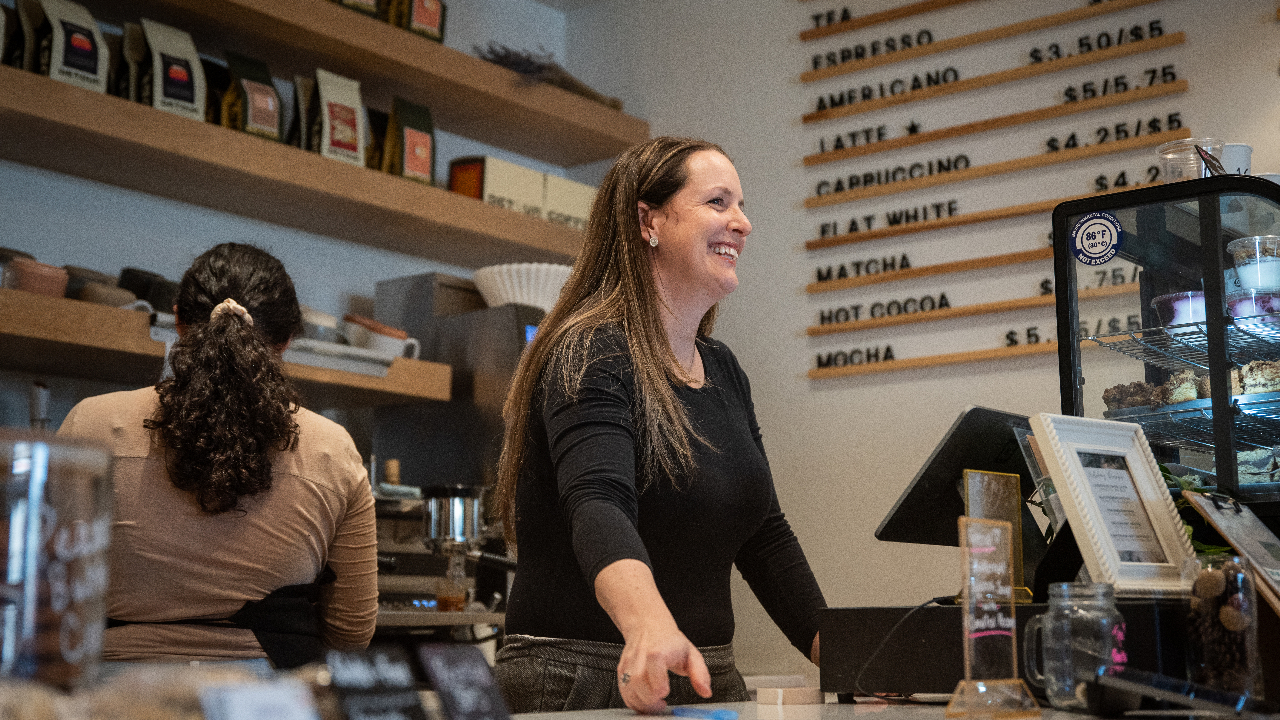
In Carleton Place, Kaitey Cosgrove, owner of The Foundry, a co-working space and café, has leaned into the dual nature of a hybrid workforce, with some employees staying home while others get in their cars to make the commute.
The café has maintained steady traffic, but the co-working space had to quickly adapt to the new post-pandemic mix of hybrid work and commuting.
“When everyone worked from home five days a week, there was more demand for dedicated workspaces,” she said. “Now, people balance office and home days, so they’re less likely to pay for a workspace when they only work remotely two days a week.”
Recognizing the shift, Cosgrove transitioned from monthly memberships to daily passes, a change she said has stabilized her business.
“We’ve learned to adjust and the café side has been an anchor,” she added, noting that she still sees many people on Zoom calls as the work-from-home crowd looks for a change of scenery.
Rohit Gupta, owner of Braumeister Brewing Company, has noted a divide between his two locations. While his Ottawa taproom in Hintonburg has seen a significant uptick in lunchtime business, business at his original Carleton Place location has remained unchanged.
“Work-from-home wasn’t great for us because people don’t leave the house during the day,” Gupta said. “In Ottawa, lunches have benefited tremendously since the mandate.”
Gupta remains optimistic about the long-term prospects of his Carleton Place location, even as Ottawa’s downtown draws the lunchtime crowds.
“In Carleton Place, evenings are the same as they’ve always been — steady, but not impacted by this policy ... and that’s a good foundation,” he said.
Other businesses have also seen little change in their operations as they hold on tight to dedicated clientele.
Nick and Tania Andrella, two of the owners of Café Joyeux in Clarence-Rockland, said their business has been largely unaffected by the mandate due, in part, to a retirement-heavy community and students from the nearby high school.
“A lot of our customers are over 65, so the policy doesn’t really impact them,” Tania said.
They also attribute the consistency in their business to shop-local habits ingrained over the course of the pandemic.
“It's that consumer shift that people want to support their local businesses,” said Tania. “So regardless of whether or not they're going into the office, they still have those values.”
That being said, Nick raised concerns about how small businesses might lose out to larger franchises.
“It raises the question, is this going to favour big conglomerates like Tim Hortons over small, independent businesses?” he said, suggesting a commuting office worker is more likely to go for the fast and affordable Tim Horton’s drive-thru, rather than stop for a locally roasted coffee.
All businesses continue to watch traffic into their stores – and on the roads – and are poised to adapt, once again, if needed.
“The hybrid model is here to stay and we’re making the most of it,” said Cosgrove.