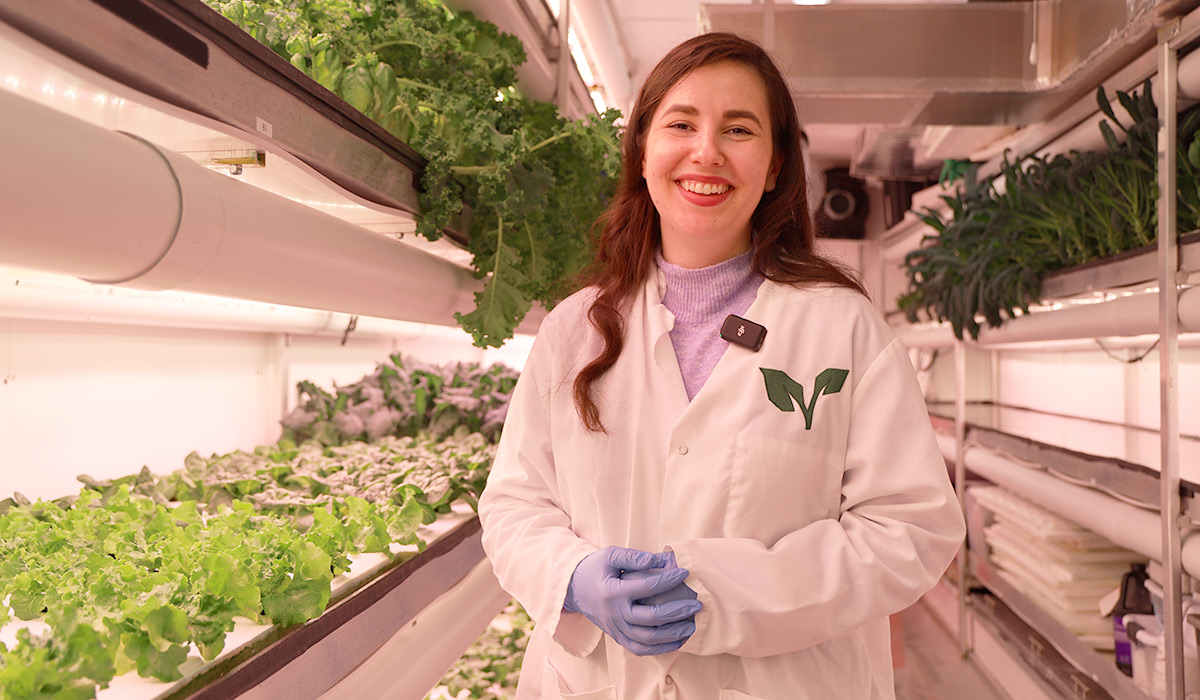
Alida Burke has spent more than a decade helping build Growcer, a sustainable food technology company, working her way through university programs and accelerator and scale-up stages.
Last year, Anya Geerts launched Paloma, an event booking app and back-end system that allows guests and planners to easily book events from start to finish. Paloma saw beta customers report booking increases of 75 per cent.
Yoobin Lee killed her first product after 18 months, despite realizing revenue, and pivoted her startup, Quip, to medical billing desktop software.
These three founders represent a growing cohort of women-led tech companies in Ottawa that are gaining traction, often with little fanfare.
National statistics show women founders receive just two to four per cent of venture capital, according to a Women Entrepreneurship Knowledge Hub (WEKH) report. But Ottawa bucks that trend. Its ecosystem has built targeted support structures that are delivering results. For example, SheBoot graduates have raised more than $20 million since the program launched in 2020 and Capital Angel Network directed 57 per cent of its 2022 investments to women-led startups.
These women-led companies are scaling quietly and successfully, and often without fanfare.
Burke sees the visibility gap as partly intentional. “Focus can sometimes be more on the business and not on the person,” she said. “Women are less likely to be loud about themselves versus loud about a cause or a business.”
Burke and her business partner Corey Ellis founded Growcer more than 10 years ago at the University of Ottawa. They built it around food security and sustainability using vertical farming and high-tech growing systems in shipping containers. Burke added that women often approach public visibility differently than their male counterparts.
“It feels tough to be in the spotlight versus supporting the thing you’re championing,” she said. “The focus tends to stay on the mission rather than the founder.”
Solving pain points
Geerts came to entrepreneurship after organizing a bachelorette party that collapsed in disaster despite three months of planning. That frustration drove her to spend six months researching why private event booking remained so broken for both guests and venues.
“I was pretty devastated for my friend and humiliated,” Geerts told OBJ. “I thought, this is tragic. It took me so many months to organize this and it still didn’t work out.”
But she wasn’t deterred. In fact, she built Paloma to consolidate the entire booking process for private events into one platform. Beta trials launched in June 2024 and customers reported booking increases up to 75 per cent and decreases in inquiry-to-booking time of up to 80 per cent. The company exited beta in January 2025.
Lee’s path started in medical school, where she developed a disdain for administrative work. “I just hate the idea of needing to do my own billing as a doctor,” Lee said. “I’m training to help people and heal people, not to crunch numbers.”
She and her co-founder initially built a medical scribe product and generated some revenue with annual contracts. After 18 months, they killed it.
“The market was way too saturated,” Lee explained. “My co-founder was like, nope, we need to pivot. We need to change, and let’s do it quickly.”
And so they built Quip as a billing software that runs in the background of electronic medical records. Lee said that solving the problems that founders experience personally can provide the stamina for the long journey.
“You need to have the grit and perseverance to keep your startup alive for five, 10, even 20 years,” she said. “You need to genuinely care deeply about this problem.”
The 2017 wake-up call
The current support system for local women founders such as Lee and Geerts emerged from difficult feedback.
Sonya Shorey, CEO of Invest Ottawa, recalls community consultations in 2017 when the organization was building its strategic plan. Women founders and business owners across the city delivered a painful assessment.
“They didn’t see themselves in our community,” Shorey explained. “They didn’t feel a sense of belonging in our programs, in our facility. They didn’t see people who looked like them in the leadership team or mentorship roles.”
Invest Ottawa responded by creating a board sub-committee focused on women founders and overhauling programs, language, imagery and recruitment. The organization now reports quarterly to its board on the pipeline of women founders at each development stage. Shorey herself became the organization’s first woman CEO — including in its previous incarnation as the Ottawa Carleton Research Institute, which dates back 30 years.
All three women founders credit Ottawa’s new collaborative ecosystem with accelerating their growth. Lee moved to Ottawa for medical school knowing no one in Canada, and felt integrated into the tech community within a few years.
“Everybody is out there to support you, nobody’s out to get you,” Lee said. “The tech community is very much a community of support. People will give us their time and their expertise and their advice. If I say I’m looking for a mentor for something, it’s rare that someone will say no.”
Geerts echoes that sentiment, having found support through Invest Ottawa and SheBoot. “People are so generous with their time and their knowledge and their information,” she said.
Burke traces her journey through multiple Ottawa programs over 10 years, from the University of Ottawa’s Startup Garage through Invest Ottawa’s accelerator and then the SheBoot scale-up program. Each stage provided different support as Growcer’s needs evolved, she said.
Where the money actually goes
SheBoot launched in 2020 as a partnership between Invest Ottawa and the Capital Angel Network. The program went national in 2022. By early 2023, graduates had raised $12.5 million in follow-on funding. By July 2024, that number exceeded $20 million in publicly disclosed investments.
The program awards $300,000 in equity investment per cohort of 15 founders. Approximately 50 per cent of its participants identify as BIPOC. The program addresses both sides of the funding equation by attracting women investors and supporting women founders.
Capital Angel Network shifted its composition to roughly 30 per cent women members and 57 per cent of its investments to women-led or women co-founded startups in 2022. This contrasts sharply with national venture capital funding, where women-owned businesses receive approximately four per cent of total dollars and sole women founders receive less than two per cent.
Suzanne Grant, executive director of Capital Angel Network, pointed to research showing women on founding teams help companies outperform all-male teams.
“Women make absolutely superb entrepreneurs, leaders and founders,” Grant said.
The traction is real
Ottawa has seen promising exits of women-led tech companies in recent years. Sue Abu-Hakima’s Amika Mobile, an emergency communications software company, was acquired by Genasys in August 2020. Mental health startup SnapClarity was bought by CloudMD the same year.
Grant emphasized the strength women founders bring to the table. “The data is out there,” she said. “Women on founding teams help elevate and outperform all-male teams. So that speaks to diversity.”
She sees the Ottawa ecosystem building momentum through collaboration. “We’re seeing a strength through really strong, dedicated collaboration,” Grant explained. “That’s helping to boost our founders.”
Capital Angel Network has become an ecosystem in itself, with venture capital firms like Capital BioVentures, Mars and IAF Venture as members, along with accelerators like Launch Labs in Kingston.
Burke sees an upside to the struggle women founders face.
“There’s a chip on your shoulder and something to prove,” she said. “Women will be prepared, have thought through their numbers, have really put a lot of effort into the pitch and the business model.”
Shorey articulated a clear vision for what success looks like.
“We want to have many $100-million-plus revenue companies founded and led and owned by women in this city,” she said. “Ottawa has not yet produced that milestone exit for a women-led tech company. But the early-stage support and proven traction is there now, the companies are scaling and the funding is growing.”