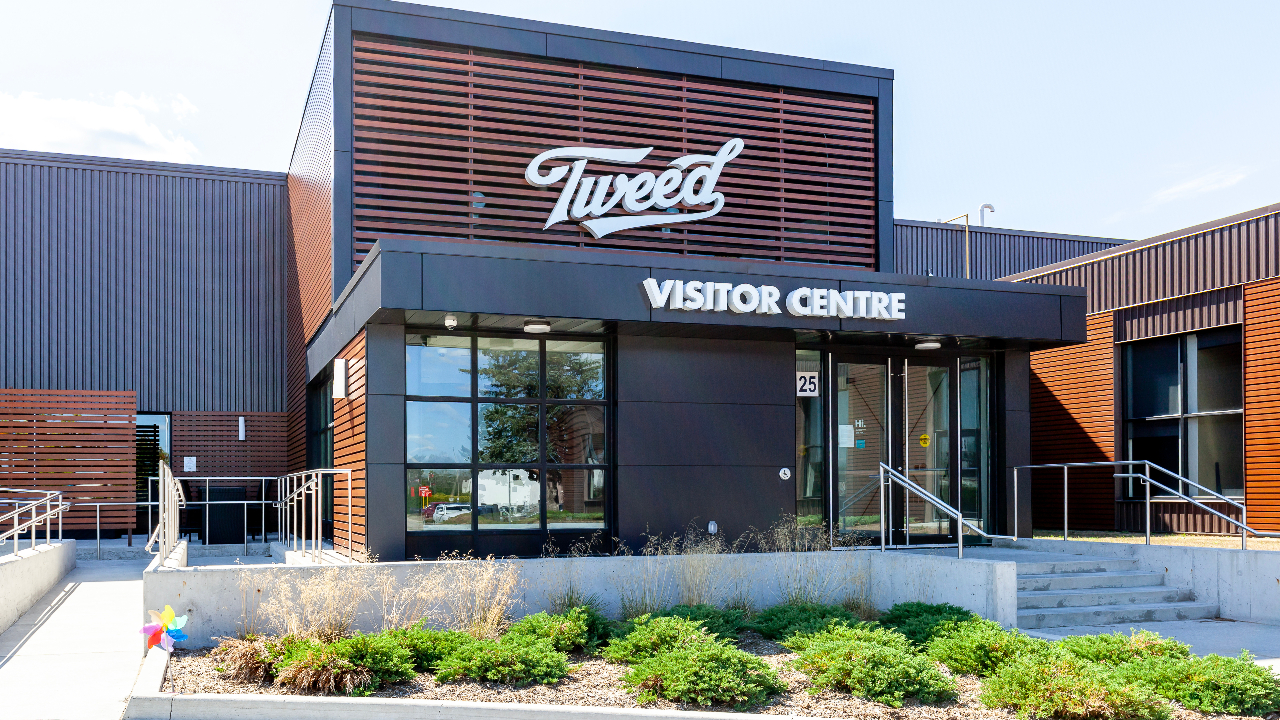
Canopy Growth Corp.’s proposed acquisition of MTL Cannabis could boost the pot producer’s bottom line, experts say, but the future remains hazy for the company and other players in the sector. Canopy, located in Smiths Falls, announced in December it had agreed to purchase Montreal-based MTL in a cash-and-share deal valued at about $125 million. […]
Get Instant Access to This Article
Become an Ottawa Business Journal Insider and get immediate access to all of our Insider-only content and much more.
Canopy Growth Corp.’s proposed acquisition of MTL Cannabis could boost the pot producer’s bottom line, experts say, but the future remains hazy for the company and other players in the sector.
Canopy, located in Smiths Falls, announced in December it had agreed to purchase Montreal-based MTL in a cash-and-share deal valued at about $125 million. MTL’s shareholders approved the acquisition this week, and the deal is expected to close by the end of March.
Canopy has touted the move as a way to bolster its presence in Quebec and beef up its share of the Canadian medicinal cannabis market, which CEO Luc Mongeau pegged at between $300 million and $400 million in a recent call with analysts to announce Canopy’s third-quarter results.
Mongeau, who joined Canopy in January 2025, told BNN Bloomberg in mid-December the deal will "accelerate" the company's push to become cash-flow positive.
“This transaction is highly accretive,” he said, noting MTL is part of a “select group” of Canadian licensed producers that have achieved positive EBITDA and are generating positive cash flow.
Mongeau said Canopy has focused on controlling costs and beefing up its balance sheet since he came on board, adding recreational cannabis sales have risen 20 per cent year-over-year while its medical cannabis revenues have also posted double-digit gains.
“All these things will really accelerate our journey to positive EBITDA and positive cash-flow generation,” he explained.
Canopy hopes moves such as the acquisition of MTL will finally help it deliver on what many saw as immense promise. Founded as Tweed by Ottawa entrepreneurs Bruce Linton and Chuck Rifici in 2013, Canopy Growth adopted its current name two years later and in 2018 became the first cannabis producer to trade on the New York Stock Exchange.
The firm’s stock quickly soared as cannabis was legalized for recreational use in Canada later that year, and investors scrambled to buy into what was expected to become a multibillion-dollar industry. By 2019, Canopy was the world’s largest cannabis producer based on market capitalization and was expanding rapidly through a series of acquisitions.
But the firm soon crashed to Earth, weighed down by ballooning expenses, soaring net losses and dampening sales amid stiff competition from other legal producers and the black market.
Canopy’s stock, which once traded for more than $600, plummeted as the company slashed its staff count and cycled through a series of senior executives in an effort to get back on track.
In 2022, Canopy exited the retail business when it sold its Tweed and Tokyo Smoke stores across the country. The following year, it announced it was selling its 700,000-square-foot growing facility in Smiths Falls back to its original owner, Hershey Canada.
Today, Canopy’s stock trades at around $1.60 on the TSX, and the slimmed-down organization is still chasing profitability. It’s hoping the deal to acquire MTL could help it get there.
'Significantly better' margins
While MTL is a smaller entity – its revenues for the second quarter of fiscal 2026 were about $21 million compared with Canopy’s total sales of $67 million in the same period – the firm has managed to move into positive cash-flow territory, reporting positive adjusted EBITDA of $2.2 million in the same period.
Mongeau said MTL’s margins are “significantly better” than Canopy’s, adding the Montreal firm has “superior growing capabilities” that will benefit his firm’s bottom line. “This (acquisition) will just accelerate how we position Canopy as a serious global player.”
Indeed, Canopy has struggled to reach EBITDA-positive status despite a series of acquisitions aimed at boosting its market share and diversifying its offerings into products such as vapes.
In its third-quarter results released earlier this month, Canopy reported an adjusted EBITDA loss of $2.9 million – down from $3.5 million a year earlier – and a total net loss of $62.6 million, compared with a loss of $122 million the previous year.
The firm’s bottom line is looking better, thanks to a series of cost-cutting measures, but its revenues have remained relatively flat.
Canopy’s two main product segments – cannabis and its Storz & Bickel line of vaporizers and accessories – generated a total of $74.5 million, down slightly from $74.8 million in the same period a year ago, thanks largely to declining foreign sales and a drop of nearly 10 per cent in its vape-related sales, a dip the company blamed on “continued consumer economic uncertainty.”
Toronto Metropolitan University business professor Brad Poulos, who closely follows the cannabis industry, said MTL’s reputation as a top-quality provider of medical pot should give Canopy a boost.
The Montreal company says it serves 5,000 medical patients across the country and is the only Canadian producer that is “fully insured,” with 100 per cent coverage for cannabis prescriptions through Blue Cross and Veteran Affairs Canada. In a news release announcing the acquisition in December, Canopy said the addition of MTL will “establish the combined company as the leading medical cannabis provider in Canada.”
Poulos recently told OBJ he thinks the acquisition is “one of the few positives in a long line of negative news” from Canopy.
“They have some good brands and I do think going back to their roots of medical is not a bad thing to do,” he said of Canopy. “The recreational space is so crowded.”
Toronto lawyer Eric Foster, an expert in cannabis law who also keeps a close eye on the industry, said the acquisition of MTL will give Canopy a stronger foothold in both the medical and recreational segments in Quebec.
“I think the strategic value is expanding (its presence in) an underserved market and leveraging MTL’s expertise on the medical side,” Foster explained.
As part of the deal, MTL founders Richard and Michel Clement will become consultants to Canopy, while the firm’s CEO, Michael Perron, will join Canopy as chief operating officer.
Foster said the Canadian cannabis sector has produced few “darlings” in the eight years since pot was legalized for recreational use, but smaller niche producers like MTL have been among the standouts.
“Really, there have been a number of licensed producers on the smaller scale that have developed really strong reputations for their ability to operate either profitably or near profitably on a smaller (scale),” he said. “They’re focusing on a more strategic or targeted market. I think that’s what by reputation MTL Cannabis has done a good job of doing.
“Clearly, Canopy believes that the cultivation capabilities of MTL are quite high and they want to leverage (that).”
Since the acquisition was announced, Canopy has also taken major steps to solidify its cash position as it looks to grow its market share in Canada, Europe and potential other markets such as the U.S.
More financial runway
In early January, the company announced it had secured a new US$150-million loan to repay about US$100 million in debt that was slated to come due in September 2027.
The new loan, which has a lower interest rate, matures in January 2031, easing Canopy’s debt burden while giving it a little breathing room and extra cash to pursue expansion activities such as potential acquisitions.
In addition, Canopy also exchanged a portion of its 2029 convertible debentures for new 2031 debentures, cash, equity and warrants, further pushing out its debt obligations.
Canopy ended the third quarter with $371 million in cash and cash equivalents on hand.
Mongeau told analysts the company is on “solid footing as we move into the next phase of execution,” adding the refinancing gives the company “more room to make the right long-term decisions.”
The refinancing deal puts Canopy in a “much better position” to pursue acquisitions and boost its market share, Foster said.
“The closer you get to your (loan) maturity date, the more leverage you lose when you’re trying to negotiate a refinancing of that,” he explained. “I think it’s extremely significant for the company.”
Poulos agreed.
“They bought themselves some runway pushing out those maturities and they’ve lowered the burn rate by getting the interest costs down,” he said. “Both of those are pretty positive, I would say.”
Still, Canopy’s path to profitability is far from clear, experts agree.
The federal government’s decision to reduce Veterans Affairs Canada’s medical cannabis reimbursement rate from $8.50 per gram to $6 per gram – a move the government said “would better reflect current market prices” – could create “headwinds” for Canopy as it strives to become cash-flow positive, chief financial officer Tom Stewart told analysts on a recent call.
And the Holy Grail of foreign markets, the United States, remains uncertain territory. Stocks of Canopy and other Canadian producers briefly soared in mid-December when U.S. President Donald Trump issued an executive order rescheduling cannabis from Schedule I – reserved for substances with “no acceptable medical use” – to Schedule III, which includes substances eligible for FDA approval as medications.
But the order faces opposition and still hasn’t resulted in a change in U.S. federal policy, meaning cannabis users south of the border remain vulnerable to federal charges even as more and more states have legalized the drug’s use for medical and recreational purposes.
Foreign investors banking on a fast entry into the U.S. market have been disappointed, Poulos noted. “That really hasn’t panned out,” he said.
Meanwhile, Canadian cannabis producers continue to be hamstrung by federal regulations that effectively prohibit them from widely advertising their products, Foster said.
“I think there is a strong view in the industry that there needs to be significant regulatory change to help these companies succeed,” he added. “If you start seeing that, I think investor sentiment will get stronger. It’s a multibillion-dollar industry. It’s just so highly regulated and, frankly, highly taxed, and government … is still trying to battle the black-market component of it. When there’s all those kinds of headwinds, it’s hard for companies to really be successful. I don’t think there is a silver bullet for them.”
The industry needs a “catalyst” – federal legalization in the U.S., for example – to give it the kickstart Canopy and other producers need, he added.
“I do still believe we’re in the third, maybe fourth inning of this thing. There’s still a lot of room to grow and a lot of opportunity to seize. But again, it’s going to need to be somewhat catalyst-driven.”