Get Our Email Newsletter Local news about the companies, people and issues that impact business in Ottawa and beyond delivered to your email inbox.
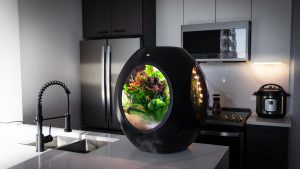
Founded in 2020, Plantaform specializes in “smart indoor gardens” that use a technique pioneered by NASA to grow leafy greens, herbs and other vegetables in a “fog” of nutrient-enriched water vapour rather than soil.
Alberto Aguilar is hoping to grow the next great Canadian agritech startup – from a new home base more than 10,000 kilometres from his company’s headquarters in Gatineau.The co-founder and CEO of Plantaform uprooted his family from the National Capital Region in October and relocated to Saudi Arabia, where he now lives in the capital city of Riyadh with his wife Gabrielle and 19-month-old daughter Sofia.Aguilar’s unconventional move was fuelled partly by an irritant that’s all too familiar to many Canadian entrepreneurs: U.S. President Donald Trump’s tariffs. Worried that his business was becoming too dependent on the U.S. market, Aguilar sold all his belongings and took what he describes as a “leap of faith” to move halfway across the world and cultivate new relationships with investors and customers in the Middle East. “I think with the threats of Trump and the tariffs, it was a very big wakeup call,” says Aguilar.“Being so dependent on the U.S. market felt very fragile. You’re putting all your eggs in one basket.”Founded in 2020, Plantaform specializes in “smart indoor gardens” that use a technique pioneered by NASA to grow leafy greens, herbs and other vegetables in a “fog” of nutrient-enriched water vapour rather than soil.The company sells the egg-shaped devices on a variety of platforms, including Amazon and its own e-commerce site. About 80 per cent of its revenues currently come from buyers in the United States, but Aguilar says that while looking south for customers is “Canadian business 101,” he wanted to go in a less conventional direction.Aguilar, who spent part of his youth in the Middle East, had been thinking about setting up an office in the region for years. The brewing trade war with the U.S. kicked the process into high gear.“All of a sudden, we were vulnerable,” he explains. “It was a sense of belief that if we don’t pivot, we’re going to be another failed startup. It’s scary to be a Canadian company with what’s happening in the U.S.“In August, I made up my mind. If I want Plantaform not only to survive, but to thrive, we’ve got to go to where the real problem we’re solving is, which is where food security is a challenge. And that’s the Middle East.”It didn’t take long for Aguilar’s firm to attract attention in the country of about 35 million people, which imports more than 80 per cent of its food supply due to its harsh desert climate and lack of fresh water.Last summer, Plantaform was one of 13 startups from around the world to be accepted into Sunbolah, an incubator run by Saudi Arabia’s Ministry of Environment, Water and Agriculture that aims to help scale fledgling agriculture, food and biotech companies. Aguilar has since met with dozens of potential investors and customers, including three of the country’s largest retailers, about getting his indoor gardens on their e-commerce sites. But Aguilar sees Plantaform’s market potential in the Middle East extending far beyond individual consumers. He’s in talks with a major developer who wants to install the grow pods in more than 1,200 villas in the United Arab Emirates, and he says more than 80 school boards in the region have expressed interest in putting the devices in their classrooms.Plantafarm's smart indoor gardens retail for about $800 in Canada. Photo courtesy PlantafarmWhile the grow pods are a niche item in North America, where they retail for about $800, Aguilar believes they could become an “essential appliance” in arid states like Saudi Arabia, the UAE and neighbouring countries such as Bahrain, Kuwait, Oman and Qatar, where conditions make it virtually impossible for anyone to grow their own fruits and vegetables, forcing consumers to rely on pricey imports. “The problem we’re solving in Canada for some places was a need, for some places it was a want,” he says. “Here, it’s 100 per cent a need. People are looking for fresh, pesticide-free alternatives.”Earlier this month, Plantaform gained additional traction when Aguilar beat out more than 1,600 competitors to win the PITCH startup competition at Web Summit Qatar, an event that attracted more than 900 international investors. He says the victory triggered a flood of inquiries from potential customers and financial backers eager to help Plantaform expand its footprint further into the Middle East and other lucrative markets such as Europe. Still, Aguilar – who shifted production of Plantaform’s products from Montreal to China last summer – stresses that his ultimate goal remains the same: to build a great company based in Canada.Plantaform remains headquartered in Gatineau, where it has nine employees. The company still conducts most of its R&D in the National Capital Region, and Aguilar plans to keep it that way.At the same time, however, he insists that high production costs were “choking” the company’s growth prospects in North America, adding the tariff war has created too much “instability” in the Canadian economy. Hence the focus on the Middle East.
'We've got to diversify'
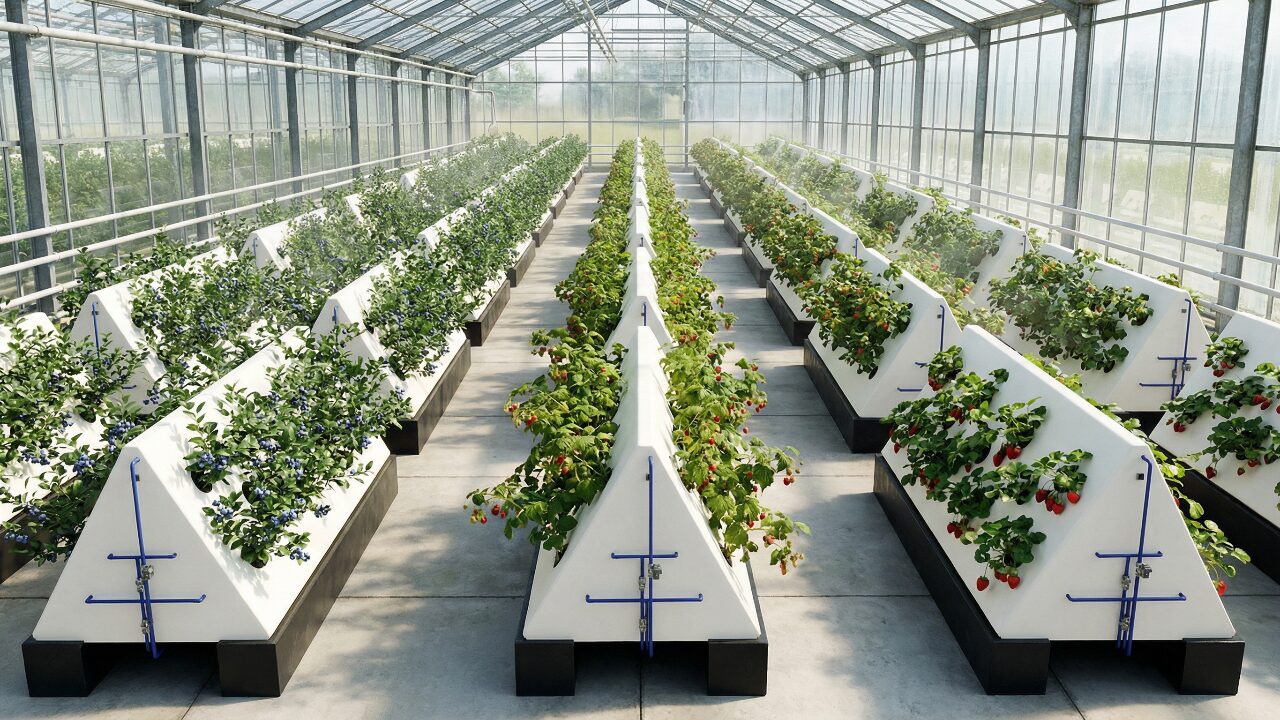
“We’d be stupid to ignore this (opportunity),” he says. “We’re doing our (part) to support Canada by diversifying (into) this market.“We still want to be a Canadian company and we’re very proud of our roots in Canada. We were very sad to have to shut down our Canadian factory. But if we want to help the Canadian dream come true, we’ve got to diversify and (pursue) risks like this and attract investment back into Canada.”Part of that diversification push includes a move into a new market segment: greenhouses. In November, Aguilar and Aftab Alam, the former director of R&D at U.S.-based vertical farming giant AeroFarms, launched a new company, Plantafarm, aimed at putting the same fogponics technology that underpins Plantaform’s household pods to use in large indoor facilities with the capacity to grow tons of berries and other foods every year.Aguilar says past attempts to set up greenhouses in the Middle East failed due to the amount of water and energy required for more conventional growing techniques such as hydroponics, adding crops often withered in the extreme heat. By contrast, Plantafarm’s technology uses 50 per cent less water than older growing methods and allows for much more efficient use of space, Aguilar says. Meanwhile, the company has found a Saudi firm to supply a high-tech coating that blocks harmful solar rays from penetrating a greenhouse roof.And unlike vertical farms – which stack plants in layers – Plantafarm’s facilities wouldn’t need energy-gobbling LED lights to fuel the growth process.“The strength of the Middle East is the sunlight,” Aguilar says. “We’ve got to capitalize on that as much as possible.”As a result, he believes Plantafarm has found the secret to making greenhouses viable in the Middle East. A typical one-hectare hydroponic greenhouse can grow about 30 tonnes of blueberries “in a very good year” at a cost of about $14 per kilogram, Aguilar explains. The same-sized facility using Plantafarm’s technology could produce more than double the amount of berries – about 70 tonnes – at a cost of approximately $6 per kilogram, he projects. In a country where 125 grams of imported blueberries now retail for $13 Canadian and typically last only a couple of days before spoiling, it’s an intriguing proposition, Aguilar says.The high cost of food production “is a big problem right now, and fogponics really could be the key to unlocking that efficiency and unit economics,” he adds.Alam has been working on the fogponics greenhouse concept for more than a year, and the firm is now building a 1,000-square-metre greenhouse in Riyadh that will grow strawberries to test the technology. Meanwhile, scientists at the National Research Council are helping Aguilar and his team test similar systems in Canada, where he hopes to eventually build greenhouses suited to harsh Northern climate conditions.Plantafarm’s plan is to build the facilities and sell them to farmers. The company would be in charge of maintaining the greenhouses, monitoring and servicing the fogponics technology and helping growers find buyers for their products.Aguilar expects to close an additional funding round of US$1.5 million in April, led by Saudi investors and other backers from the Middle East, to help finance construction of a larger demonstration facility.“Now that we have all the channels ready to open up, we need to raise the capital to fulfil them and start scaling,” he says.In what little spare time he has in between being a father, husband and busy entrepreneur, Aguilar is slowly picking up Arabic. It’s a work in progress, but he says it’s all part of a process that he hopes will one day pay handsome dividends for him and his businesses.“The Middle East is a place where you can’t have one foot in, one foot out. It’s very relationship-based,” he explains. “They have to see you in person. They have to see what you’re doing. You’ve got to build those relationships. Moving here was critical to be able to make this a successful expansion.”