There’s a set of servers in Ottawa processing data that may one day uncover a cure for cancer. This week, Techopia Live sat down with Roy Chartier and Tyler Nelson, two of the men behind Cancer Computer, a charity that’s taking used hardware and turning that processing power on one of the world’s most deadly diseases.
Cancer Computer accepts server donations from partners, refurbishes those rigs and rents the supercomputing power to researchers at little or no cost. Servers with high-computational capacity are needed to simulate how various drugs and proteins will interact with replicating cancer cells, with the goal of eventually creating a protein that could turn these problematic cells off.
Founder Roy Chartier told Techopia Live that he saw a clear gap between the demand for processing medical data and the available resources, and believed he could bring the Ottawa community together to make an impact.
“There was this gap, so we thought there’s an opportunity here to get some used gear and get it processing some science,” he said.
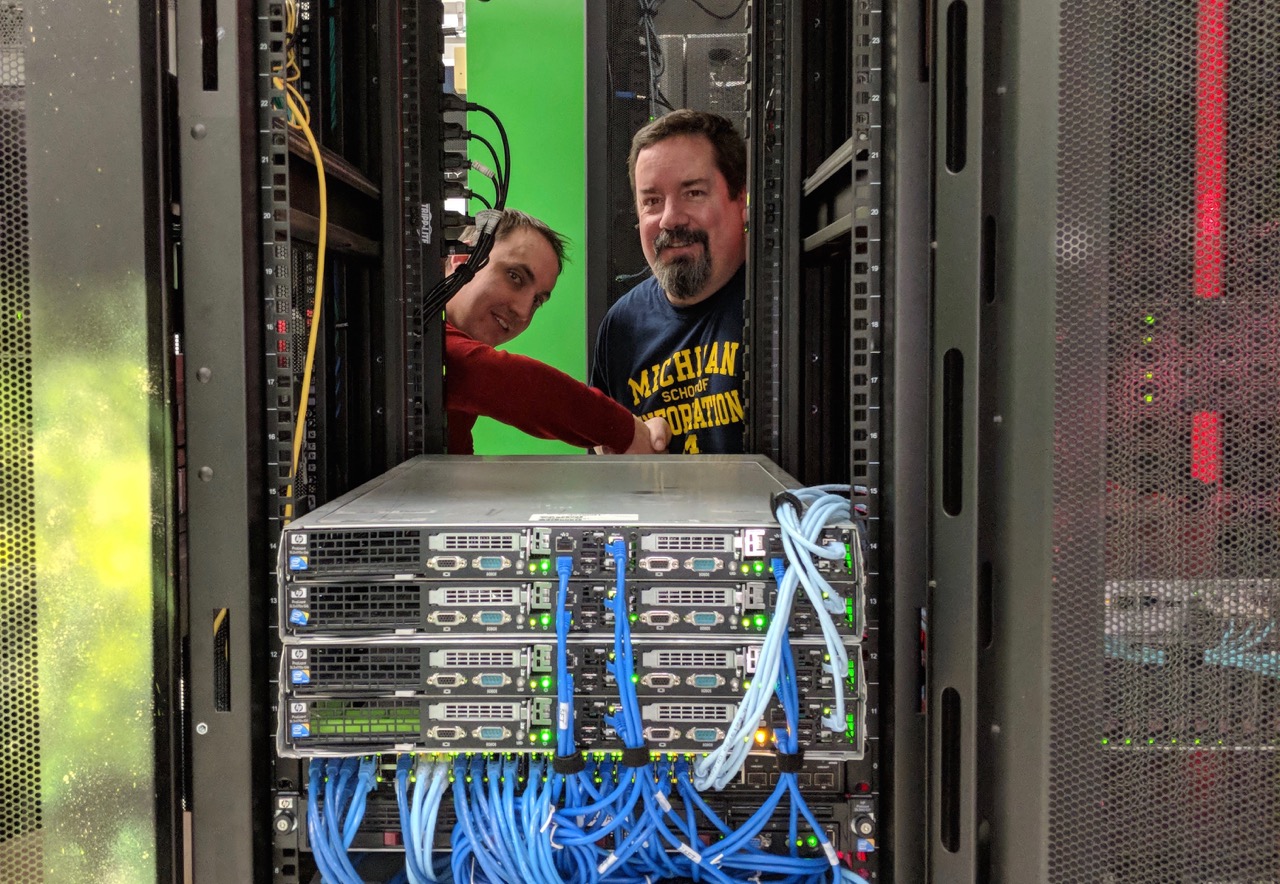
When he approached childhood friend and serial entrepreneur Tyler Nelson about the idea, Nelson says Chartier’s passion won him over.
“The conviction that Roy put forward and the team that he had started to assemble was just astounding,” Nelson told Techopia Live.
In terms of cancer research today, Chartier says Cancer Computer is the No. 1 processing provider out of 133 North American research institutes on the Open Science Grid, an organization that connects researchers to high-throughput computing services.
The all-volunteer organization is still run part-time by the team, but executive director Nelson says he foresees the need to go full-time by the end of the year. Eventually, he’d like to see the Cancer Computer concepted scaled up worldwide, with cities around the globe implementing similar programs.
Though running a charitable organization is new for Nelson, he says it’s important to consider new perspectives about what can be accomplished through an entrepreneur’s skillset.
“The skills that we assemble through life, and the experiences, can be pivoted toward accomplishing really cool things, amazing things.”