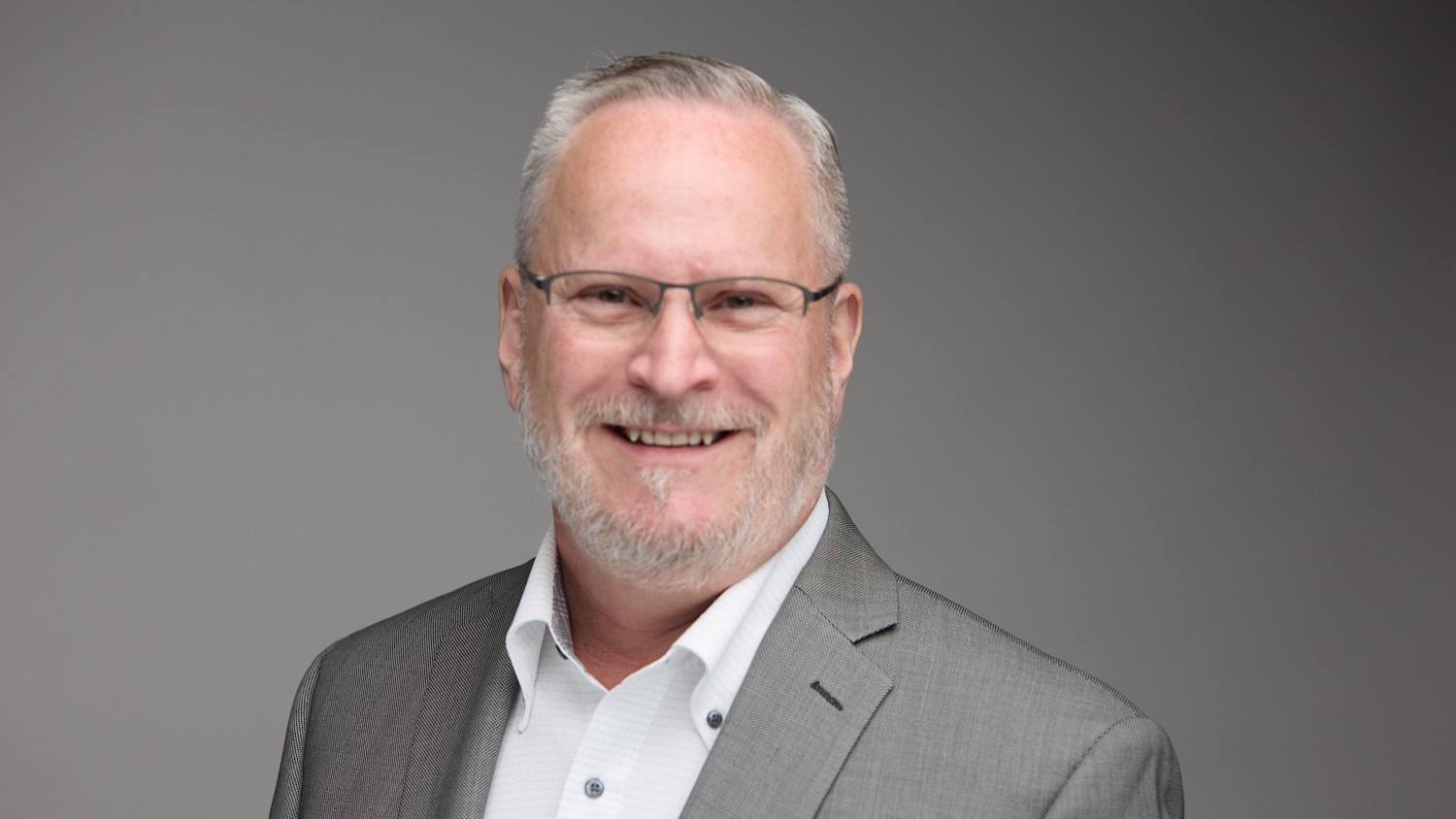
With travel patterns more unpredictable than ever, Colin Morrison says local hotels are tapping into new markets and finding other ways to adapt.
With travel patterns more unpredictable than ever, Colin Morrison says local hotels are tapping into new markets and finding other ways to adapt.
Now more than 40 years into his hospitality career, Morrison recently joined the Ottawa Marriott Hotel as general manager, just as the property is about to undergo a complete renovation.
Morrison has worked all over Canada’s hotel sector, holding corporate positions for organizations such as Sequel Hotels, Deerhurst Resort, Parkridge Lifestyle Communities, and managing properties like Touchstone Resort on Lake Muskoka and Hockley Valley Resort. Locally, he’s been the general manager at the Arc The Hotel and, most recently, at the Ottawa Embassy Hotel and Suites.
In this interview with OBJ, Morrison discusses his career, what it takes to turn around a struggling hotel, and how tensions with the U.S. have impacted international tourism in the city.
The transcript has been edited for length and clarity.
Tell me about your experience in hospitality and why you joined Marriott Ottawa.
How much time do you have? So, I've been doing this for a little while, about 45 years now. It's just something that's in my blood, something that I absolutely love doing. The old adage, if you love what you do, you never work a day in your life. That's quite literally what I do. I've been in Ottawa for the last 17 years. I started at the Arc The Hotel and then moved to Embassy (Hotel and Suites), where I was for the last almost 12 years.
Through happenstance, I worked in a number of boutique properties where you can really refine the level of service that you provide to guests because your interaction is much more detailed in a 50-room hotel versus a 500-room hotel. You are much more up close and personal with the guest, which is great to be able to hold their hand through that entire experience. I enjoyed that and was able to turn some properties around. I did that with the Arc The Hotel and the Embassy and allowed those properties to be recognized for what they should have been versus what they were.
The transition to Marriott was a bit of a surprise. It was an opening that was available just after the Embassy was sold. So I was in a position where I could take on a new responsibility and it's something that was absolutely attractive because I had been with Marriott 40 years earlier. It’s also a property going through renovation and I've renovated or opened 20-odd hotels across Canada. So it was an opportunity to play a little bit more on a renovated property, which is always fun.
What does it look like when a hotel is struggling and what does it have to go through to thrive again?
I think that it's true in all businesses, you can become very strained in what you do over a period of time and you need to find a point of differentiation and focus on that — something you can hang your hat on. At Arc, it was the only boutique hotel in Ottawa at the time and it became a little slice of New York City in Ottawa, which was very different. For Embassy, it was something that was a little more sophisticated and residential versus some other properties that presented a product without having a personality attached to it.
I've said before that this industry, while a wonderful industry, has lost a little bit of its identity from property to property. The iconic hotels of the world have a distinction among them. Chateau Laurier, inside or outside, has that feel of the management and the ownership property. So many properties don't have that exclusive feel where you almost have to wake up in the morning and look at the telephone book to see what city you're in because we all look the same. That point of differentiation is something that I focus on and that's been able to help move those properties forward.
In this property, it's a little more challenging, because you're dealing with the circumstance of a franchise organization, but there's still the ability to provide very focused customer service, to present a product that is slightly different from the norm — still meeting all the standards and criteria, but slightly different. There's an identity to it and it’s about furthering that identity into service and being of service to others at every point of contact.
You’ve worked all over Canada. What’s different about Ottawa as a hospitality market?
Ottawa has changed. When I first came to Ottawa, it was a very predictable city. We went through predictable seasons. You could have corporate travellers that were travelling from Sunday through Thursday and leisure travellers that came in Friday, Saturday and then left after the weekend. Summer would be primarily leisure. The other three seasons would be primarily corporate, business and government travel. You could almost set your watch to it.
That's not the way that it is. Now, primarily post-COVID, corporate business travel is a little more challenging. There are more people meeting the way that we're talking right now (by video) and that makes things a little more challenging. The government doesn't work the same way today as it did five years, seven years ago. So while there's still government meetings and there's still people getting together — and COVID is no longer a cloud that hangs over us — it has had long-lasting implications as to what business does and how people respond. So it's a little less predictable.
How is the local hospitality sector responding to that and navigating a less predictable market?
It really depends on the property and where they're located in the city. If you're close to the convention centre, you're more heavily impacted by the business that happens in the convention centre. If you're close to the ByWard Market and the Rideau Centre, that’s an attraction unto itself. For properties like the Marriott and other properties west of Elgin Street, bringing business down to this side is a little more difficult. We're a little bit further away from the things that people are currently looking to do on a leisure side, but then we're also very close to Parliament Hill, which is another thing they wish to do. We certainly are looking forward to the day that LeBreton (Flats) gets underway, which will expand the city out to the west a fair bit.
We've also gone after different market groups. We're looking at sports marketing as an example, making ourselves attractive to those sectors that we may not have gone after as actively. Indigenous tourism is another one. Also being able to present an area that is close to an urban centre really makes a big difference. The fact that we have an urban centre that is as close to wilderness as we have so that you can have an adventure holiday and still stay in the city is really unique. So there's lots of draws into Ottawa. We just have to amplify those draws into the feeder areas.
What kind of impact are you seeing from tensions with the U.S.?
There’s tension with the U.S.? (Laughs) We are getting quite a few Americans coming up. Anecdotally, I’ve seen more U.S. licence plates driving around Ottawa than I have in the past. It’s challenging to say whether we’re seeing more Canadians staying in Ottawa, because we’re seeing similar (occupancy) volumes as we’ve had previously and dealing with leisure travel is a bit tricky. If (travellers) have to be in Ottawa for something specific, like a wedding, it’s a different story. But if they’re going on a drive — if the weather is great, they might go. But if it’s raining, maybe they’ll wait until next weekend. It’s a fickle audience.
As individual hotels, we’ll look at markets and groups that we’ve done business with before and look to nurture those markets. It’s challenging for a standalone property (to promote itself internationally). But we will nurture business from afar based on needs we can fill. We are an incredibly attractive city to high-tech, internet-connected organizations and associations that may have international travellers that are looking to avoid situations in other countries. In Ottawa, we are welcoming to anybody who wishes to come and we’re going to show them the best of the city.
Ottawa may see more hotel investment in the coming years. How competitive is its hospitality market?
We are a very close hotel network city, which is a very attractive situation to be in. I love the fact that I can walk into another hotel in the city if I need to borrow some tables to set up immediately and everyone will help each other out. All the general managers know each other, not only in the business sense, but in a social sense. And we are one cohesive group as far as that relationship is concerned.
That said, we are as competitive as the day is long. So, I will have lunch with Genevieve (Dumas, GM of Fairmont Chateau Laurier) and that afternoon I'll be fighting for a piece of business that she has and that I want. And we're not fighting with her, we're fighting to make ourselves attractive to the client. That's part of the business. That's part of what we do. We want to ensure that our hotel is viable. So yes, we are very competitive, but we're also very friendly. I guess you could say — to put an analogy to it — it would be similar to a group getting together to play hockey or curling and playing fierce and then, after the game, you'll sit down and have a beer with each other.