
In the face of rapid growth, Orleans needs an anchor employer and other infrastructure to reduce the need for residents to travel elsewhere for work, says the head of the local BIA.
In 2024, the Heart of Orleans BIA expanded its boundaries and went from representing 360 businesses to 780. Today, that number is closer to 800. Tannis Vine, the BIA’s executive director, said that move presented new opportunities.
“We went from (just representing) small mom-and-pop type of businesses to a mixed bag now. We’ve got industrial places like the (Agropur Cooperative) milk plant. We’ve got all of (the businesses in) Taylor Creek … Expanding our boundaries provides so many opportunities for us,” Vine told OBJ on Thursday.
Still, the area lacks a large employer to support continued growth, she said. “In 2018, there was a project that we were working on called Balanced Orleans. It was basically to try and get a federal node in Orleans, because we have no large, major employer here.”
In a study completed at the time, the BIA found that 80 per cent of its residents went “west to work,” with 50 per cent being federal civil servants.
While Orleans saw a boost for local businesses during the pandemic when more employees worked from home, Vine said the area needs more permanent infrastructure to support growth, especially since federal workers are being called back to their offices four days a week starting this summer.
As a result, the BIA recently launched a “Why Not Orléans?” campaign, a community-driven initiative meant to attract investment to the area.
“Either with a federal node or a (private-sector) large employer, we want our fair share,” Vine said. “(The campaign) is to try and showcase why our district is a smart choice for businesses, residents and investors.
“Orleans has one of the largest populations in Ottawa. It has the most educated and bilingual workforces. It’s got a very strong entrepreneurial spirit. We’re one of the fastest-growing communities,” she said. “We’re pushing for more jobs and more economic investment.”
The area is also seeing unprecedented growth in its residential real estate market, with several big projects in the works.
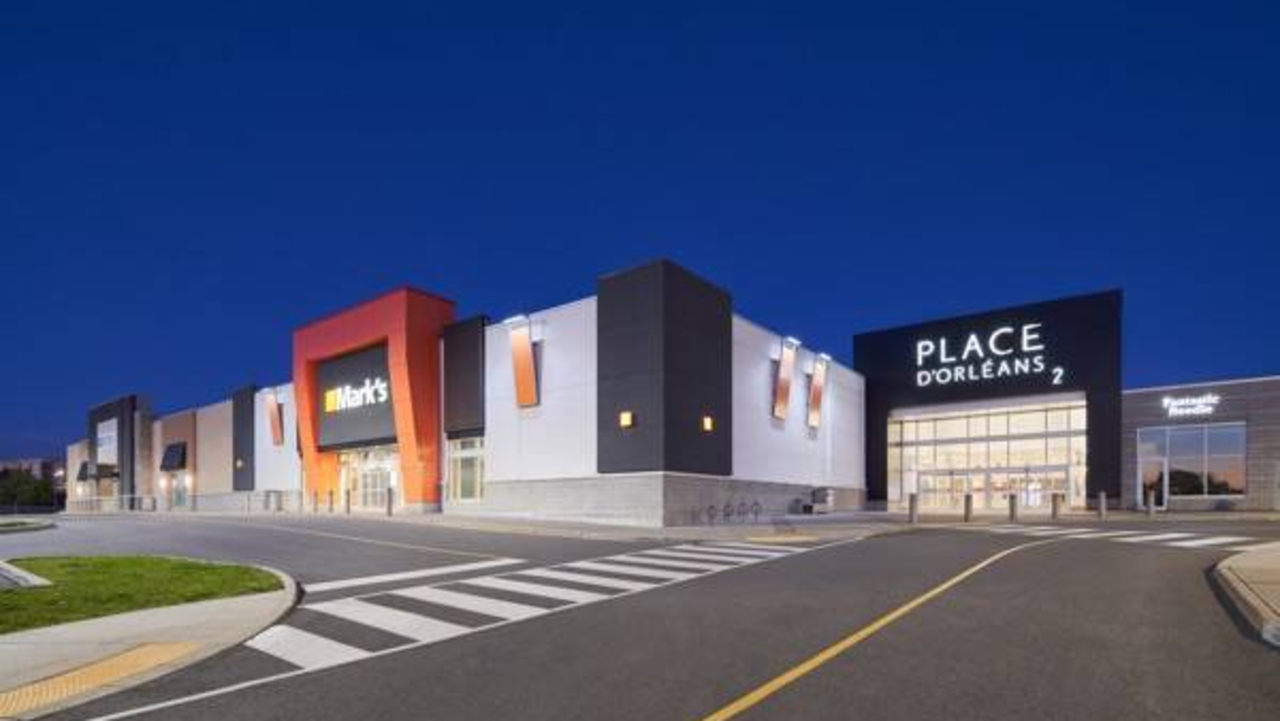
Toronto-based investor Forum Asset Management recently proposed plans for a multi-tower development that would add more than 1,500 residential units and a community centre near Place d’Orléans Shopping Centre.
On the other side of the highway, a proposed development on Tweddle Road would see four highrise towers with space for 1,200 residential units, ground-floor commercial space and a public pedestrian plaza.
And a “home-based business rental” project is now complete on Champlain Drive, with 10 units that blend living and working spaces.
Vine said that with more residents comes an increased need for the businesses and amenities required for 15-minute neighbourhoods.
“I don’t want to speak for everybody, but we’ve done surveys in the past and a lot of people want to stay in Orleans. They don’t want to have to go elsewhere to go and eat at a nice restaurant or watch a movie. They want to be able to do their groceries and go to their doctor here. We need the infrastructure as we go through this growth spurt.”
The opening of the LRT east extension will be a catalyst for economic growth in the area, facilitating residents’ movement to and from Orleans, especially for the city’s younger population, she added.
“One of the things that Orleans does have an issue with is attracting young employees,” Vine said, adding that her daughter had to quit her part-time job in Orleans as she couldn’t make it back in time from her classes at Algonquin College.
“Once the LRT is in place, it’ll be a lot easier for our businesses to hire younger employees or those without cars. And they’ll stay employed.”
Still, Vine said the success of growth opportunities in Orleans hinges on getting an anchor employer.
“We don’t have a large employer out here. We don’t have a lot of tech. That was the whole point of trying to get a federal node out here. We have so many federal workers that are living here it just felt like the thing that made the most sense.
“We used to have a lot of military here as well. But since they moved out Kanata way, residentially they’ve moved out that way too.”
Vine’s vision for Orleans is for the area to become the economic hub of Ottawa’s east end, where it will no longer be the norm to head “west to work.”
“Orleans could be a centre for small businesses (and) maybe for tech, professional services. (It would be) a true Main Street with a cultural identity. I see us no longer being just the suburb. I see us becoming more walkable, more economically balanced, more vibrant and better recognized as a destination in Ottawa.”
It may take a decade or two, Vine added, but she thinks Orleans is well on its way to distancing itself from the “sleepy suburb” reputation it once held. However, while it’s looking to modernize, Vine said the community will also be looking to hold on to its character.
“We have to move forward. We have to grow, but we also can’t forget where we came from. We can’t forget the history,” she said, adding that the BIA has installed plaques along St. Joseph Boulevard highlighting the history of its Main Street businesses and landmarks. “They built the stories. And it’s why a lot of residents stay in Orleans and are supportive of this ‘Why Not Orléans?’ movement.”
The BIA will generate momentum for its campaign by putting together a “group of champions” to discuss next steps.
“It’s not about competing with anyone else. It’s not about competing with downtown. It’s just about getting our voices heard and saying why Orleans is so great.”