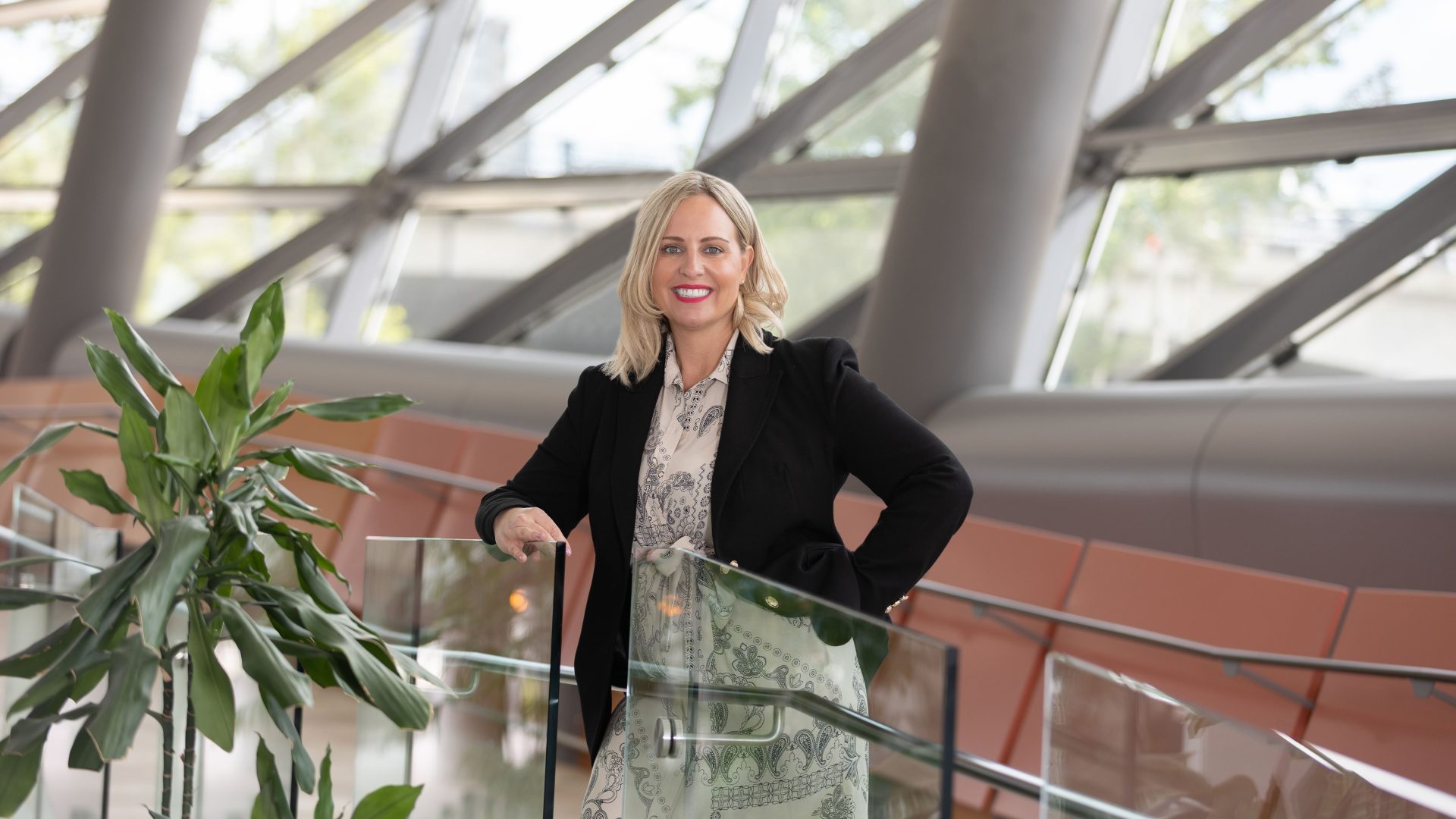
With Ottawa conferences and events seeing record-setting attendance, the new president and CEO of Rogers Centre Ottawa, Lesley Pincombe, plans to keep the trend going.
Get Instant Access to This Article
Become an Ottawa Business Journal Insider and get immediate access to all of our Insider-only content and much more.
With Ottawa conferences and events seeing record-setting attendance, the new president and CEO of Rogers Centre Ottawa, Lesley Pincombe, plans to keep the trend going.
Pincombe started her new job last summer after 11 years at Ottawa Tourism, where she was most recently vice-president of meetings and major events. It was a natural progression from there to Rogers Centre Ottawa, she told OBJ Friday, adding that her time in destination marketing has been essential to her understanding of the importance of convention centres to the local economy.
In her first six months, Pincombe has overseen upgrades to the facility, introduced live music and begun planning a revitalization project to improve the environment around the venue.
But she also has a larger vision.
In this conversation with OBJ, Pincombe describes Ottawa’s current period of transition, how the city’s reputation is changing on the international stage, and how businesses can play a role in making the city a sought-after destination for major events.
This transcript has been edited for length and clarity.
You’re six months into your new role. How are you feeling?
Amazing. The move has been so energizing and really just a culmination of my life’s work. I feel such a great sense of purpose being here and it’s been a nice continuation of all the work I was doing before I came, just on a different side of the coin.
Why did you decide to make the switch from Ottawa Tourism to this role at Rogers Centre Ottawa?
I think this is a time in our city’s history where we need great leadership. We’re at a point of transition and it’s really important that we have those that understand the ecosystem that is Ottawa and really step up to help set future Ottawa up for great success. Being part of the business events and tourism ecosystem prior to joining Rogers Centre, I understand the importance of marketing this destination. I understand the importance of this building and how iconic it is and the reason why it was built. It’s such an amazing building in our skyline and, being the capital of Canada, needs to hold important events.
We are at a point of maturity now as a destination. We matured a lot in the last decade and more since (the centre) was built. I want to ensure that work continues, to make sure this building and the employees that call this place home — that we can keep them employed and we keep contributing to the visitor economy here in Ottawa.
How would you describe the “transition period” we’re in?
When you look around, there’s a lot of cranes in the sky. There’s a lot of new infrastructure projects in the works, with either shovels in the ground or soon to be. When we think about the future Ottawa, it needs to be not only a great place for people to live, work and raise families, it also needs to be a great place for people to visit.
When we go to other cities for a conference, that may be that first reason for going; the catalyst for booking that city or that trip. Then, all of a sudden, we go, ‘What else is happening in the city? Should I go early? Should I stay late? Where can I eat? What can I do while I’m there?’ It’s important that this building plays an active role in advocacy to support those delegates when they come here or when event planners choose Ottawa to host their conference.
When I see cranes in the sky, it’s exciting because it really helps to position Ottawa as a first-class meeting and conventions destination. It’s one of those things that’s maybe not all that intuitive but it’s the full package that we have to sell. It’s not just the building or the space, it’s the city.
What kind of reputation does Rogers Centre Ottawa have on the domestic stage compared to the world stage? How do you bring it to the next level?
We’ve changed our name a few times so that continues to be an area for us, to ensure that the Rogers Centre Ottawa becomes a household name.
I would say nationally and locally we have a great reputation for hosting first-class events. But internationally, alongside Ottawa Tourism, the way you build that reputation is by hosting more events. The more people who are able to come here and experience Ottawa in all its glory, regardless of season, then go home and tell their friends and organizations about it — that’s what helps build our reputation and gets us our calling card.
What kind of work have you been doing to bring more international events into the building?
In lockstep with Ottawa Tourism, we travel and exhibit within the Destination Canada stand. Every major destination across Canada is represented there, meeting with customers.
We take quite a scientific approach. We look at our ecosystem, what’s thriving, and we really tailor our meetings and target clients, making sure it’s something that we know will thrive here, something they can riff off of. Like the government or our academic institutions. We have a thriving tech community and startup scene. We really make sure that when we host conferences here, there’s also a local ecosystem to support it. That could be making sure that there are students to attend, that there are great speakers, that if they want to go to technical sites, we’ve got that scene for them to experience when they’re here.
Business travel has been the slowest to recover from the pandemic. What trends are you noticing about that side of tourism?
Business travel, as we call it in the tourism industry, we would say that’s the individual travellers. Somebody is coming from another city to meet with somebody here in Ottawa for business. And then there’s business events, which is attending a meeting or coming to something larger, not just meeting one-on-one.
Business travel is slower to recover because that’s where that virtual component has taken over and thrived even post-COVID, in terms of reasons for getting on a plane and even just from a sustainability perspective. But we haven’t seen that translate into fewer delegates. The need to meet in-person has not gone away. The numbers that we’re seeing I think actually are record numbers for many events post-COVID. It’s very different compared to individual business travel. There are still companies and businesses alike putting a large emphasis on meeting in-person. And I think we can all agree that we can make great things happen when we have that human connection.
How do you plan for the future to maintain or grow those record-setting numbers?
We can’t take our foot off the pedal for many years to come. We need to be able to constantly be in markets where our competition is. We need to continue to do a phenomenal job marketing Ottawa, not only as a great place to meet, but also as just a great destination and a four-season one at that. We also really need to be aligned. Think Ottawa is a tripartite agreement between Rogers Centre Ottawa, Invest Ottawa and Ottawa Tourism and we’re seeing so much success from that program.
We also need to continue to work with others and the Ottawa Board of Trade so that our business community understands the importance of hosting events in their own city and what that can do for their business. It’s one thing to host your annual Christmas party or sales kick-off. But a lot of companies in our city are members of international organizations, which all host annual conferences on a rotation. What we would love the business community to do is, when those events come back to North America or Canada, put their hand up and say, maybe host this in Ottawa. That’s where we come in and kick into high gear to put a bid together and help them sell the destination.
How does Ottawa stack up to other major cities like Toronto, Vancouver or Montreal when it comes to attracting these types of major events?
Size plays a big factor in that. Within our class or our size of conference centre and city, I think we punch above our weight. But it’s also why it’s important when we say and advocate for things like better air access to the city. That’s why we’re at that table. Those are some of the deciding factors that could really edge you out from the competition. If they have more direct flights, it might tip them as the winner of a bid for a big international conference.
In terms of economic development and the well-being of Ottawa’s economy, (Rogers Centre Ottawa is) making sure we’re at those tables to see how we can help in those important discussions, helping to support the messaging and play a role in hosting events to solve some of those issues.
We hosted the Mayor’s Breakfast with Prime Minister Mark Carney (last year). It’s great to have those events happening in the building. Sometimes people think a conference is just a conference. But although we at the Rogers Centre Ottawa might not be solving any wonders of the world, a lot of our clients are doing that. A lot of policy is passed here. A lot of decision-making happens. A lot of reconciliation happens in this building. It’s really fulfilling needs that shouldn’t be underestimated.