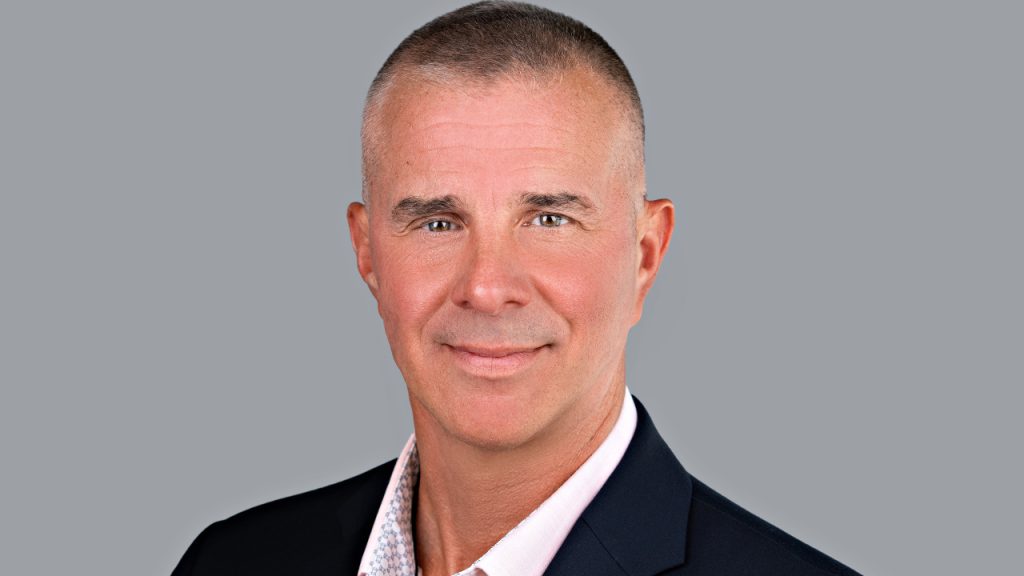
As the federal government ramps up military spending and defence is suddenly in the spotlight, Jean-Marc Lanthier feels like he was meant for this moment. After a three-decade career in the Canadian Armed Forces that saw him rise to become vice-chief of the defence staff, Lanthier is now embarking on a new career challenge. And […]
Already an Insider? Log in
Get Instant Access to This Article
Become an Ottawa Business Journal Insider and get immediate access to all of our Insider-only content and much more.
- Critical Ottawa business news and analysis updated daily.
- Immediate access to all Insider-only content on our website.
- 4 issues per year of the Ottawa Business Journal magazine.
- Special bonus issues like the Ottawa Book of Lists.
- Discounted registration for OBJ’s in-person events.
As the federal government ramps up military spending and defence is suddenly in the spotlight, Jean-Marc Lanthier feels like he was meant for this moment.
After a three-decade career in the Canadian Armed Forces that saw him rise to become vice-chief of the defence staff, Lanthier is now embarking on a new career challenge. And the recently installed chief executive of ADGA Group, one of the largest defence and security companies in the National Capital Region, couldn’t be happier.
“The stars were aligned,” Lanthier said in an interview with OBJ a few weeks after he officially assumed the CEO’s role in mid-August.
“I’m a bit of a techie guy. I love science, I love data. I think (ADGA is) doing great work, and as a former army commander, they’re delivering on one of the most important components for the army. If I could lead a company that delivers where my heart is, the army, I’m pretty darn happy. I’d be a fool to say no.”
The Gatineau native takes over from Shaun McEwan, who joined ADGA as its chief financial officer in September 2020 and moved into the CEO’s role eight months later. McEwan, who owns Carp’s KIN Vineyards with his wife Lorraine Mastersmith, retired to devote more time to the couple’s winery and restaurant business, “which I would have done a lot sooner if I were him,” joked the affable Lanthier.
A career soldier whose resume includes tours of duty in Bosnia and Afghanistan in addition to being deputy commander of a joint task force that was on the ground in Haiti after an earthquake devastated the Caribbean nation in 2010, Lanthier concedes he has big shoes to fill. “Shaun led the business brilliantly,” he said. “He transformed it, evolved it.”
Now at about 400 employees, ADGA specializes in a range of software targeted at the defence and public safety sectors, including cybersecurity tools as well as systems that form the backbone of command-and-control platforms that help soldiers communicate with each other and share data in the field.
The Canadian Armed Forces is one of the firm’s biggest customers. And now that Prime Minister Mark Carney has pledged to pour billions of additional dollars into defence annually over the next decade as Canada strives to meet its NATO funding commitments, ADGA would seem to be well-positioned to capitalize.
“I see the potential to really help move forward that agenda of regaining what we’ve lost since COVID in terms of readiness in the Canadian Armed Forces and contributing to expanding our capabilities,” Lanthier said. “There will always be work for us. We have people with deep, deep domain knowledge. In this world right now, I would think there is more demand (for ADGA’s products) than there is supply.”
Still, there are challenges. Lanthier said the ArriveCAN scandal “eroded” some of the trust between government and the private sector, but he says he brings a “good understanding of the machinery of government” to his new job thanks to his one-year stint as vice-chief of the defence staff in 2019 and 2020.
Lanthier describes the role of vice-chief as being the “connective tissue” between the Canadian Armed Forces, which serves as the “muscle” of Canada’s military, and the Department of National Defence, which he calls the “skeleton all those muscles attach to so that they can deliver.”
Lanthier said the job was no walk in the park, but he believes it was the ideal training ground for his new position, where he’ll oversee ADGA’s efforts to grab a bigger piece of a growing federal funding pie for defence contracts.
“Ultimately, the end user of everything ADGA does is the government,” he said. “I’m an insider a little bit more than Shaun was. It’s a bit easier for me sometimes to have these conversations (with government procurement officials) because my threshold knowledge is a little bit higher after 30 years of doing it.”
Lanthier says the feds are rethinking the way they look at procurement and embracing a more “solution-based” model where private companies are being asked to come up with remedies for specific problems.
“It’s a completely different business approach,” he explained. “We’ve got to understand what the user wants. It’s an interesting environment in the defence industry. There’s one customer and there’s a million suppliers.”
Still, Lanthier is also scoping out new opportunities to broaden ADGA’s customer base and find new sales avenues within the federal government. Defence clients now account for about half of the firm’s revenues, and while that might seem like a winning formula today, the new CEO is well aware that the feds’ policy priorities aren’t set in stone.
“That brings an element of risk because there’s always an ebb and flow of where the government goes,” he said. “Right now, we are very, very fortunate that the government is investing massively in defence, but I’m not insensitive to the fact that, come four years, if we have a $100-billion deficit, there needs to be fiscal realities that kick in.”
Should ADGA succeed in diversifying its revenue sources, Lanthier predicts it could double its head count in the next couple of years.
“We needed the external stimulus, and the government of Canada, I think, has just given us that stimulus. It’s up to us now in the industry to deliver on it.”