
Local business leaders say high-speed rail will be a game-changer in many ways for Ottawa’s economy. In December, federal Minister of Transport Steven MacKinnon announced that the first segment of the high-speed rail project to be constructed would be the 200 kilometres between Ottawa and Montreal, saying that a three-month consultation process would begin this […]
Already a Subscriber? Log in
Get Instant Access to This Article
Become an Ottawa Business Journal Insider and get immediate access to all of our Insider-only content and much more.
- Critical Ottawa business news and analysis updated daily.
- Immediate access to all Insider-only content on our website.
- 4 issues per year of the Ottawa Business Journal magazine.
- Special bonus issues like the Ottawa Book of Lists.
- Discounted registration for OBJ’s in-person events.
Local business leaders say high-speed rail will be a game-changer in many ways for Ottawa’s economy.
In December, federal Minister of Transport Steven MacKinnon announced that the first segment of the high-speed rail project to be constructed would be the 200 kilometres between Ottawa and Montreal, saying that a three-month consultation process would begin this month, with construction starting by 2029.
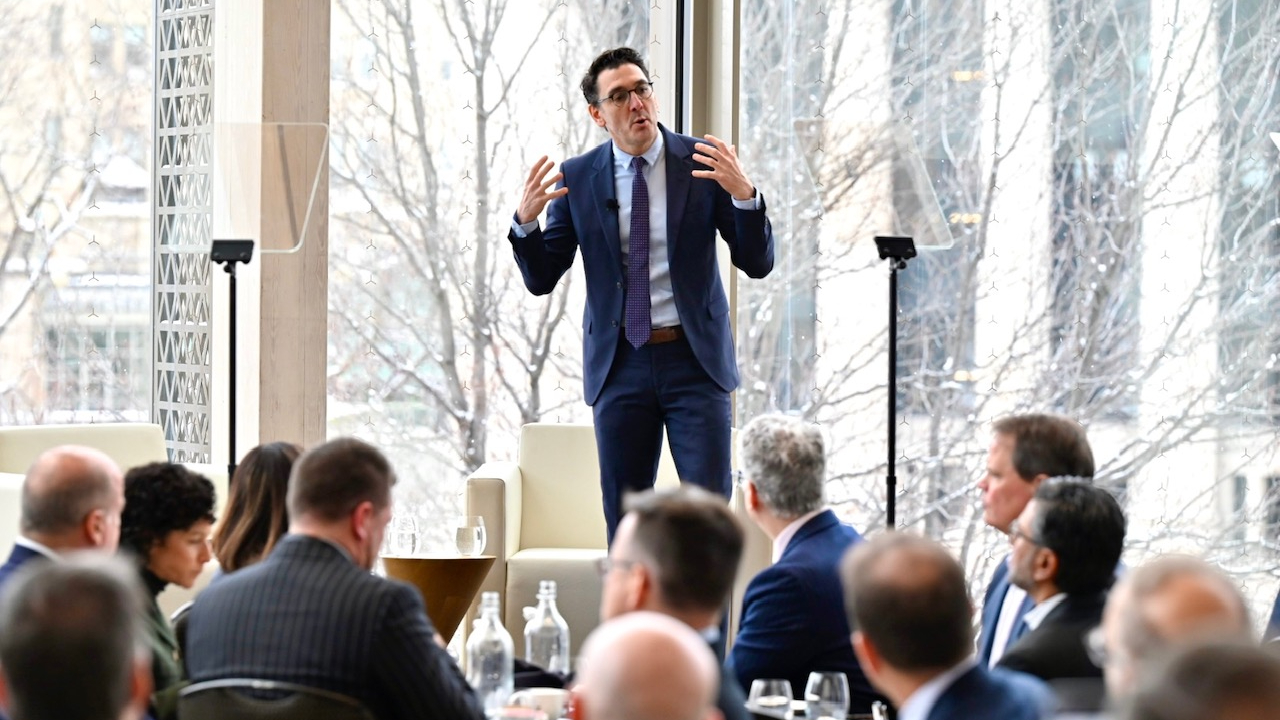
On Monday, Martin Imbleau, president and CEO of Alto, the Crown corporation responsible for the project, spoke to an Ottawa business audience, explaining the rationale behind making Ottawa-Montreal the first segment of the project that will ultimately operate from Toronto to Quebec City.
“(Ottawa, Laval and Montreal) sit at the crossroads of Quebec and Ontario and is a natural place to start. The Ottawa-Montreal segment gives us a more manageable distance to deliver in a controlled, disciplined way … it's 200 kilometres. Still, it enables us to leverage skilled labour on both sides of the provinces,” Imbleau told a crowd gathered at the National Arts Centre for an Ottawa Board of Trade event.
Calling the project a “generational investment in Canada’s economic future,” Imbleau said it is expected to deliver a one-time, $25-billion impact on the country’s GDP.
While the infrastructure, including the track and stations, will remain publicly owned, Alto will work with the private sector on the project. Speaking to OBJ before the event, Imbleau urged businesses in the National Capital Region to get involved.
“Imagine the talent and opportunities that Ottawa will be connected to. So instead of having three different localities, it becomes one big economic region. But before that, we need to build it. The opportunities (for) the development and construction (in) the Ottawa region is just fantastic. I need everyone to start preparing today, because construction will start in four years,” he said. “I need the businesses and construction community of Ottawa to get prepared for it.”
In his remarks, Imbleau said the project will offer many opportunities for Ottawa businesses.
“We're already engaging producers to understand their capacity and readiness to provide us with domestic supply chains. Construction will also call for an army of expertise and workforce; 50,000 people will be required, enough to fill the Canadian (Tire) Centre three times over. We're talking about Ottawa-based welders, surveyors, electricians (and) signal communication technicians to keep the train running safely at full speed at 300 kilometres per hour. Construction crews to build bridges, tunnels and electrified tracks, all with millimetre precision.”
In the short-term, he said, Alto will look for local surveyors, people with environmental expertise and engineers to take part in the development process. Imbleau said he hopes the local construction industry will ready its workforce to respond to this demand.
He described the project as an “industrial accelerator (and) a weapon of mass construction,” and said it will also impact Ottawa businesses by improving productivity and allowing companies to broaden their talent pools.
“Businesses will spend less time moving people and more time producing,” he said.
While there is not yet a location identified for a station in Ottawa, Imbleau said it will be vital that it is connected to local transit lines. He praised Ottawa’s LRT system and said Alto will be learning from local examples to “replicate some of the good successes and avoid the mistakes.”
Over the next few weeks, Alto will conduct a consultation process online and in-person across many of the regions it will service. An in-person session is scheduled for Jan. 21-22 at Bayview Yards in Ottawa and for March 11 at Maison du citoyen in Gatineau.
Stephen Willis, federal sector leader in infrastructure projects at professional services firm Stantec and a former senior planning official at the National Capital Commission and the City of Ottawa, said the high-speed rail project “may be the most significant infrastructure project in Ottawa’s history, after the building of the Rideau Canal.”
“The Ottawa (and) Gatineau regions (make up) about a million-and-a-half people together right now and we're growing towards two million, but connectivity to the bigger economic centres in Montreal and Toronto are really important. Montreal (is at) seven-and-a-half million (people and) Toronto (is) heading quickly towards 10 million. We need that economic synergy … and the relationships,” Willis told OBJ at the event, adding that the project will also better connect families.
Kevin McHale, executive director of Downtown BIA, told OBJ that the project should benefit Ottawa’s tourism industry.
“So much of our tourism is regional-based with visitors coming from Toronto and Montreal. So to have a dedicated line (and more) pedestrian traffic back and forth, I think it will be spectacular.”
Erin Benjamin, president and CEO of the Canadian Live Music Association, said a project of this size will improve Ottawa’s access to musical acts.
“I think that high-speed rail connectivity to Ottawa will make it even easier for music fans to come to this city and enjoy concerts and festivals like never before. I mean, it's absolutely game-changing in terms of identifying Ottawa as a more and more viable market (as a) music city,” she told OBJ.
When complete, the high-speed rail project will service stations in Toronto, Peterborough, Ottawa, Laval, Montreal, Trois-Rivières and Quebec City, cutting travel times by half.