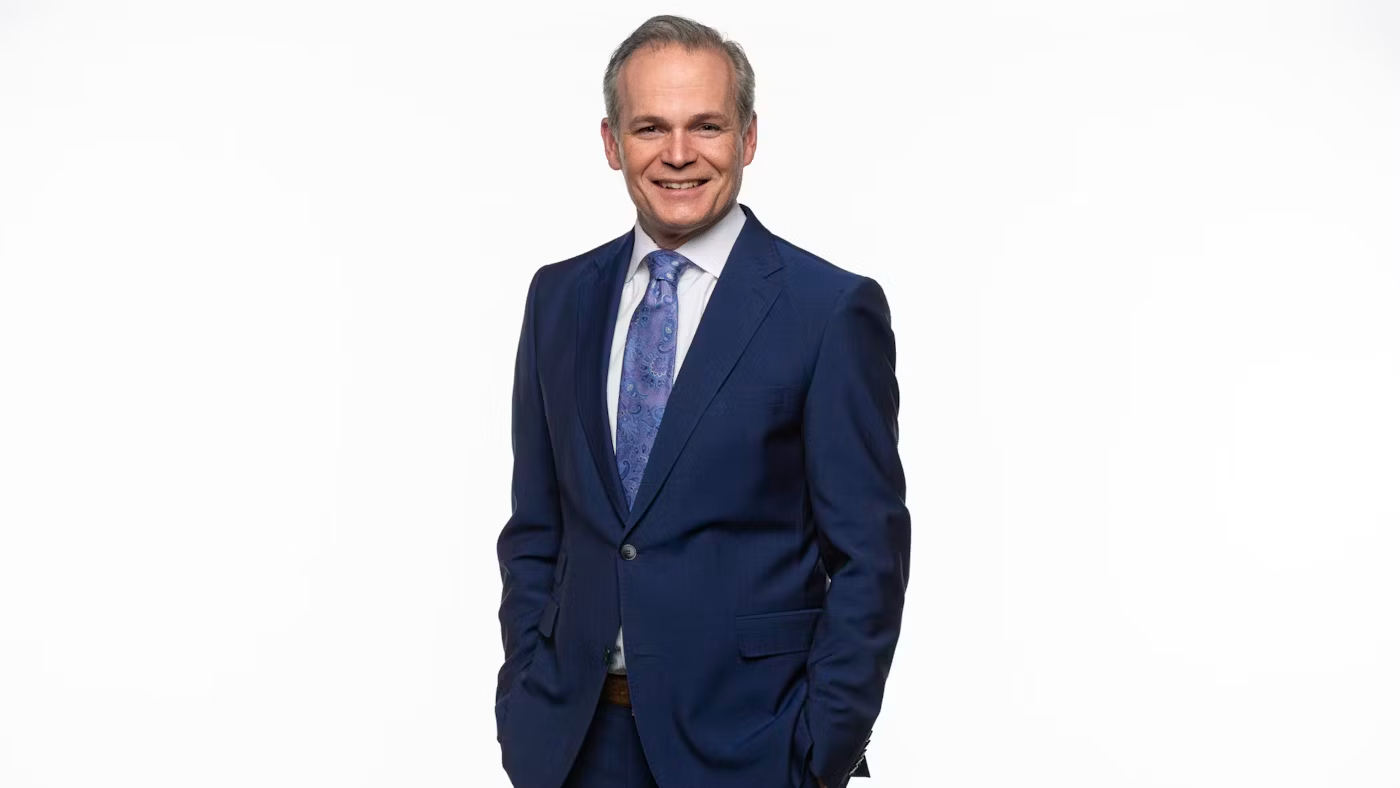
Graham Richardson knows how to spot a good story, and in an era of information overload, he’s putting those skills to work to help businesses grab the public’s attention.
Get Instant Access to This Article
Become an Ottawa Business Journal Insider and get immediate access to all of our Insider-only content and much more.
Graham Richardson knows how to spot a good story, and in an era of information overload, he’s putting those skills to work to help businesses grab the public’s attention.
After more than 30 years in journalism, the former CTV news anchor left the industry in July 2024 to take on a new role as managing director of media and communications at Edelman Global Advisory, based out of its Ottawa office.
“There's been a similarity here to a newsroom and to the ebb and flow, especially given the political cycle we've all been living through for the last 12 months,” Richardson told OBJ on Friday. “It's been a really unusual and exciting time and a lot of clients are wondering what's going to happen next. We're trying to help them through that.”
In his new role, his main responsibility is working with private-sector and non-profit organizations to tease out the narratives that will make the public care. With so much noise and a never-ending news cycle, he said that’s no easy feat these days.
OBJ caught up with Richardson to talk about transitioning from journalism to public relations, how businesses can craft a compelling narrative, and how the unpredictability of the administration in the United States has changed the playbook.
This transcript has been edited for length and clarity.
You’ve been in your role for about a year-and-a-half. What do your days look like?
I have a hand in many files that deal with public-facing people: large corporations in the energy sector, smaller ones in some non-profits, and others in the defence sector. So anything that involves engaging publicly. We also have a large government relations business here. With my political background as a reporter in the legislature, I help out on that side as well. The long and the short of it, without getting into the details, is that I help our people deal with anything public-facing that might be difficult or any client who might be having difficulty getting attention on a very specific issue.
What appealed to you about making the jump from CTV to Edelman?
I wouldn't say it’s been seamless, but it's been a natural progression for me.
I think what appealed to me, and it’s come true, is that every single thing I worked on before was for public consumption. This is different. This is advising people on how to get that public consumption, how to get that public attention and, sometimes, how to minimize it. It’s also strategizing when clients choose to be public. It's a different space, and it's challenging.
What I tell friends and colleagues is that I like to go deeper on specific subjects and think a bit more about them, without the daily grind of television news. I loved that part of my job; I loved the adrenaline of television news. But it is nice to step back and take a bit of perspective on, okay, what does this really mean? What is the impact on this client? And how do we engage publicly? Or do we at all?
What knowledge and experience from your time as a journalist have you put to use in this role?
I think CTV’s culture is militantly driven by the public. In my current work, we deal with a lot of very complex, interesting, challenging subject matter with clients, and I find myself continuously going back to that simple question that was drummed into me throughout 30 years of journalism: how does this impact real people in the country? I think, even though I might repeat it a bit too much, clients appreciate that perspective. What is going to resonate with the public? That was my job — to do the stories that impact people the most. And now I have a perspective on what will resonate, and what will not.
What have you noticed about what resonates versus what doesn’t?
I talk to clients a lot about what it takes to cut through and get attention in a world that is absolutely flooded with information. And then, when the president of the United States talks about Greenland again, all of your efforts get blown out of the water.
There is a hunger and there is still a deep, deep desire to engage with the public. All successful organizations — from non-profits to corporations, big and small — need to tell their own story. They need to be able to do that and do it effectively.
Consumption has never been higher. There has never been more information at the fingertips and eyeballs of Canadians and everybody around the world. So it’s really important that clients and companies have a succinct, understandable, relatable story to tell. That’s one of my main roles here: to help them achieve that.
You picked a very interesting time to make this transition. What are you hearing from clients in this particular climate?
Well, I think the stunning turnaround of the Liberal Party and what that has meant has been huge. A year-and-a-half ago, when I joined, everyone was anticipating a Poilievre government, including the Liberal Party of Canada. That has been a shock, a change that has been a fundamental shift in the country and a fundamental shift for our clients. There have been a lot of discussions around dinner tables about what’s going to happen and a lot of our clients are having those discussions as well. We have some insight, but it’s very difficult when the president of the United States is Donald Trump and you just don’t know what’s going to come out of Washington and how it’s going to impact you.
So what’s the playbook? For a public-facing client, how do you help them navigate the unpredictability?
You still try to punch through, regardless of your story, regardless of what your narrative is. It’s just more challenging. Look at (the World Economic Forum in) Davos. The administration and the president are sucking up so much attention because the president is saying extraordinary things that have never been done before. I understand from a news perspective that that must be covered; there’s no choice, because he’s the president of the United States and he’s doing what he says.
All of that drives a significant amount of the news agenda and a significant amount of conversation about trying to get public attention. But many clients are trying to fit into that space of change in Canada. Whether that’s inclusion in the (federal government’s) Major Projects Office or attention from all levels because they fit into a category that will bolster the sovereignty of Canada and our economic future — many people, many companies want to be in that space and that’s driving a lot of what we do.
One sector where we’re seeing that strategy is defence. How are your clients positioning themselves to get that kind of attention?
There are two tracks: there’s government attention and attention from policy-makers and decision-makers, and then there’s public attention. I think in a lot of these cases, our clients need both. The public needs to be aware of the importance of what’s happening. I think we’re seeing that more. All of a sudden, we’re all very aware that a deep-water port in the Arctic is incredibly important for the country. A year ago, I would challenge you to find anyone who knew where it was, let alone why it was important. That’s all changed.
There are many, many sectors where that’s all changed. There are people in the resource sector who, a year-and-a-half ago, would never think of going out into the public with their narrative. And now many of them want to, because they see themselves in Mark Carney’s vision for a future of Canada that is different from the previous Liberal regime under Trudeau. It has shifted everything.
And of course, not to talk too much about the Americans, but so much of it is driven by changes in Washington. There are changed relationships. Whether it’s the corporate sector or non-profit sector, everybody is coming to terms with that major shift and how it’s going to impact our economic life.
What are some issues or trends you’ll be keeping an eye on in 2026?
I think the shift in Canada to domestic priorities and everything that touches. Is it true that we can give ourselves more than any foreign government can take away? I think the Carney government, and Mr. Carney in particular, has been quite successful so far and has been given quite a bit of grace by the public. I'm just interested in how that's going to play out. Because there are lofty words and lofty goals. There's going to come a time, and it's approaching quickly, where you know we need to see some results, and they know that, and that team knows that. I'm very interested in seeing how that plays.
What are some new areas you want to explore going forward?
I really enjoy talking to clients about the attention economy. We call it training, but I enjoy taking some time to walk them through how people are consuming information and news these days. We often assume everyone knows this or that when they don’t. That’s been one of the most rewarding aspects of it.
The other really enjoyable thing has been the various branches of Edelman. It’s a very big company that does a lot of things, both in this office and elsewhere. It’s been great to engage and work with those people.
I also really enjoy pitching and trying to land work (with clients). I spent 15 years on the anchor desk and you do that every night. You’re pitching to people why they should be watching you right now. In the attention economy, there is a tsunami of information. I’ve enjoyed engaging with people who are curious about what we do and learning about the business, what we provide, and hopefully helping them find some success winning business.