According to the president and CEO of Ottawa Tourism, 2025 was a banner year in the city. Here are five things with the potential to shape the tourism sector in 2026 and beyond.
Get Instant Access to This Article
Become an Ottawa Business Journal Insider and get immediate access to all of our Insider-only content and much more.
According to the president and CEO of Ottawa Tourism, 2025 was a banner year in the city.
“(Last year) will go down as a record year by pretty much every metric that we have,” Michael Crockatt told OBJ this week. “Moving forward, it’s about how do we build on what we’ve been able to achieve as a collective destination, not just an organization. The industry is different now and everything is changing around us. That’s both exciting and it makes us all a little nervous.”
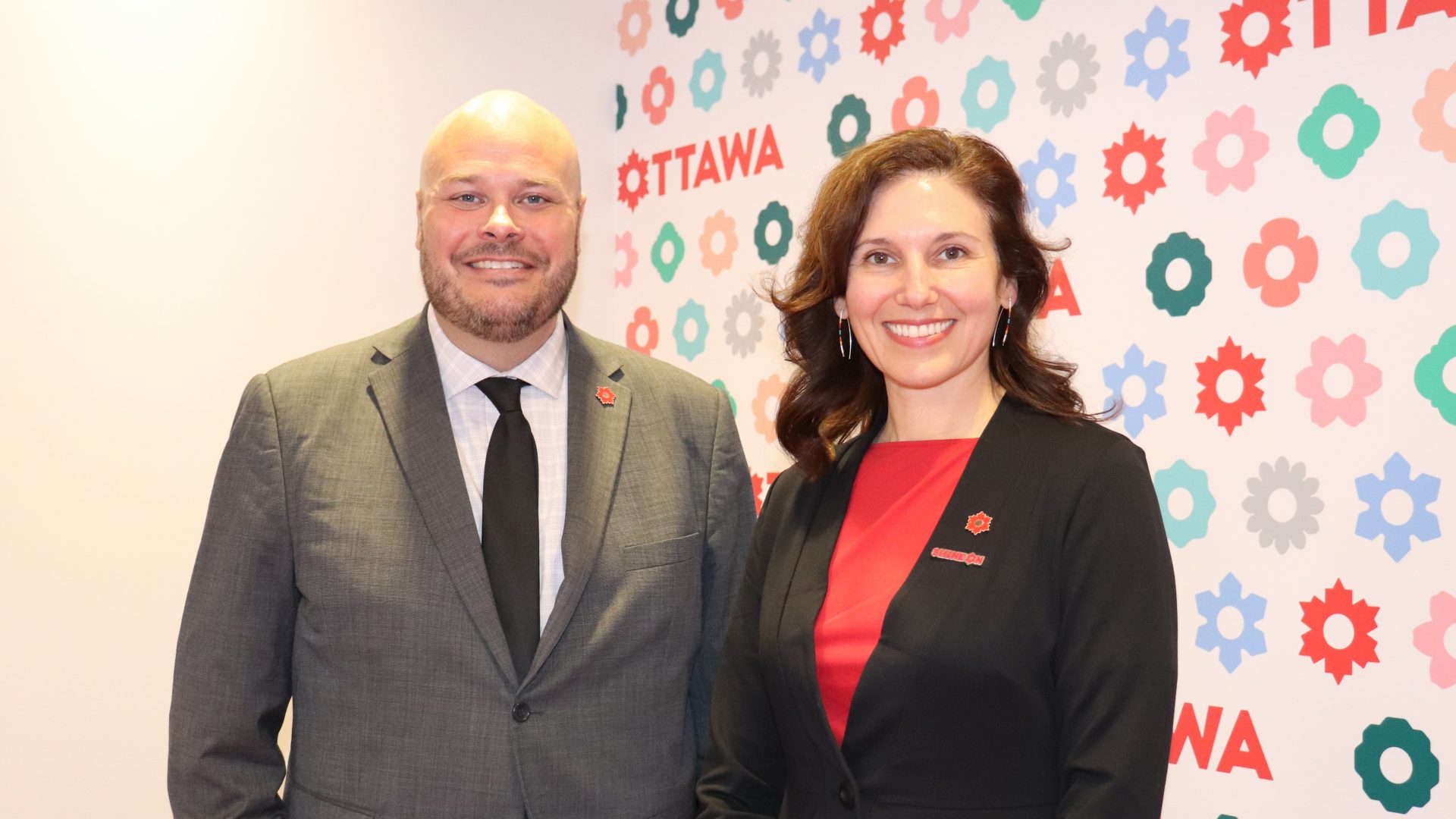
To find out more, OBJ recently sat down with Crockatt and Catherine Callary, vice-president of destination development, to discuss tourism in the city. Based on that conversation, here are five things with the potential to shape the tourism sector in 2026 and beyond.
1. Ottawa’s 200th anniversary celebrations
Programming around Ottawa’s bicentennial is likely to drive tourist traffic throughout 2026, according to Callary.
“Having programming (like that) is going to give people more reason to stay in town longer, or maybe come a little earlier than they were going to for a business trip. Those types of things do provide a big lift in terms of tourism.”
A calendar of events was announced earlier this week, with Ottawa Tourism providing up to $20,000 to select projects, including a tulip festival at Saunders Farm; a French music series called Deux Voix, Une Capitale; an immersive outdoor gallery at Bytown Museum; a touring Algonquin installation by Indigenous Experiences; and a birthday drag show by Capital Pride.
The City of Ottawa is also providing $750,000 in funding to support events throughout the year. The programs have earmarked funds for artists and creators, cultural and community non-profit events, and an activation grant to allow BIAs to purchase promotional materials.
According to Callary, organizing the celebrations has given tourism and business stakeholders a chance to collaborate.
“All of these community groups working together on this one event, it’s really amazing to see,” she said. “There are so many different partners that are now driven by that one singular theme and an opportunity together. We’re all investing our time, our energies, our funds into this. It leaves that legacy of how we work together as a community.”
2. Ottawa as a defence innovation hub
As the federal government invests in the defence and security sector, local businesses and public-sector stakeholders are advocating for Ottawa to be at the centre of the country’s plans.
If Ottawa became a defence innovation hub, Crockatt said it could lead to a boost in business travel, which has been slow to recover from pandemic lows.
“There’s a lot of great upside from that (for tourism),” he said. “There would be people coming to meet defence companies or see Canada’s national defence infrastructure.”
In addition to individual business travellers, more activity around the defence sector could be part of a larger, ongoing strategy to attract major events, conferences and conventions.
Ottawa Tourism is working with Invest Ottawa, which is spearheading the city’s Defence Innovation Hub Strategy, and Rogers Centre Ottawa on the Think Ottawa initiative, which supports local leaders bidding to bring events to the city.
While Crockatt said Ottawa Tourism will not take the lead on defence-related issues, he said the sector has the potential to boost tourism and bring “massive economic impacts” to the community.
“(The partnership) gives us an opportunity to take advantage of the expertise that exists within Ottawa to help bring business events, conventions and meetings here,” he said. “If we have an even bigger and stronger defence sector, we should be able to work together to attract even more defence-related business events here.”
3. High-speed rail between Toronto and Quebec City
Public consultation is underway on a project to build a high-speed rail line between Toronto and Quebec City, including a stop in Ottawa. It’s an ambitious project, overseen by Crown corporation Alto, but one that could be a boon for both leisure and business travel.
“We feel fortunate, but I would also say honoured, that Ottawa is going to be part of the first phase of this,” said Crockatt, referring to the first segment of the project planned to be built between Ottawa and Montreal. “I think anything that adds or enhances access to our city is a good thing. Having high-speed rail here would be exciting, though we’ve got some time before we have to figure out how to market it.”
Ottawa has become increasingly accessible to travellers over recent years, especially by air, with Air Canada, Porter Airlines and WestJet expanding their offerings at YOW. High-speed rail would further increase the options and wouldn’t draw only leisure visitors.
“You can’t discount Ottawa’s geographic location,” said Callary. “It’s part of the strength of an investor’s decision to invest in Ottawa. Our location, geographically and very strategically, puts us in the middle of some of Canada’s most populous cities. We’ve also got a 20-million population that surrounds us in fairly close quarters. That puts strength on any investments being made here.”
4. Hosting la Francophonie
At a business event in Ottawa last December, Prime Minister Mark Carney announced that Canada has put in a bid to host the Sommet de la Francophonie in 2028, with the aim to host it in the National Capital Region. La Francophonie represents one-fifth of the global economy.
While Ottawa Tourism is not involved in the bidding process, Crockatt said it’s another event that has the potential to drive traffic and attract new investment and partnership opportunities.
“We’ll support, in any way we can, this region being the host for that type of event,” said Crockatt. “We’re strongly supportive of it. It’s still early days in terms of what it would look like, but it’s an exciting opportunity. It could potentially be one of those big anchor events for us.”
5. Wheelchair basketball championship to drive accessibility
One of the biggest sporting events coming to the city in 2026 is the World Wheelchair Basketball Championships, which hits local courts in September.
“We have the opportunity to put ourselves on the world stage,” said Crockatt. “It’s a big event, it’s a global event, but we also have to do a lot of work with everybody in this community.”
Through its Capacity Building Program, Ottawa Tourism has been seeking ways to make the city and its venues more accessible for visitors. The upcoming wheelchair basketball championship is another opportunity for the city to double down on accessibility. From museums and restaurants to sporting facilities and hotels, Callary said the upgrades made for this specific event will have long-lasting impacts on tourism.
“You can think of it as a catalyzing event,” said Callary. “It’s going to spur more leisure travel and more opportunities for Ottawa to bid on para-sport events in the future. (It could) really start to cement that as something Ottawa can really shine in and deliver on in spades, where maybe we wouldn’t have had that capacity in the past.”