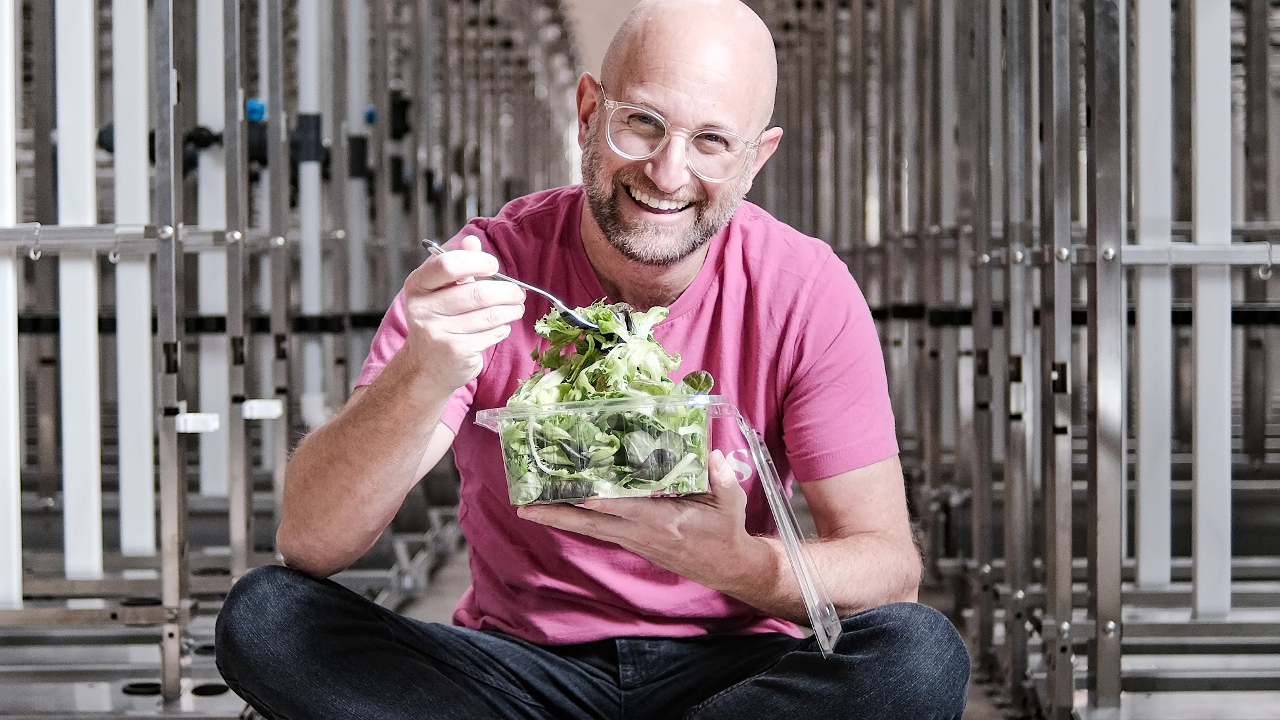
Ottawa-based Fieldless Farms was acquired by Toronto’s Elevate Farms in late January in what the firms’ leaders describe as a union of two organizations that complement each other.
Canada’s indoor farming industry has yet to harvest a bountiful crop of thriving businesses, despite attracting major investors over the past decade.
But the co-founders of two Ontario-based ag-tech startups believe that’s about to change thanks to a recent deal that brought them together in a bid to capitalize on rising demand for homegrown produce.
Ottawa-based Fieldless Farms was acquired by Toronto’s Elevate Farms in late January in what the firms’ leaders describe as a union of two organizations that complement each other.
“Our weaknesses are their strengths and our strengths are their weaknesses,” says Elevate co-founder and CEO Amin Jadavji. “It was a perfect marriage in that sense.”
The firms would not disclose financial details of the all-share deal, but Jadavji says the combined entity will have nearly 50 employees and is aiming to become cash-flow positive by the end of this year.
The veteran businessman turned Metro Paper into one of the country’s biggest producers of tissue paper before it was acquired by industry giant Kruger. In 2018, he brought his manufacturing expertise to the vertical farming sector, launching Elevate with Norwegian entrepreneur Per Aage Lysaa, who brought decades of experience in photobiology – the study of how light affects living organisms.
Unlike traditional farms, vertical farms grow plants upward rather than outward on wide fields. Lysaa, whose work included studying how organizations such as NASA could grow food in outer space, tapped into his lab work at the University of Guelph’s Controlled Environment Systems Research facility to pioneer technology that produces plants stacked in 13 layers – about 7.5 metres high – that grow their roots in water rather than soil.
The LED lights that fuel the plants’ growth are regulated by Elevate’s cutting-edge proprietary software, which uses artificial intelligence to create algorithms that know exactly how to adjust the amount of light to change plants’ colours and nutrient content. The software also controls other environmental factors such as carbon dioxide levels and powers an array of sensors, conveyors and automated systems, including robotic arms that ensure the plants are never touched by human hands.
All of those processes require energy – a lot of it. The vertical farming industry has so far struggled to figure out how to rein in those massive greenhouse power bills enough to make the business economically viable.
But Jadavji believes Elevate has finally cracked that code.
“We did the science to optimize every one of those variables to get the maximum output using the least amount of input,” he says.
Jadavji says the industry has spawned a slew of startups that felt pressure to generate “hockey-stick” revenue growth after landing big money from venture capital investors. As a result, many firms spent millions on building indoor farms that were large and inefficient in an effort to get as much produce out the door as quickly as possible.
“Very few people took the time to actually say, ‘OK, we’ve got a little bit of money. Now let’s start to do the science and figure out how to do this.’ We sort of took the time to do the homework first.”
Elevate, which is headquartered in Toronto, currently operates a 14,000-square-foot indoor growing facility in New Jersey, where it produces about 300,000 kilograms of lettuce and herbs a year.
By contrast, Fieldless grows only about one-sixth of that amount of produce at its greenhouse in Cornwall – which, at 60,000 square feet, is four times larger than Elevate’s facility but stacks its plants just five layers deep and relies on less efficient hydroponic techniques it licensed from other companies.
“We are very good growers and operators, but we don’t build the technology,” Jon Lomow, who founded Fieldless in 2019, explains. “We didn't have the science or the technical backgrounds to build the tech.”
Growing distribution pipeline
What the Ottawa-based company has, however, is an expanding network of big-name retailers that are buying into its mission.
While Elevate currently sells its lettuce and herbs in fewer than 20 stores owned by New Jersey-based grocery co-operative ShopRite, Fieldless’s lettuce, kale, spinach, basil and other products can now be found in more than 70 stores across Ontario, including Farm Boy and select Real Canadian Superstore and No Frills locations.
The newly combined firm is set to roll out its greens at a grocery chain in Atlantic Canada next week and soon expects to be in more than 40 stores on the East Coast. Amin says the company’s long-term goal is to see its products “in every major retailer across Canada.”
Describing vertical farming as an “exercise in optimization,” Lomow says the new organization will benefit from the combination of Fieldless’s sales, marketing and packaging prowess and Elevate’s technological know-how.
“The nice thing about the marriage is now those efforts at optimization can reinforce each other and compound further that way.”
Amin agrees, noting the tariff war with the U.S. has once again shone a spotlight on food security in Canada, which currently imports 90 per cent of its lettuce supply from farms in California and Arizona. The merger comes, he says, “at a time when it feels like people want more” locally grown food.
“It’s not that we're going to be the only ones, but I think this is a tremendous opportunity to really showcase (the two companies),” he adds.
“If you look at the 10 biggest vertical farming companies from five years ago, I think only one of them is still around. The landscape has changed, and the only way to really (stay) around is to have both core strengths, both core competencies. You have to have consumers that believe in your product, and you have to have technology that consumers can believe in.”
Still, even if the combined firm does believe it’s a big fish, it’s still swimming in a very small pond.
According to McGill University professor Mark Lefsrud, an expert in food security and urban agriculture, vertical farming currently accounts for less than one per cent of all agricultural output in Canada.
But Lefsrud also senses there’s a growing appetite for products such as Fieldless’s lettuce and other greens, which include varieties with names like Northern Crunch and Ontario Sweets.
The Canadian food supply chain is “getting stretched,” he explains, as climate change makes lettuce-growing regions in the southern U.S. more susceptible to drought and other factors that can wreak havoc with production.
Lefsrud says health-conscious consumers might find the Ottawa firm’s products – which are pesticide-free and come in eco-friendly packaging made mostly from recyclable cardboard – an attractive alternative to imported veggies.
“Having somebody who can fill those holes and make for a more consistent product, for a grocery store or a food supply company, it would be a lot more beneficial,” Lefsrud says. “Having some level of diversity I see as quite a positive step.”
The multimillion-dollar question, however, is whether the likes of Fieldless and Elevate can lower production costs enough to compete with cheaper greens grown on traditional outdoor farms.
“Figuring out how to meet the requirements of consumers while maintaining a price point that they can handle and be economically viable seems to be one of the challenges right now,” Lefsrud says.
“I was told by (U.S. vertical farm operators) Plenty and AeroFarms and other ones … that they’d cracked the code and they went bankrupt. If (Fieldless and Elevate) are here in three or five years, then I’ll say, ‘Yes, they have figured it out.’”
But while energy and labour costs remain huge hurdles for the industry, Lefsrud says he is “still optimistic” that vertical farming could eventually grab as much as 20 per cent of the Canadian leafy produce market, which generates annual sales of more than $1 billion.
“A lot of people have been hyper-depressed about indoor agriculture, just because of so many companies that have gone bankrupt,” he says. “(The acquisition of Fieldless) is showing that there’s still potential. This actually gives a lot of hope to the industry.”
Amin, whose firm is currently planning to open an indoor growing facility in Switzerland in order to gain a foothold in Europe, is bullish on vertical farming’s long-term prospects on this side of the Atlantic.
He thinks domestic farms – both traditional and indoor varieties – could eventually supply 50 per cent of the country’s lettuce and other leafy greens. And he thinks Fieldless and Elevate will be a big part of that growth story.
“I was doing nine figures in paper product sales, and I had to compete against China, with unionized operations in Quebec, and health care and pension plans and all kinds of other things, and we did it by streamlining operations and using the right technology,” Amin says. “In that sense, we can do this, and now we want to do it.”