
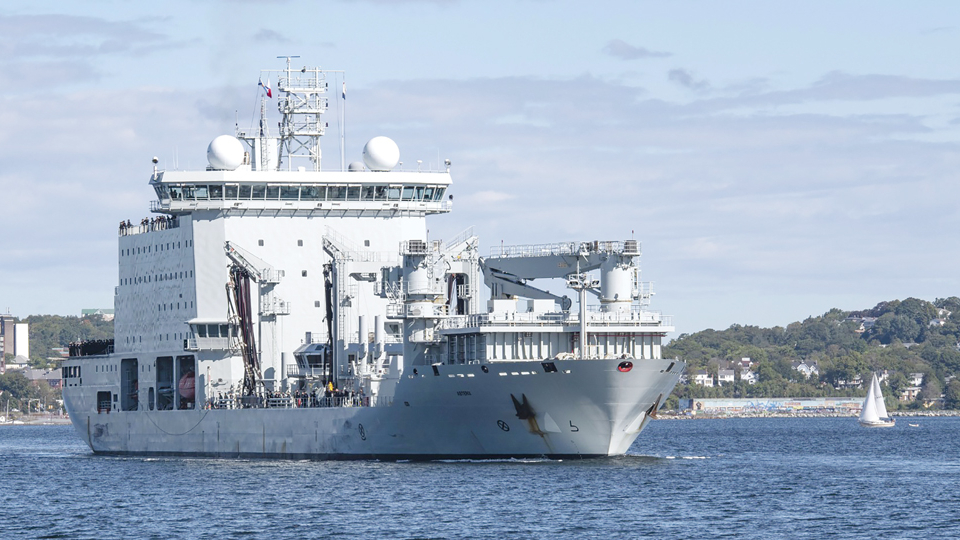

Federal Fleet has quietly become one of the most compelling examples of Canadian innovation in defence support, demonstrating how private-sector investment can deliver critical capability with speed, efficiency, and reliability.
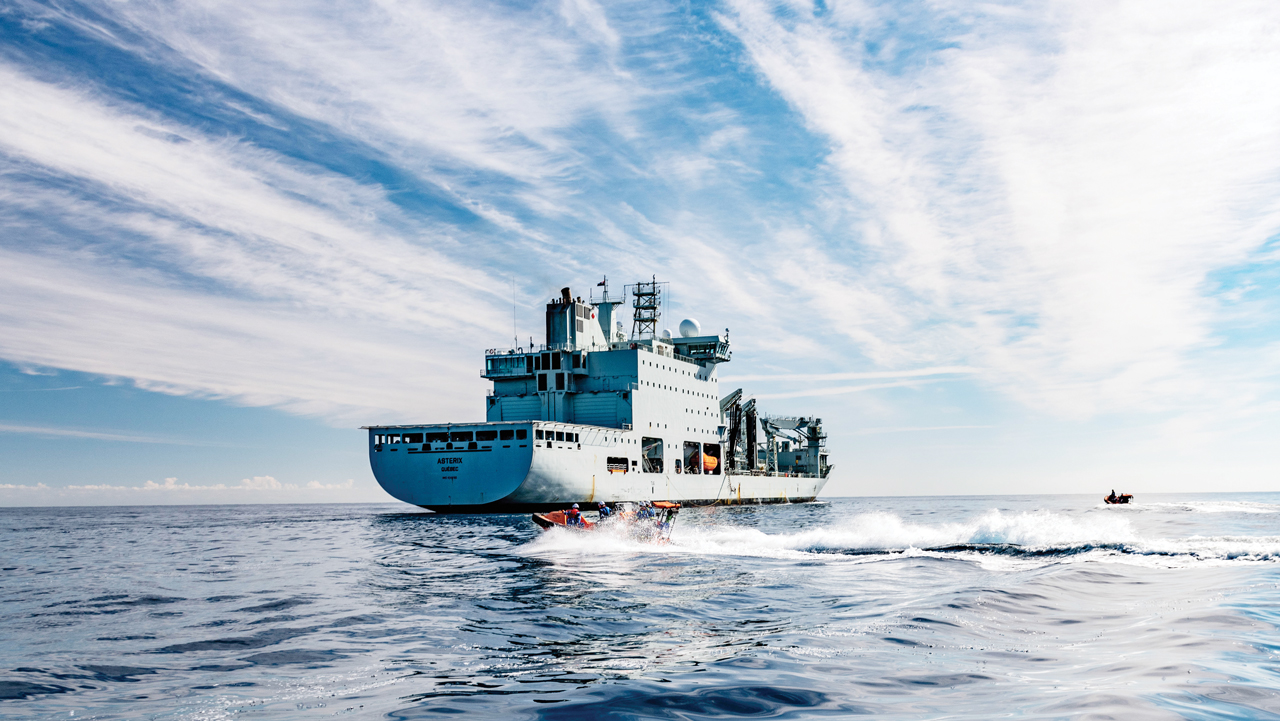
It also serves as an example of how Canada can build, partner and buy a defence asset. The CSS Asterix combat support ship has reshaped how Canada sustains naval operations at home and abroad. It is a modern example of the critical convoy support provided by the Canadian Merchant Navy during the Second World War, whereby merchant mariners worked alongside their Royal Canadian Navy counterparts to provide critical maritime defence capability.
This vessel serves as a multi-role support platform, a floating gas station and bulk goods outlet combined, providing fuel, supplies, munitions, medical facilities, and even a training platform for future mariners:
- With the Asterix, Canadian fleets can operate farther and longer.
- Its capabilities are interoperable across Canadian and NATO fleets, a vital function in an era marked by growing geopolitical uncertainty.
The primary mission at Federal Fleet is clear: Ensure uninterrupted operational availability of the Asterix to support the Royal Canadian Navy (RCN).
Ensuring capability at a quarter of the cost of traditional procurement
Preserving this capability is widely viewed as indispensable to ensure Canada can lead or participate in naval missions around the world – and achieving it was made possible through a unique funding and procurement process.
This model is distinct for its operational performance and financial efficiency. The Asterix, a container ship built in 2010, was converted by Davie Shipbuilding in less than two years and funded entirely through private equity. It was brought into service in 2018 after being fully certified, trialled by the RCN, and mission-ready. Only then were public funds committed, a significant deviation from traditional procurement approaches.
“Not only is the model more cost effective, additional benefits are realized by our implementation of proactive commercial marine maintenance management practices that will extend the Asterix’s operational life by another 25 to 30 years of service,” says John Schmidt, president of Federal Fleet.
Independent lifecycle cost comparisons suggest this approach meets RCN requirements at less than a quarter of the cost of government-owned and operated alternatives over a ten-year period – representing more than $2 billion in savings. The Asterix has consistently met its mission objectives under budget.
Beyond the ship itself, Federal Fleet’s vision intersects with a broader challenge facing Canada’s maritime sector: workforce sustainability. With nearly half of the nation’s current mariners projected to retire within the next decade, the company advocates using operational platforms as training environments, integrating cadet development with real-world missions.
This aligns economic and national security priorities, particularly in Ottawa, where defence policy, procurement, and industry partnerships are encouraged.
A notable shift in defence capability delivery
Strategically, Federal Fleet and the Asterix represent a shift in defence capability delivery. By promoting firm-price and turnkey contracts, private industry can complement government objectives, reduce financial risk, and accelerate timelines.
Interest from NATO and European partners suggests the model’s relevance extends well beyond Canada.
In a domain often defined by complexity and delay, Federal Fleet offers a vital alternative: A Canadian-built solution that is operational, cost-effective, and globally relevant. The success of the CSS Asterix affirms Canada has strong innovation and combat support ship capability at a time when every naval asset is critical to our defence needs.
This article first appeared in the Executive Report on Defence and Security in the April Magazine produced by the Ottawa Business Journal. That publication is available in it’s digital format below: