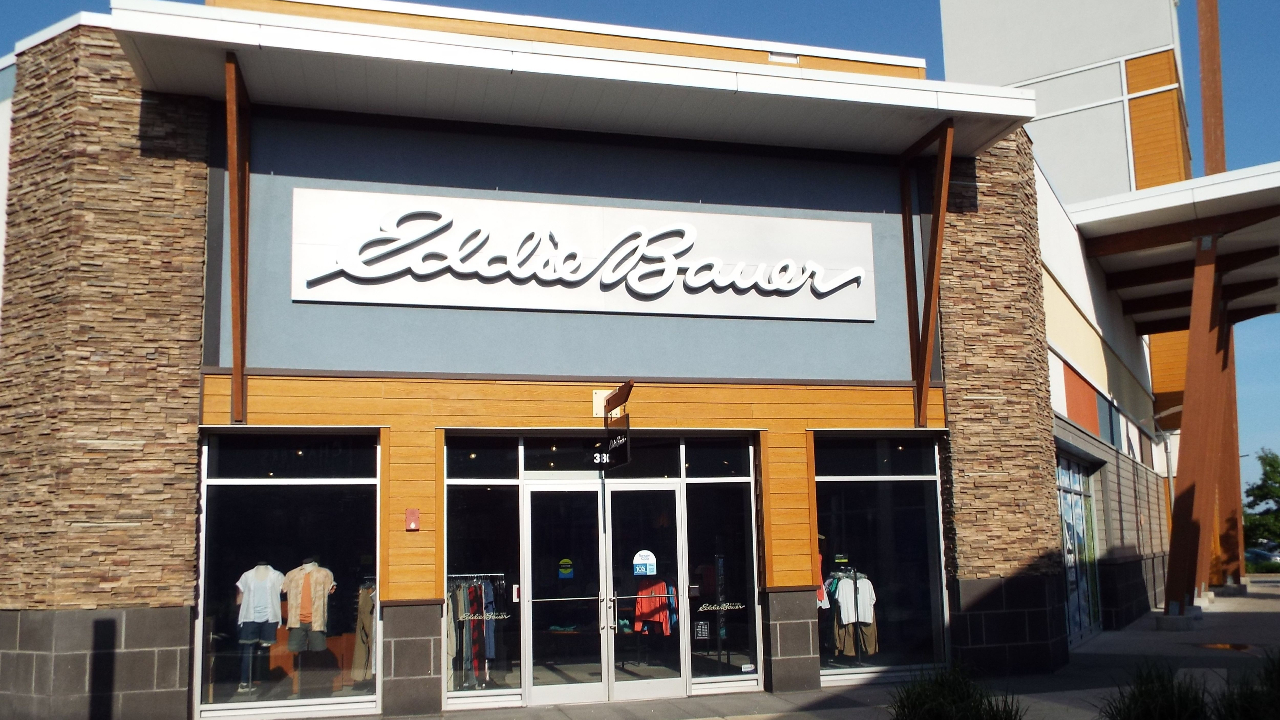
Popular outdoor apparel brand Eddie Bauer is reportedly preparing to file for bankruptcy, which could mean the closure of its North American stores, including those in Ottawa. Women’s Wear Daily reported last week that Catalyst Brands, which owns the licensing rights to distribute Eddie Bauer products in retail stores, intends to file Chapter 11 bankruptcy […]
Get Instant Access to This Article
Become an Ottawa Business Journal Insider and get immediate access to all of our Insider-only content and much more.
Popular outdoor apparel brand Eddie Bauer is reportedly preparing to file for bankruptcy, which could mean the closure of its North American stores, including those in Ottawa.
Women’s Wear Daily reported last week that Catalyst Brands, which owns the licensing rights to distribute Eddie Bauer products in retail stores, intends to file Chapter 11 bankruptcy and close about 200 Eddie Bauer locations in the U.S. and Canada.
While the filing would affect Eddie Bauer’s brick-and-mortar stores, the brand’s manufacturing, e-commerce and wholesale operations in the U.S. and Canada would remain unaffected, as they operate under a different license agreement held by Outdoor 5, according to Retail Insider.
In Ottawa, the Eddie Bauer location at the Rideau Centre has already closed, leaving 5,427 square feet vacant. It is not known when the other three local stores — Bayshore Shopping Centre (6,013 square feet), Place d’Orleans Shopping Centre (3,976 square feet) and Tanger Outlets (5,505 square feet) — would shutter.
Craig Patterson, publisher at Retail Insider, told OBJ that Eddie Bauer was a good fit for the Ottawa market.
“Ottawa had a really good (market) penetration. Four stores is pretty high density for a market of that size, when you compare it to other markets,” he said. “There’s certainly going to be an impact on retail. The Ottawa market being a bit more conservative in terms of its dress, I actually think that Eddie Bauer resonated with a good percentage of the population.”
Landlords at the Ottawa malls and outlets affected shouldn’t have a hard time filling those spaces, he added.
“These landlords may be able to get new tenants into these spaces fairly quickly if (there’s) a waiting list. Rideau Centre is considered to be certainly a first-in-class (with) very high sales per square foot overall. Bayshore is quite similar. I know it’s a popular mall, so I honestly don’t know how difficult it would be to lease that space in the mall. Perhaps if a Dynamite or Aritzia wants a bigger location, they can make it work with that real estate,” Patterson said.
The recent bankruptcy filing is not the brand’s first experience with Chapter 11, having been subject to bankruptcy in 2003 with then-parent company, Spiegel Inc., and again in 2009 as Eddie Bauer Holdings.
When asked if Eddie Bauer’s retail stores might return, Patterson said it’s possible “under some sort of new ownership or management.”
“Eddie Bauer as an online retailer is going to suffice a certain percentage of the market. It’s going to be pretty small, but maybe to a market that’s loyal … Could they come back? Absolutely. Has the brand had its day? I hope not. It’s a legacy brand and maybe someone could take it and do a better job.”
Seeing a brand such as Eddie Bauer pull out of in-person retail isn’t surprising, Patterson said, given recent retail trends.
“Retail across the country is struggling right now. Consumers have pulled back. They’re more cautious, so I don’t think we’re going to see quite the same spending.”
At the same time, even though malls have seen big tenants such as Hudson’s Bay leave, he said foot traffic and consumer spending haven’t taken as big of a hit as might be expected.
“We’re seeing reports of consumers struggling but we’ve also seen month-by-month retail sales and they haven’t gone down drastically or anything. People are still spending. Christmas was a pretty decent season.”
A new retail landscape may be emerging in Canada, he said, with successful brands being those on the lower and higher ends of the spectrum.
“There’s a lot of reasons why Canadians are struggling financially and it’s a reason why we may see less spending in the mid-price category retailers such as Eddie Bauer. Dollarama is doing great. They can open new stores and be very successful. Some luxury brands are also doing okay in Canada, not always, but there’s a population that can shop and support those stores and not really have to worry about things in the same way.”
Overall, does the exit of bigger-name retailers mean the end of malls in Canada? Not exactly, Patterson said.
“It isn’t always a dire situation when a particular retailer leaves one location,” he said. “Sometimes landlords and retailers take a longer-term view of things and say, ‘Things are not great right now, but we are predicting that, in five to 10 years, things will be much better. We’re going to open a store now. We’re going to expect that consumers are going to come back and shop sometime in the near future.’”