Significant changes to the city’s homebuilding approval process will go to council later this month as the mayor makes housing one of his priorities for 2026.
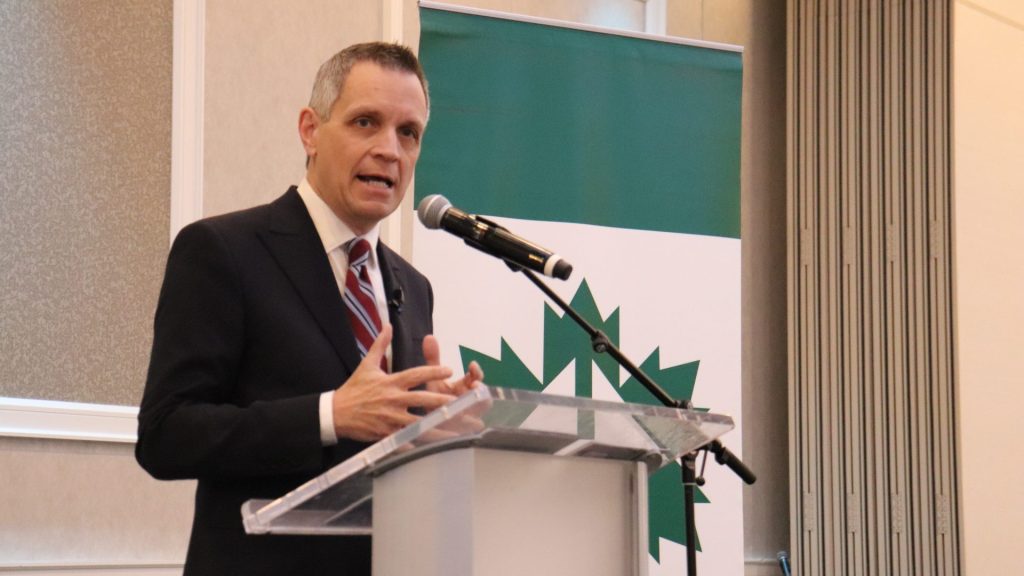
On Thursday, Ottawa Mayor Mark Sutcliffe continued his annual tradition of joining the Greater Ottawa Home Builders’ Association (GOHBA) for a breakfast event. This year, he provided an update on the city’s housing action plan, which was announced last year.
“I’m really pleased that we’ve established this tradition of having the mayor and setting the tone for the year moving forward,” GOHBA executive director Jason Burggraaf told OBJ. “We’re going to have a bit of a truncated year because of the municipal election. I think by this summer, things will get quiet at City Hall.”

Ottawa businesses critically important to ending youth homelessness across the city
Local businesses joining United Way East Ontario’s effort to prevent and end youth homelessness not only helps build a stronger, safer, and healthier community, but gives a boost to Ottawa’s
Ottawa businesses critically important to ending youth homelessness across the city
Local businesses joining United Way East Ontario’s effort to prevent and end youth homelessness not only helps build a stronger, safer, and healthier community, but gives a boost to Ottawa’s
Last January, against the backdrop of decreases in housing starts in the city, Sutcliffe announced a task force composed of local stakeholders with the goal of streamlining the housing approval process.
That group developed the housing action plan, outlining 53 measures that would allow local homebuilders to build more houses in less time.
“I’ve heard from you over and over again about the challenges of building homes in Ottawa. The bureaucracy, the long approval process, the red tape, the fees, the taxes, the long list of studies that had to be completed before a project could move forward,” said Sutcliffe Thursday. “I’m happy to say we’re making progress; we’re moving Ottawa forward.”
The plan includes measures to pause, defer or reduce fees throughout the application process, speed up approvals, cut community benefit charges for the next five years and allow deferred payment of development charges and other upfront costs without interest.
Sutcliffe called it “the most ambitious housing plan in our city’s history. It’s the biggest overhaul of our planning process ever.”
Since the announcement of the plan, Sutcliffe said nearly half of the recommendations have been implemented and the remaining measures will be the priority in 2026.
“One area we’re working on already is around the long list of studies and reports that are required during the approval process,” he said. “I don’t have to tell you about some of the items on that list. I’m sure they’re a source of frustration to many of you.”
Later this month, city council will vote on changes to some of the current reporting requirements, including shadow analysis and wind studies. If approved, Sutcliffe said 13 current requirements will be eliminated and the scope of another 13 will be narrowed.
Burggraaf highlighted another change expected to be implemented this year, which would create a standardized legal agreement for development proposals, rather than requiring developers and the city to create a bespoke agreement for each new project.
“Essentially, the idea is that it’s much more replicable,” he said. “The review, on both sides, will be quicker, so you can cut months off a development application process.”
Also heading to council is a new zoning bylaw to boost residential development in certain urban areas.
“This ambitious zoning bylaw will make it easier to build the kind of housing that we so desperately need throughout the city,” said Sutcliffe. “It will increase density and height provisions where there’s infrastructure to support it, particularly near transit.”
Homebuilders have other concerns, such as issues related to development charges and the GST, which Sutcliffe said have highlighted the challenges of collaboration between three levels of government. While the mayor said the city has strong ties with both the provincial and federal governments, he said those two levels of government don’t always communicate as well with each other.
“I’ll be candid. One of the dynamics that can be frustrating sometimes is you talk to one level of government and they say, oh, we’re waiting to hear from the other level of government about what they’re going to do, then we’ll do something,” said Sutcliffe. “And then you go to that level of government and they say, well, we’re waiting for the other one to do something.”
Despite the frustration, he said discussions between all three levels of government have been positive.
“I think there is a willingness on the part of both the federal and provincial governments to do something about development,” he said. “The question is what and, more importantly, when.”
For Burggraaf, the city’s growth management strategy will be top of mind for 2026.
“Right now, our official plan, all our zoning — everything revolves around the idea of Ottawa growing by 400,000 people,” he told OBJ. “But the new, updated growth projections are 680,000 people. We’re tacking on five years, but there’s a significant jump from what we’re expecting.”
With the rate of population growth outpacing planned housing supply, Burggraaf said homebuilders are looking to the city to make good on its promises to ensure construction can keep up with demand.
“We need to basically scale-up all our plans to match those new growth projections,” he said.
While last year’s housing starts weren’t quite at the level he’d hoped for, Burggraaf added that, overall, Ottawa is doing well.
“We’re not as good as we want to be, but we’re in a better position than most markets,” he said. “We’re the best market in Ontario and, arguably, outside of Edmonton and Calgary, we might be the best market in all of Canada. We might be middling growth, or even flat, but we’re not declining, which so many other markets like Toronto are seeing. We’ve seen resiliency in the Ottawa market.”