
The character of a community is measured by the quality of its schools, hospitals, and places of worship. These institutions are the cornerstones of the cities we live in. The greatest and most important to our own personal identities are the schools – the elementary, secondary and post-secondary places of education that grow with the city.
When we meet a new friend and discover they are from Ottawa, we usually ask each other what schools we each went to. It’s almost automatic. In so doing we establish shared experience and a sense of belonging rooted in the classrooms, halls, characters, and sporting events that helped shape us at important developmental periods in our lives.
Hospitals, churches, and recreation facilities – which are all part of the fabric of our community – are rarely invoked when searching for common ground. It’s almost a trope, but “What high school did you go to?” is an icebreaker we have all employed and will continue to use as the city expands.
Schools essential for responsible urban growth
Schools are essential components of measured urban growth. When the demand is there, new residential developments grow and spread from the outskirts of the city like vines, bringing with them young families and new generations.
When neighbourhoods reach a tipping point and existing schools become stressed, new schools are built not only to accommodate growth but also to anchor new communities, bond new neighbours, and create their own stories.
Schools are anchored in their neighbourhoods and take on their characteristics, both cultural and socio-economic.
Merkley Supply Ltd. has been a part of this community from when the city’s boundaries extended not much further to the west than Hintonburg, Billings Bridge to the south, and the Rideau River in the east. The company then was known as Ottawa Brick and Tile and was operated from Casselman by the Merkley brothers.
When the brothers took over a massive brick factory at Billings Bridge following the First World War, Ottawa was going through a growth surge fed by the expansion of federal government ministries and their facilities. It was only a matter of time before the Merkleys were called upon to supply masonry products for more than just residential and commercial projects.
A history of growth in the educational sector
At the end of the war, Ottawa had only three non-denominational public high schools to serve an expanding community – Ottawa Collegiate Institute (now Lisgar Collegiate Institute), Ottawa Technical High School, and Ottawa Ladies College in the Glebe.
Two new and relatively large high schools – Glebe Collegiate Institute and Nepean High School – were planned for the beginning of the second decade of the century, nearly doubling Ottawa’s secondary school capacity overnight. Merkley was there to supply the terracotta needed for interior walls.
Later, Glebe Collegiate’s footprint would double as it added the Ottawa High School of Commerce to a newly-built section. These schools were fed by a web of elementary schools in what is now the city’s core – Glashan, First Avenue, Mutchmor, Corpus Christi, and others. All were built with local brick and terracotta.
School building projects in the city were slowed somewhat in the decade before the Second World War, with the financial and social pressures brought on by the Great Depression, but that would change with the advent of the single greatest baby boom in Canadian history.
Providing building materials for a postwar ‘tsunami’ of new schools
The postwar baby boom created a student tsunami that was soon to put enormous pressure on Ottawa’s primary and secondary school systems. As boomer children came of age in the late 1950s and early 1960s, a new wave of modernist and sprawling institutions – schools like Fisher Park; the nearly identical Ridgemont, Rideau and Laurentian high schools; Hillcrest; Champlain; and others – came online.
Underpinning each was that network of smaller public and separate schools (like Vincent Massey, Queen Elizabeth, St. Leo’s, and Immaculate Heart) feeding students into the high school systems.
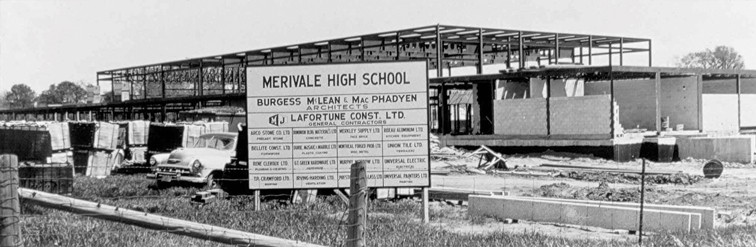
Every one of these schools were built of brick and glazed interior block walls – and Merkley Supply (and its predecessor, Ottawa Brick and Tile) provided many of the products that made these schools the community icons they were to become.
These high schools were built to last and serve the community into the next century. Schools such as Merivale High School, built of Merkley Supply brick in 1960, have undergone a recent renovation with brick supplied once again by Merkley – 60 years after it opened.
Merkley Supply was also there to support wave after wave of new school construction, from the 1970s well into the 21st century.
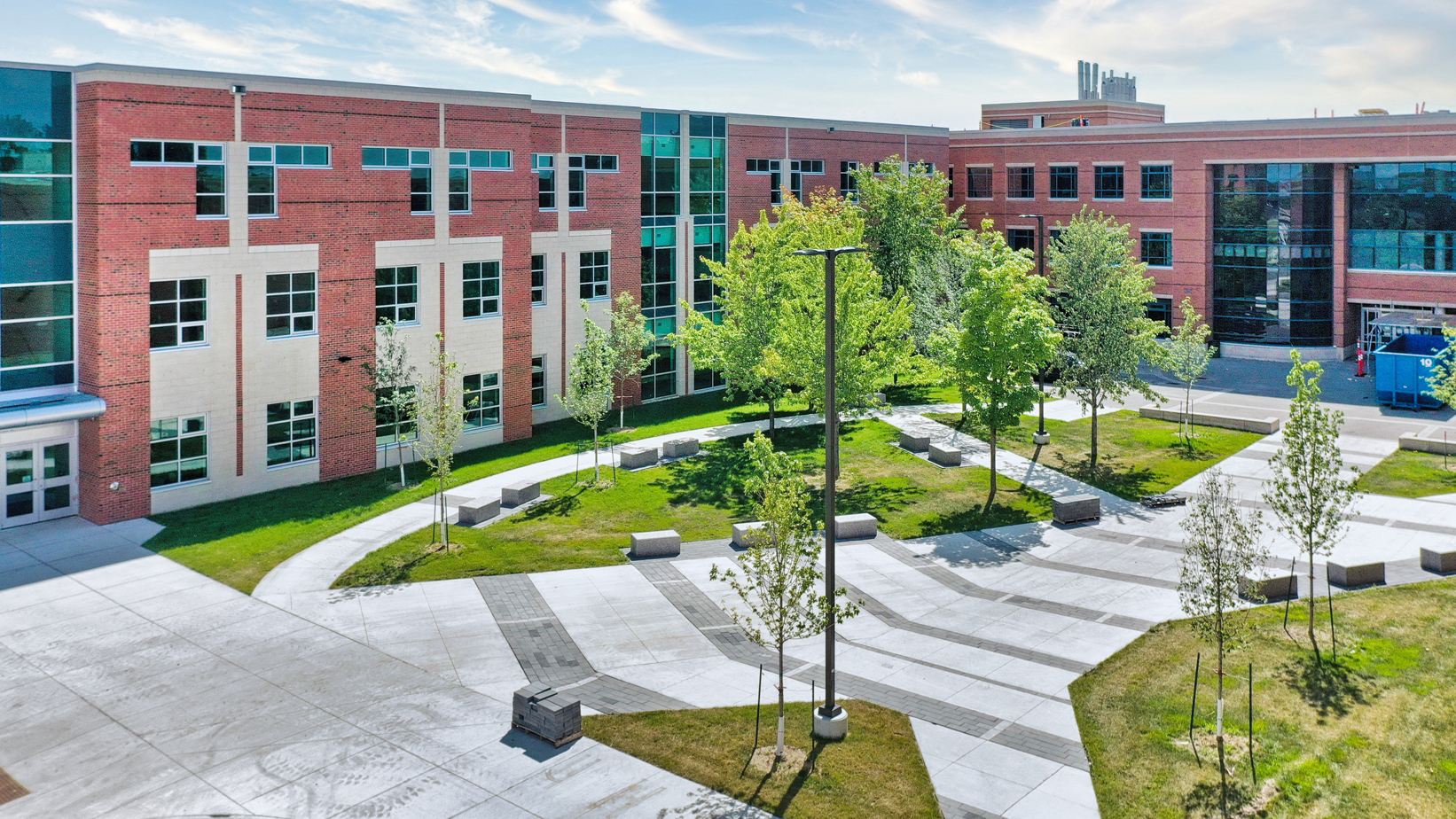
School design has undergone its own transformations over the years. At the turn of the 20th century they were powerful, imposing symbols of the seriousness of education. But newer schools like St. Francis Xavier High School in Orleans, designed by Edward J. Cuhaci and Associates Architects, are light-filled vessels of inspiration designed for learning and social interaction. The school’s richly detailed elevations of warm red brick and stone, supplied by Merkley, convey the social importance of schools but now also offer a sense of welcome, community, and adventure.
Stone and masonry supplies that endure for the long haul
While Ottawa’s older schools were designed before architects and educators worked together to create enlightened spaces for teaching, they remain some of the best places of learning in the city. The great old schools of our past will be here for many decades to come thanks in part to the enduring quality of the materials used in their construction.
Ottawa is now undergoing another spate of rapid growth and there are new schools being planned or under construction. Last year the Ontario government announced an investment of $162 million for new school and expansion construction in Ottawa, while also committing $23 billion to new school construction projects over the next 10 years in Ontario.
To put that in context, Corpus Christi School in the Glebe was built in fewer than five months for just $47,200 with an enrollment of 320 students in 1926.
Today, exactly a century later, the new Half Moon Bay Secondary School in Barrhaven will cost $77.7 million and will hold 1,474 spaces for students from Grades 7 to 12. The Mer Bleue high school will cost $74.7 million and support 1,439 students in Orléans. The staggering increase in costs, complexity, and build time reflects the long-term importance of schooling in Ottawa.
Merkley Supply understands that educational environments of exceptional quality are built with materials of exceptional quality, to create spaces that are enduring, beautiful, supportive, inclusive, cost-effective – and, above all, inspiring. Stone and masonry products from Merkley are still used to create our schools and memories 125 years after the company was created, and will continue to do so for many decades to come.
Oh, and if you ever meet Robert Merkley at a cocktail party, he’ll tell you he went to Brookfield High School.
This article first appeared in the 2026 City Building in the April Magazine. That publication is available in it’s digital format below: