While many multi-tower projects with hundreds of residential units are being built across Ottawa, urban infill could be another part of the solution to the city’s housing shortage.
Russell Coltess is the founder of BuildShare, a real estate firm that has gained traction over the past year by hosting bus tours that bring together real estate stakeholders and aspiring developers to network and tour active infill construction sites across the city.
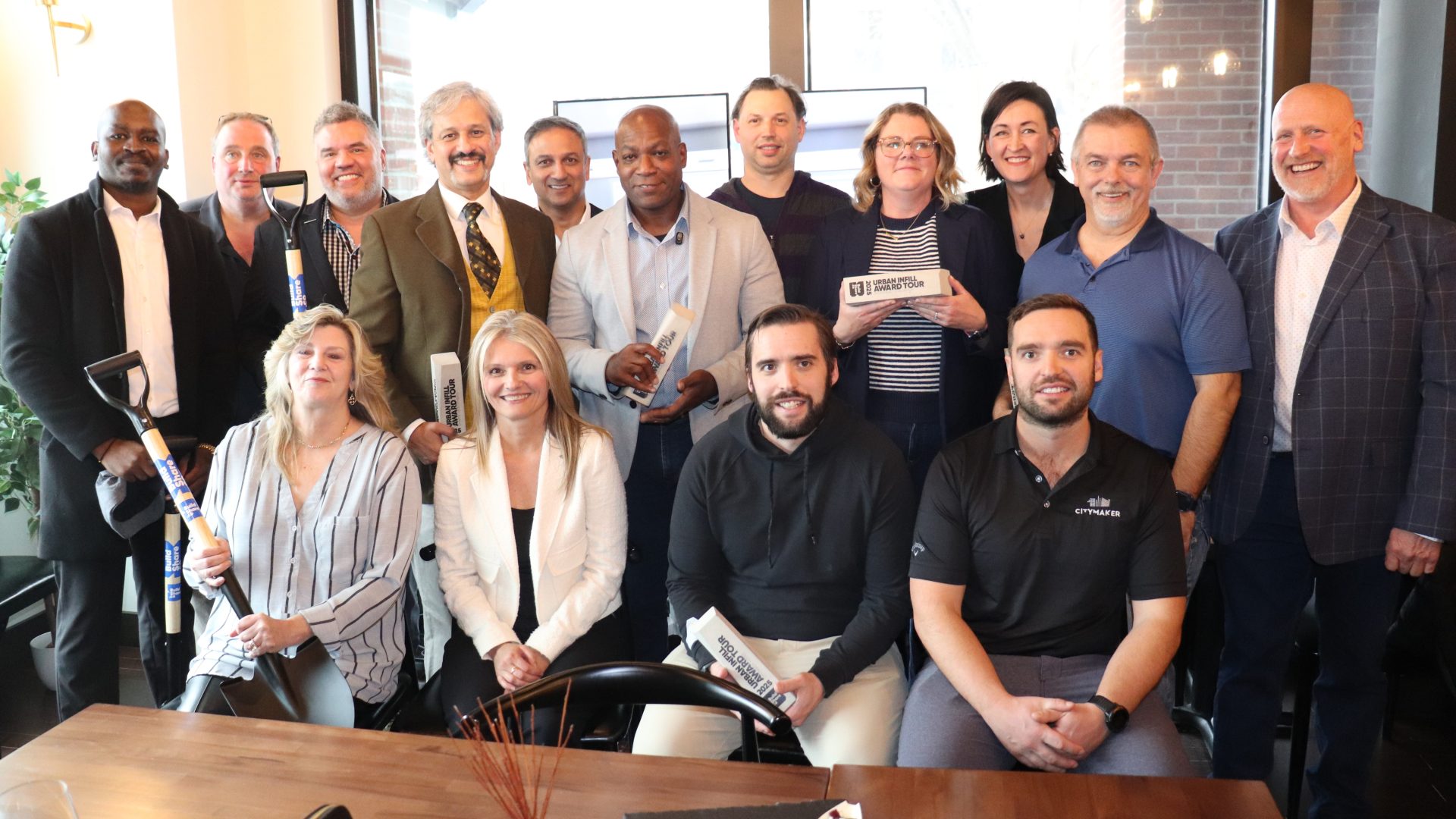
On Wednesday, his firm recognized the developers who hosted participants at their sites with the first edition of the Ottawa Urban Infill Award Tour.
“We never thought about doing awards,” Coltess told OBJ at the event. “At the beginning, it was just the bus tours. Each of these developers, they were part of multiple tours or presented multiple locations. We’re going to do four tours this year, but I thought, before we start, let’s thank these guys.”
While Coltess said the definition can vary, “infill” generally refers to developments that fill gaps in neighbourhoods by redeveloping vacant or underutilized land.
“It can overlap with missing-middle housing,” Coltess said. “To me, the whole idea around infill is this idea of creating these opportunities all around. There are so many projects going on that nobody knows about.”
Elise Restaurant in Westboro, where the awards were hosted, is one example of an infill project, located in a building by Azure Urban Developments. Managing director John Thomas was one of the award recipients.
Coltess said the infill industry has been gaining traction over the past few years as many cities, including Ottawa, search for ways to address their housing shortages.
The City of Ottawa is currently developing design guidelines to facilitate the construction of low-rise infill housing in the city’s urban neighbourhoods. The second draft of the guidelines, which was posted for public review in February, specifically defines low-rise infill as residential buildings of up to four storeys.
“Low-rise infill housing forms part of Ottawa’s neighbourhood fabric and supports healthy, liveable, and safe communities by adding housing choice within established areas,” the document said.
Coltess said changes already made over the past few years at the city have made the job of infill developers easier, especially after years of resistance.
“I would say that Ottawa used to feel like a city that was really against infill,” he said. “But what I’m seeing now, with what the city actually did with its new zoning by-law, is that they’re really looking to solve this problem. There are people working at the city who really do care and want to see these things work.”

Jennifer Murray, a partner at real estate adviser Kadus Group, accepted an award on behalf of her client Ali Shirazia, founder and president of Bridgehead Development.
Murray told OBJ that the changes that encouraged infill in the city’s new official plan, which was approved in 2022, have had a particular impact in the city’s up-and-coming neighbourhoods.
“(The changes) really emphasized the fact that (the city) wanted to see more infill happen and less urban sprawl,” she said. “We’re seeing the impact of those policies. With this kind of development, people want to live in neighbourhoods like Westboro, Old Ottawa South, New Edinburgh. And there’s a lot more purpose-built rental, versus condominiums and new-build construction housing.”
She added that the crowd at the awards contained more new people than a typical Ottawa real estate event, a reflection of the local industry itself.
“I’ve been in development in Ottawa for 20-something years and I find with infill developers, you get a lot more diversity of people with different backgrounds,” she told OBJ. “People that come from different places, who are willing to take risks. It’s not just the typically big builders that you always see.”
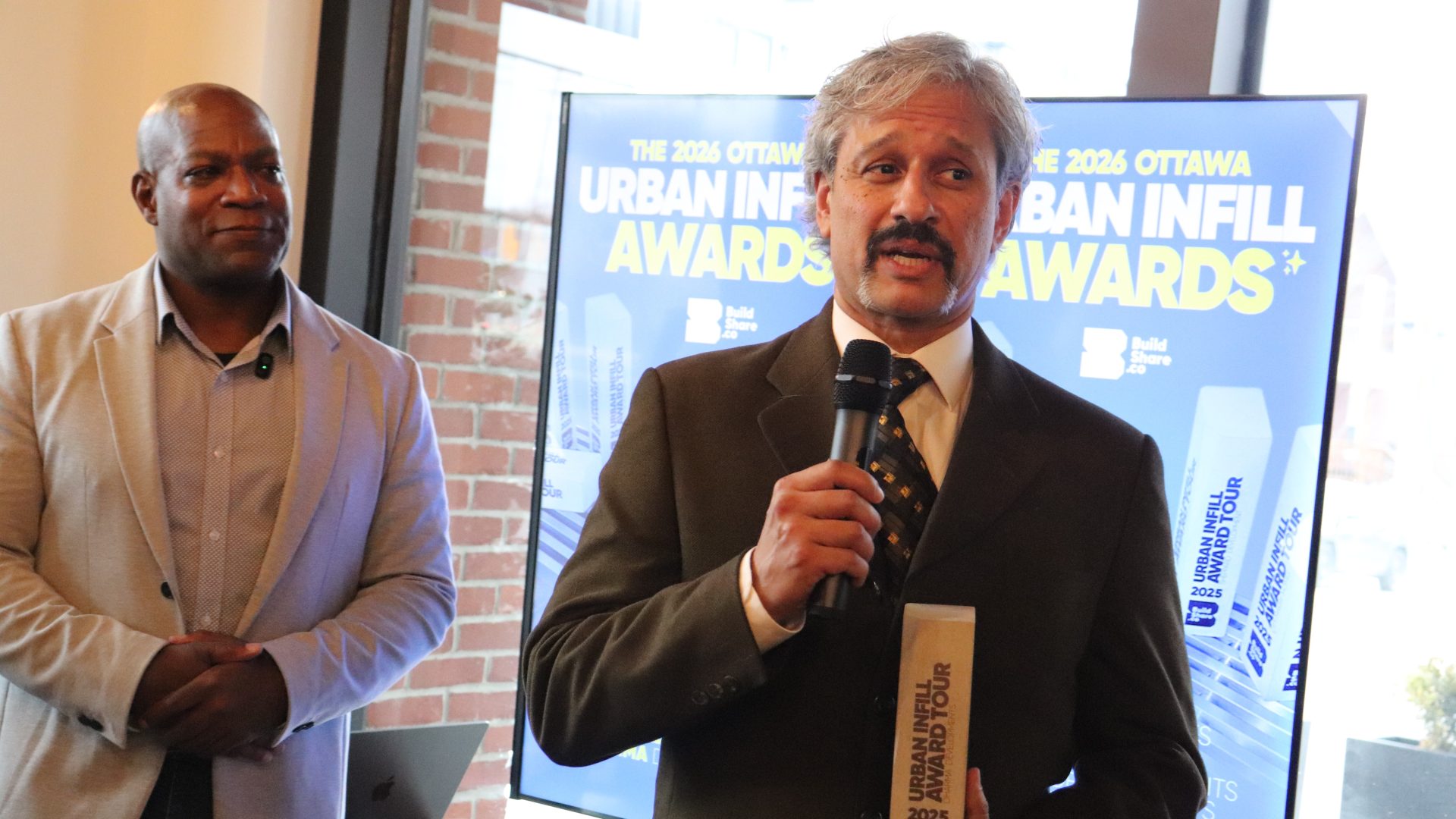
Akash Sinha, president of award recipient Dharma Developments, has been in the industry for 25 years. In his acceptance speech, he said the current regulatory and economic climate is making it difficult to be a builder these days, but presents opportunities for developers in the infill space.
“You see a lot of larger builders out there because of the regulatory and economic forces,” he said. “In some way, those bigger builds are somewhat easier to get going. But you’ll notice they’re very homogeneous in a lot of ways. They now have to cater to economic realities.”
While the economic climate is impacting infill developers as well, Sinha said they aren’t hampered in the same way big builders are. As a result, it’s an area that’s seeing more creativity and innovation.
“Infill construction is where we see so much variety,” he said. “All the different builders here have done crazy great projects, unique designs. That’s what provides the unique character to these neighbourhoods. It provides a nice living environment for people.”
Sinha added that it’s a trend he wants to see continue. “Please keep pushing. Please help make Ottawa a great city. Bring out that variety. Bring out your passion. Bring out that design and make sure we do whatever we can to bring that life to the city.”
Recipients of the 2026 Ottawa Urban Infill Awards include:
- Tommy Ladouceur, Karnak Developments
- John Thomas, Azure Urban Developments
- Jeremy Silburt, Theberge Homes
- Van Sheppard, Sheppard Property Development
- Harrison DaCosta, Citymaker Homes
- Ali Shirazia, Bridgehead Development
- Akash Sinha, Dharma Developments