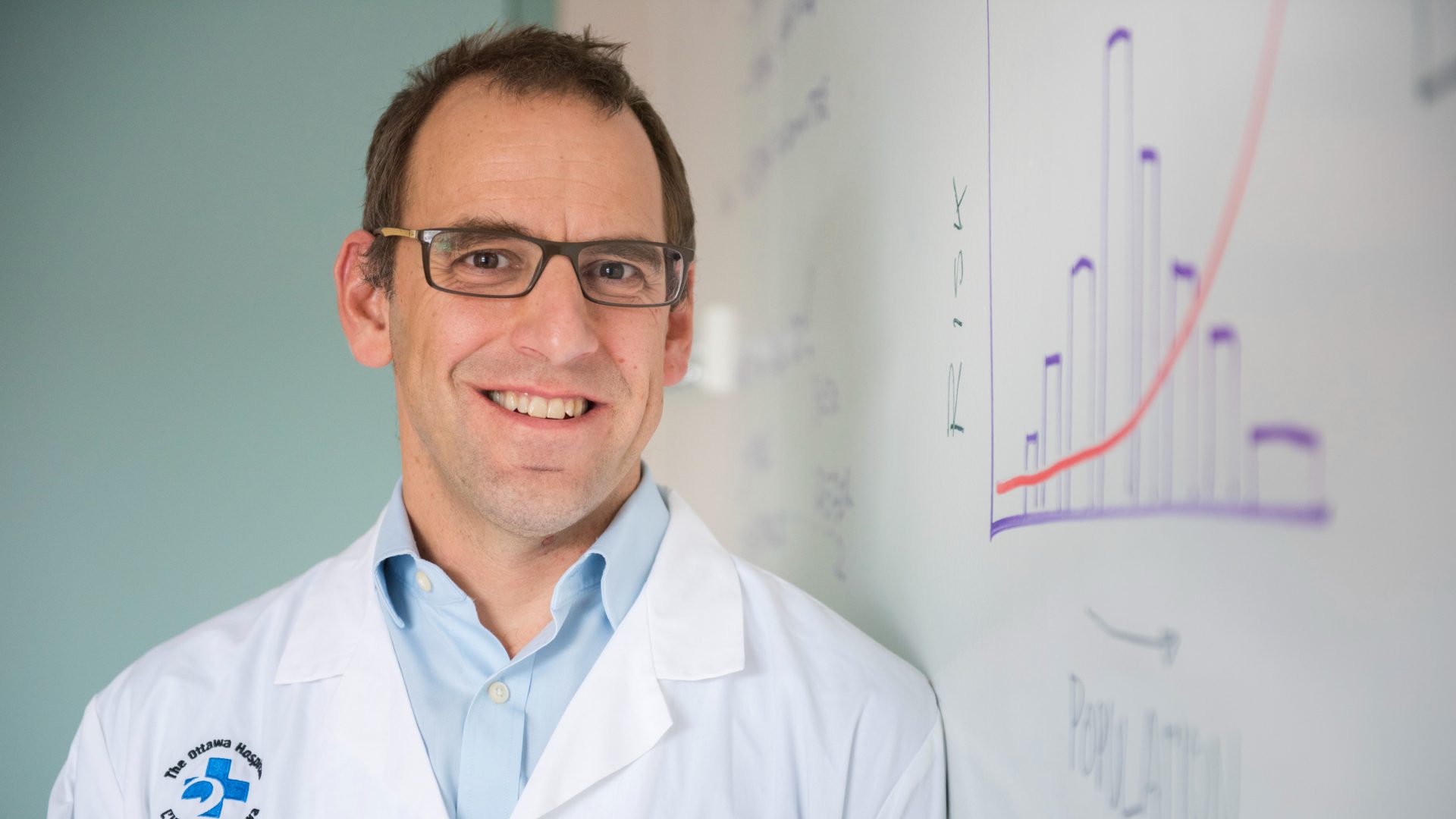

Dr. Douglas Manuel says it all began with the Ottawa Ankle Rules algorithm, a set of clinical guidelines developed in the early 1990s by The Ottawa Hospital’s Dr. Ian Stiell to determine the necessity of radiographs for ankle or midfoot injuries. The guidelines are now used in emergency departments around the world.
“It’s a simple algorithm, but it’s effective,” explains Dr. Manuel, senior scientist at the Ottawa Hospital Research Institute (OHRI) and community medicine professor at uOttawa. “At The Ottawa Hospital (TOH), it’s in our DNA to build these algorithms. We’ve been building decision algorithms for 30 years.” An example of an even more complex decision is when it is safe to remove a patient from a breathing machine – one of many ways the hospital is harnessing the power of AI algorithms to improve patient outcomes.
TOH’s well-established track record of innovative success has only accelerated in the age of artificial intelligence (AI and machine learning (ML), as the organization has developed several cutting-edge tools helping to improve patient care and improve efficiency for physicians and other medical staff.
Innovation not just a buzzword
Indeed, at The Ottawa Hospital (TOH), innovation isn’t just a buzzword – it’s changing lives. Adopting AI is helping care teams work smarter and faster, improve outcomes, and create a more personalized patient experience.
Part of the hospital’s innovation agenda includes the TD Artificial Intelligence in Medicine (AIM) Hub, a platform designed to accelerate the development and use of AI in health care. Led by Dr. Manuel, the AIM Hub was launched thanks to a $2 million donation from TD.
“We’re proud to make this investment in leading edge health-care innovation at The Ottawa Hospital,” says George Dalal, region head at TD. “The AIM Hub and the team of researchers, doctors, and health-care practitioners at TOH are improving outcomes for patients in our local community and beyond.”
This is the future of care, and it’s happening right in our backyard thanks to generous contributions from Ottawa’s business community, corporate sponsors, and other donors.
But Dr. Manuel says developing algorithms and other tools is only half the battle. The real test, he says, comes with getting clinicians to incorporate new technologies in their day-to-day workflows – and in that regard, TOH is also a leader.
“One of the strengths of The Ottawa Hospital is what we call ‘implementation science,’” he explains. “It’s not always easy to get physicians to try new techniques or technologies. That’s why a lot of what we do is evaluating and getting this technology into practice.”
From AI scribes to hygiene monitoring, TOH is leading the way
Putting leading-edge technology into practice is exactly what’s happening at TOH, with the organization rolling out or trialing several next-gen tools to help both patients and medical teams alike, including:
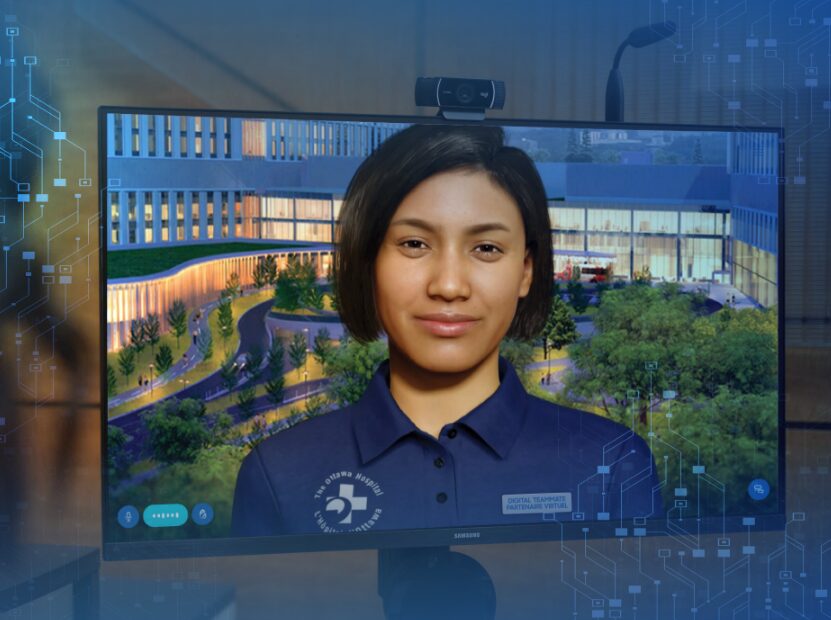
- Digital Teammate: Sophie, a first-of-its-kind AI assistant developed in partnership with Nvidia and Deloitte, is launching soon to provide educational support to patients prior to orthopedic and thoracic surgeries through human-like conversations. To guard against cultural bias, it was co-designed with a multidisciplinary team of TOH physicians, nurses, patients, and staff, ensuring it provides information in French or English with empathy, adapted to various literacy needs, voice, and visual cues.
- Microsoft DAX Copilot: A generative AI tool that securely records clinician-patient conversations during in-person appointments and converts them into draft medical notes. Nearly one year into its trial, DAX Copilot is showing promising results by ensuring critical health information doesn’t get missed, saving charting time, and reducing administrative workload burnout for clinicians. Initial results show seven minutes saved per patient encounter, a 70 per cent reduction in clinician-reported burnout and fatigue, and 93 per cent of patients report a better or equivalent care experience.
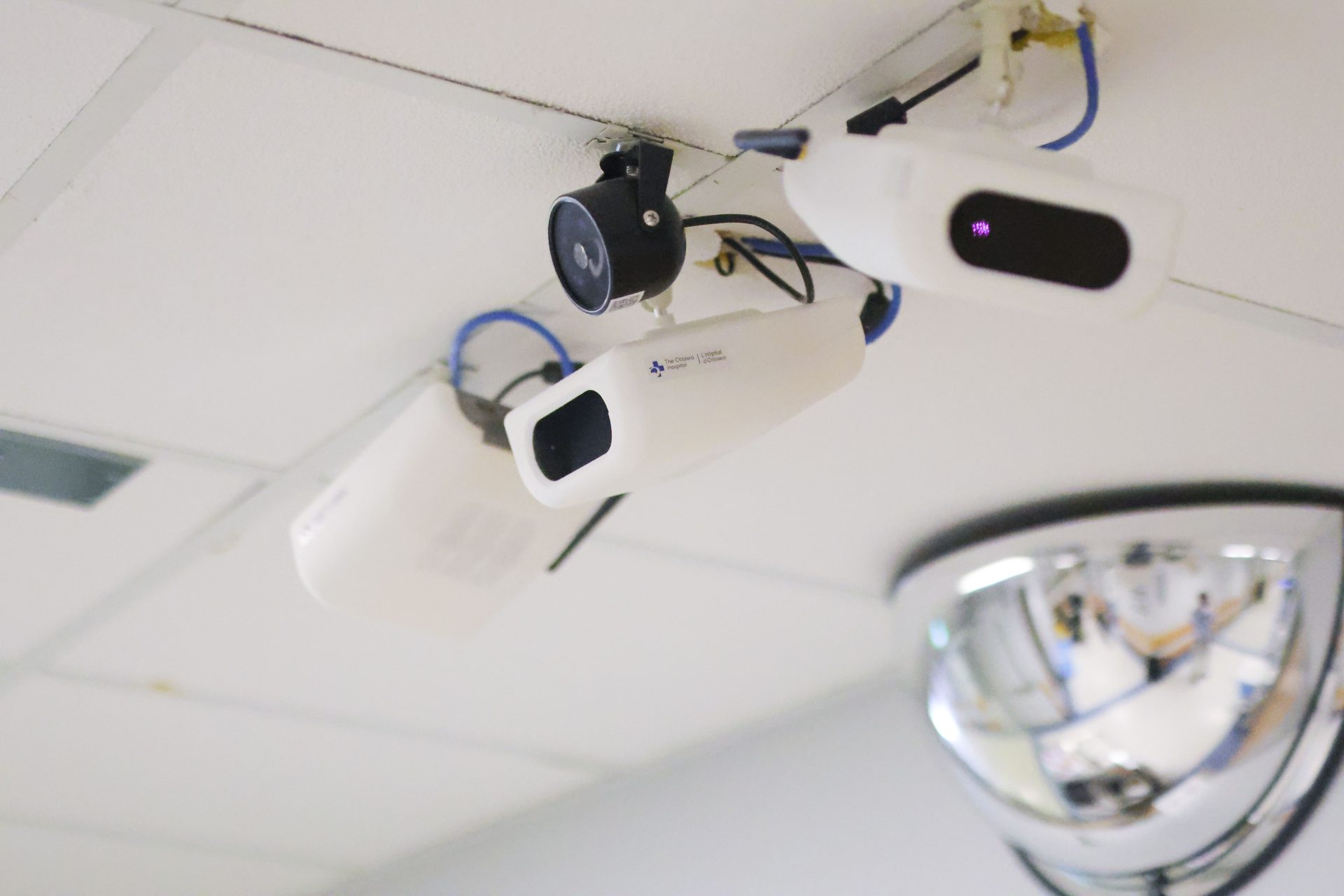
- AIMS: In collaboration with Canadian technology firm Lumenix, TOH was the first in Canada to implement the Artificially Intelligent Monitoring System (AIMS) to understand and improve hand hygiene and reduce the spread of infection. Using AI and 3D sensors, AIMS provides real-time feedback and generates predictive insights to help improve hand hygiene compliance and enhance patient safety without using cameras or collecting personal data. Early results have been promising: In the 12 months after AIMS was implemented, there were no outbreaks experienced.
- Breathing machine technology: Developed by Dr. Andrew Seely and other TOH researchers, this tool uses AI to analyze patterns in patient vital sign data to help predict when a patient is ready to breathe on their own. It identifies patients at higher or lower risk of extubation failure and helps reduce uncertainty, leading to better outcomes for patients and more efficient use of ICU resources.
This is just a small sample of the innovative technologies being developed, trialed, and implemented at TOH.
Balancing speed vs. rigor when implementing AI tools
Dr. Manuel says TOH is hyper aware of the importance of balancing the speed of implementation with a rigorous approach. “People often want to bring new tools in as quickly as possible, but this is medicine,” he explains. “We need to make sure every technology we use is safe and equitable.”
But he also predicts that the penetration of AI tools for physicians will keep accelerating as technologies mature, and concerns around data privacy and bias are alleviated. The technology is helping to scale a health system that’s been under siege for the past several years.
“If you go see your family doctor, there’s a 20 per cent chance today that it’s going to be recorded by an AI scribe,” he explains, adding that around 20 different scribe programs have already been approved by Ontario’s Ministry of Health. “The estimate is that this number will hit 80 per cent in two years.
“I’ve never seen a rate of adoption this fast, ever.”