Get Our Email Newsletter Local news about the companies, people and issues that impact business in Ottawa and beyond delivered to your email inbox.
As CEO of the Ottawa Humane Society, Sharon Miko knows a lot about animals. But, over the past few years, she’s also had to become something of a real estate expert. According to Miko, the OHS isn’t the only organization of its kind taking a big swing in a sector that is becoming increasingly complex.
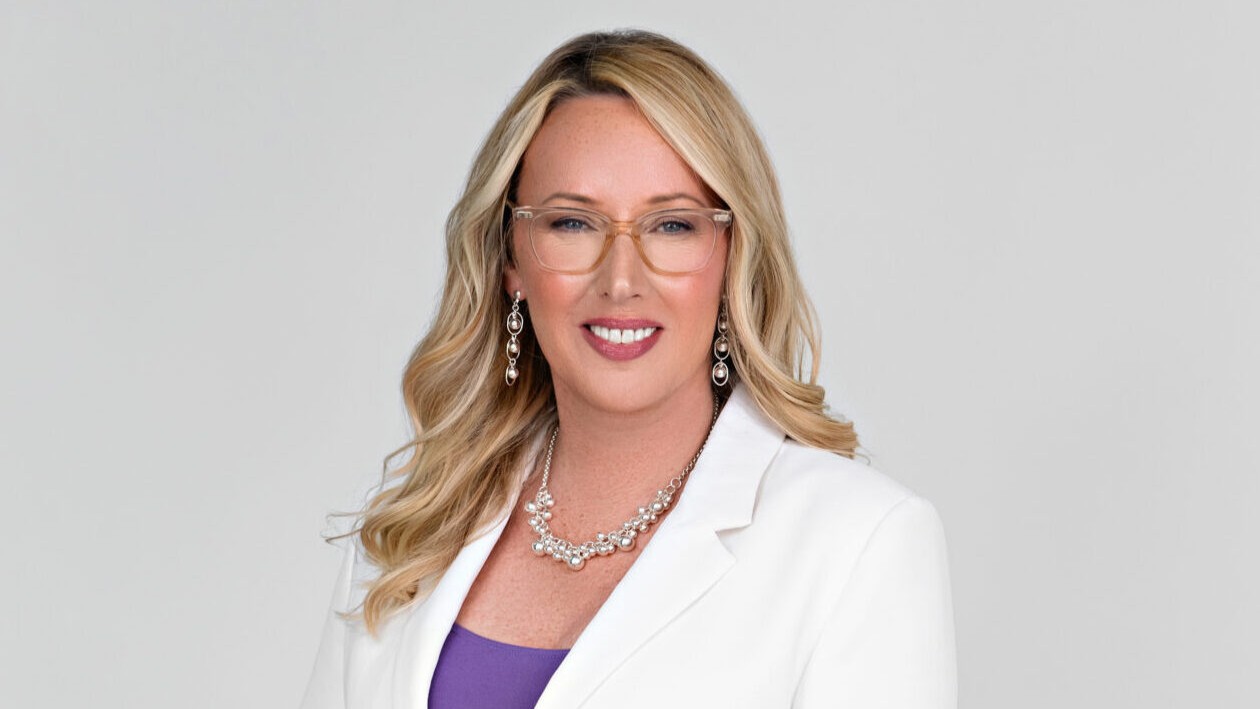
As CEO of the Ottawa Humane Society, Sharon Miko knows a lot about animals. But, over the past few years, she’s also had to become something of a real estate expert. That’s in part because the OHS is in the middle of establishing its own veterinary clinic to provide subsidized services to low-income pet owners, and it hasn’t been the easiest process. Finding a suitable property was difficult, with a number of deals falling through. Not to mention a lengthy application process at the city to get approval on the zoning amendment needed to build the clinic on the property the OHS finally did acquire. While it will be another two years before the clinic opens to the public, that time will be necessary as the organization changes its business model to accommodate an entirely new — and unfamiliar — service. According to Miko, the OHS isn’t the only organization of its kind taking a big swing in a sector that is becoming increasingly complex. “Humane societies have evolved,” Miko told OBJ. “They represented an area where there was a gap between what the government was providing and what businesses were providing. There was no public safety net. And so, the humane society, like a lot of other charities, became that public safety net.” In the early days, Miko said charities were largely community-driven and reliant on volunteers and philanthropic support. It’s an approach she describes as paternalistic. Working on a shoestring budget, charities would decide who they would help and how, but couldn’t do much beyond that. There was little support and very few guidelines. “There wasn’t a ton of regulation or reporting, certainly at that time,” she said. “Charities weren’t very professional in how they approached what they were going to do. It was best effort. Charities were filling gaps that existed in our community at the time. We tended to look at needs as more of an individual failure, not a systemic problem.”But in the 1980s and ‘90s, that started to change. What was once informal and volunteer-led became a new professional sector, said Miko, where individuals could turn fundraising into a career. Charities also became more organized. There were increased accountability requirements and higher levels of regulation. Organizations embraced strategic planning and higher governance standards. But that wasn’t all. As the industry professionalized, it also started looking more broadly at systems. Miko said charities soon became leaders in understanding the root causes of the issues they were created to address. “We weren’t just addressing symptoms anymore,” she said. “By the time an animal got here, we were addressing the symptoms; it was a homeless animal. But over the past few decades, we’ve really started honing in on the root cause of animal overpopulation. What’s the root cause of people not being able to afford care for their pets? What’s the root cause of animal suffering?”While this model has been the standard for decades, Miko said the charitable sector is now in another period of change. And organizations like hers are coming up with creative ways to meet the challenge. “We’re at a point where charities have to prove their value,” she said. “We have to make sure we are being more efficient, that we’re operating on an evidence-based approach and that we’re really focusing on the outcomes we’re providing. Charities today are more systems actors. We’re more community partners. We’re working within complex systems to make sure we’re driving the right change in the field we’re supporting.”Sharon Miko, president and CEO of Ottawa Humane Society. Image supplied
Shaking up business models requires transparency
At its inception, the Ottawa Cancer Foundation had a specific goal: to raise funds for cancer research. “They raised millions and millions of dollars,” said foundation president and CEO Deborah Lehmann. “It’s something to be very proud of.”Over the years, the organization started to move in a different direction, she said, in response to feedback from the community. “Leaders in the community approached board members, talking about what was missing in the community, which is cancer support services,” she told OBJ. “(The foundation) just kept hearing about these gaps in services, the non-medical ones. The things that impact not only patients, but their caregivers, their families. So what did that bigger picture look like?”The idea to offer direct support to people affected by cancer percolated for years, according to Lehmann. But it was after the height of the COVID-19 pandemic that a plan started to take shape. In the spring of 2022, the foundation began undergoing a transformation to become what Lehmann calls a “community cancer hub,” connecting directly with the community to meet the needs of patients and families by filling a variety of service gaps. It meant a change in business model, which Lehmann said was easier said than done. Logistically, the foundation had to think about its partners and donors and how to navigate fundraising as it completely changed how funds were allocated, she explained.“The right way to talk about it was honesty and transparency,” she said. “We spoke about what we’re doing and why. And you know, some donors naturally transition out. That is just the way this sector works. Depending on where they’re at and what is important to them, donors move on. But many stayed and others are coming in.”Lehmann said the foundation also had to consider its own limitations for providing support. “We were measuring milestones and scaling in a measurable way,” she said. “Knowing our capacity and starting small, we had success. And as we have more success, we look at what’s good, what we might change and what didn’t work as well. It’s checking in: how is this working? What partners do we need at the table? Who are we missing? It is that constant reflection.”Staffing has been a major limitation. As the organization changed, Lehmann said some employees left and the foundation searched for new talent to bring in. While finding experienced, long-term staff is a never-ending challenge in the charitable and non-profit space, for an organization suddenly looking for a number of new skillsets, Lehmann said the issue becomes especially acute.“We are very particular about bringing people in who have a deep understanding of many different aspects of cancer support,” she said. “It’s a unique role. Each one of our services is evidence-based. There’s a lot of training involved. There’s a lot of structure and processes. That is critical for us to maintain.”With so many factors to account for, it’s an ongoing, multi-year process at the foundation. “Over three years, it transformed into this incredible new way of doing things. But we couldn’t do it all ourselves,” Lehmann said. “How do we collaborate and co-design and create this partnership model? So, over time, we bring certain partners in. We bring collaborators and community agencies.”She added, “Our message is that we're complementing what’s already in place, not duplicating services. What can we do and how can we leverage what’s already happening in the community and make it better?”
Blurred lines and a multi-sector approach
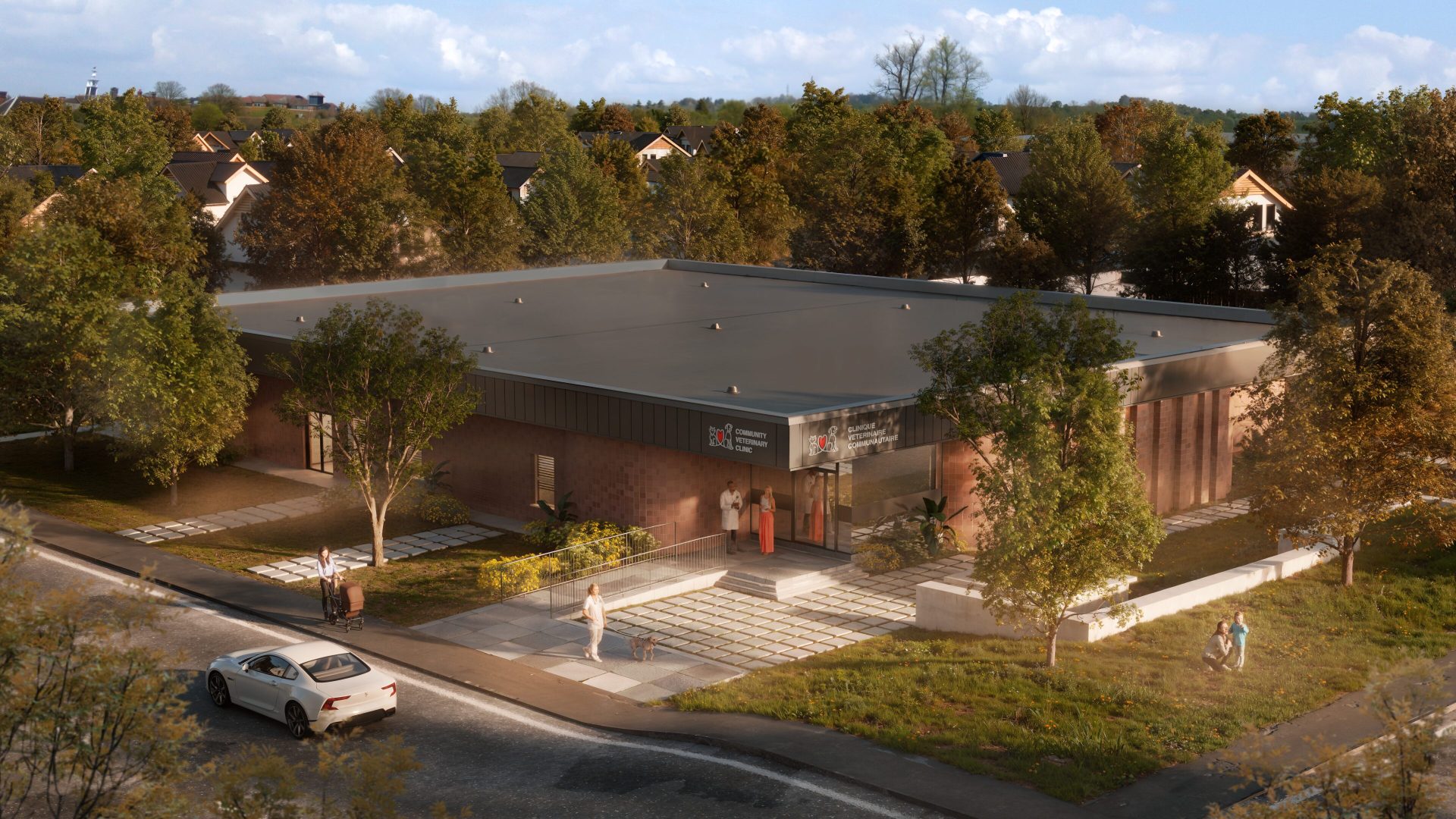
The Ottawa Humane Society has a similar message as work on its clinic gets underway. The organization took ownership of a property in Vanier last month after receiving approval from Ottawa city council in December on a zoning amendment for the site at 258 Durocher St.The 3,930-square-metre property, close to Montreal Road and the Vanier Parkway, is currently occupied by a single-storey building that once served as a Canada Post mail depot. The existing building will be retrofitted for the clinic, which will also include a retail store and training centre. But its main goal will be to provide subsidized care for pets with income-qualified owners. It’s an approach that goes back to the changes many charitable organizations are making to embed themselves in more complex community networks. “We’re looking to collaborate across different sectors here. That includes the government as well as private and non-profit,” Miko said. “How are we working with the municipality to bring this project to bear? How are we going to work with the (private) veterinarians in our community? This is part of a safety net for animals. How do we support veterinarians in providing their services and how do we become part of that model that already exists in Ottawa? That’s an important business consideration for us.”A rendering of the Ottawa Humane Society's proposed clinic at 258 Durocher St. in Vanier. Image credit: Ottawa Humane SocietyWith the change comes new questions and challenges, Miko said, such as what new expectations will exist with regard to governance and ethics, and how the OHS’s business and staffing models will evolve.“We’re seeing increasingly those blurred lines between charity, social enterprise and advocacy,” said Miko. “As we move forward with this as a business, we’ve got to think of all those pieces to make sure we’re bringing forward the right model to serve the best interests of our community.”More than that, Miko said the new model has to be sustainable long-term. In the past, she said, the OHS has experimented with different ways to support low-income pet owners, including financial assistance programs. But the pilot programs never panned out. Now, the OHS believes that a limited-scope clinic that charges income-based fees would allow the organization to reach the most families while recouping some of the costs, and help both pets and owners. “These animals often end up at the OHS being surrendered, where we may not have options available or it may be too late to provide services,” she said. “The combination of issues may mean we don’t have a path forward. But if that client, who is invested in keeping their animal, has support to deal with the physical issues, it may mean that the animal has a second chance.”Miko added, “At the end of the day, our mission and our goal is to decrease animal suffering in our community and this is the best way that we have found to do that.”The clinic project is expected to cost $9.4 million, according to an OHS press release in December, which also said the organization is seeking community donations and leadership gifts to support construction. The goal, Miko said, is to open the clinic to the public in November 2027 as “a complete hub for animal well-being.”“The clinic will keep more pets with the people who love them, allowing the shelter to be even more prepared for the animals who truly have no other option.”