Even as rumours persist about federal civil servants spending more time in their downtown offices, restaurants in the core are focusing on other potential traffic drivers to diversify their customer bases.
Already a Subscriber? Log in
Get Instant Access to This Article
Become an Ottawa Business Journal Insider and get immediate access to all of our Insider-only content and much more.
Even as rumours persist about federal civil servants spending more time in their downtown offices, restaurants in the core are focusing on other potential traffic drivers to diversify their customer bases.
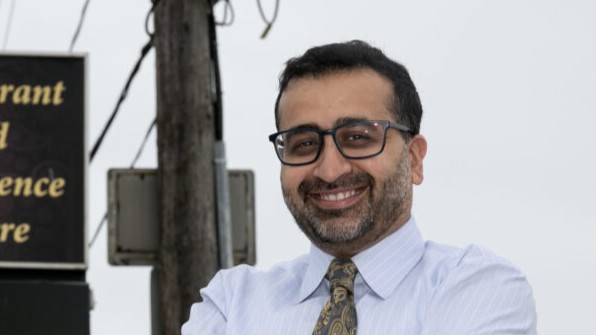
According to Anish Mehra, owner of East India Company Restaurant on Somerset Street West, restaurant owners in the area have been “kind of buzzing” about a potential increase in federal workers downtown, but are also continuing to look for ways to shift reliance away from the nine-to-five crowd.
“The last few years have made a lot of businesses in retail and hospitality pivot and look at different client bases to reach out to,” Mehra told OBJ on Wednesday.
At his restaurant, Mehra said he’s seen an uptick in dinnertime patrons, although lunch remains quieter. Weekends are also busier, with more group reservations and tourists, he said.
And even though fewer businesspeople are stopping by for lunch, the corporate crowd hasn’t gone away entirely. Mehra said there has been significant interest in his restaurant’s catering service, with some offices ordering catered lunches every week or two.
Scott May, owner of Bar Robo at Queen Street Fare, points to many challenges faced by the industry.
“The hangover from COVID is certainly still in play with many, many restaurants, not just downtown, but everywhere else,” said May. “Rising employment costs, food costs, insurance costs — everything’s going up. Certainly the culture has changed with the rise of Uber Eats and DoorDash. It’s not the best time in the restaurant world.”
Construction on Parliament Hill has also put a damper on an otherwise steady year for nearby restaurants, he added.
But it isn’t all bad. May said he’s “moderately optimistic” about where the downtown restaurant industry is going as 2026 approaches, especially after a summer season that saw an uptick in tourist traffic through the downtown core that compensated for a lack of office workers.
“Our second-biggest business generator and employment provider is tourism,” he said. “Downtown especially, we’re uniquely positioned to focus on and leverage that.”
Mehra said restaurants like his will have work to do if civil servants do return downtown full-time.
“I think for a lot of people, because they haven’t been coming to the office lately, it feels like you’re a new restaurant that just opened,” said Mehra. “It’s like you’re telling people who are new to the area to get to know your business, reintroducing it from scratch. That’s the situation for some of us now and we’ve been around a long time. We’ve got a following and people who know us, but anyone who joined the federal service in the past five years, there’s probably a lot of restaurants and retail shops and destinations that they don’t know about.”
Beyond that, he said that while high-income earners are back on the food scene, there remains a “missing middle” of customers who are spending less and eating at home more.
“We still see those people come, but instead of getting meals, appetizers, desserts and maybe a bottle of wine, it’s becoming maybe a glass of wine, which became a soft drink, which became just a meal,” he said. “People are trying to cut where they can.”
Mike Campbell, co-owner of Stolen Goods Cocktail Bar on Sparks Street, has noticed a similar trend.
“For us, it’s been picking up the last couple of months,” he said. “Summer felt more event-related, with Bluesfest and others. But recently it has picked back up to full steam overall. We’ve seen a similar number of guests each night on average. But guests are spending a little less. Instead of having three cocktails, now they’re staying for two.”
Campbell said the bar’s high-end atmosphere caters mostly to the political crowd, including MPs, rather than the average government worker. And its after-midnight closing time attracts those in nighttime industries, rather than the nine-to-five crowd.
So far, he said there hasn’t been much of an uptick in late-night traffic, despite ongoing efforts to boost the city’s nightlife. In fact, he’s seeing the opposite.
“I think, on average, people are going home earlier than they used to,” he said. “There is still a late-night crowd, but it’s not as big as it once was. And it seems there’s more of a demand to be drinking from eight p.m. to 10 p.m. rather than to midnight or one a.m., at least for us.”
Though challenges persist, Mehra said he’s feeling optimistic about the downtown food scene, which he hopes will continue improving into 2026.
“As more people come back, I’m guessing we’ll see more bodies on Elgin Street and as far down as Somerset or Gladstone, just as people move around within the core,” he said. “It’s nice. It’s a good feeling when you have a downtown core that’s lively, where there are things going on and people walking around and going out.”