

Quantum science is ushering in the next great wave of technological change — one that promises to transform cybersecurity, computing, and communication on a global scale.
As countries invest heavily in quantum research and secure digital infrastructure, Carleton has become a key hub of Canadian expertise — uniting scientists, engineers, and policymakers to drive breakthroughs from discovery to application.
“Quantum technologies are set to redefine what’s possible — from ultra-secure communications to revolutionary advances in materials and AI,” says Rafik Goubran, Carleton’s Vice-President (Research, Innovation and International). “Carleton’s interdisciplinary strength enables us to combine the expertise, facilities, and partnerships that will help Canada shape this new technological frontier.”
Building the foundations of a quantum-ready economy
Once confined to physics labs, quantum science at Carleton is now woven throughout numerous disciplines — from engineering and computer science to information technology and public policy — extending beyond research to the classroom.
Carleton now offers more than 160 courses connected to quantum-related fields, alongside its new Bachelor of Cybersecurity, launched in Fall 2025 — one of the first programs of its kind in Canada with a focus on quantum-safe computing and data protection.
In total, more than 6,300 students are enrolled in programs aligned with industry needs in cryptography, networking, and cybersecurity. Over the past five years, Carleton has also awarded more than 220 graduate degrees in fields connected to quantum computing and communications — strengthening Canada’s growing talent pipeline.
“We’re preparing students not just to understand quantum systems, but to apply them in ways that solve today’s real challenges,” says Maria DeRosa, Dean of the Faculty of Science. “The next generation of engineers, computer scientists, and physicists will be those who can bridge theory with implementation.”
A research ecosystem aligned with national priorities
Carleton’s expanding academic focus on quantum technologies is matched by a broad base of research activity. Across the university, more than 100 faculty members in over 30 laboratories are conducting work in quantum communications, cryptography, sensing, nanotechnologies, and quantum commercialization — areas that are directly aligned with Canada’s National Quantum Strategy.
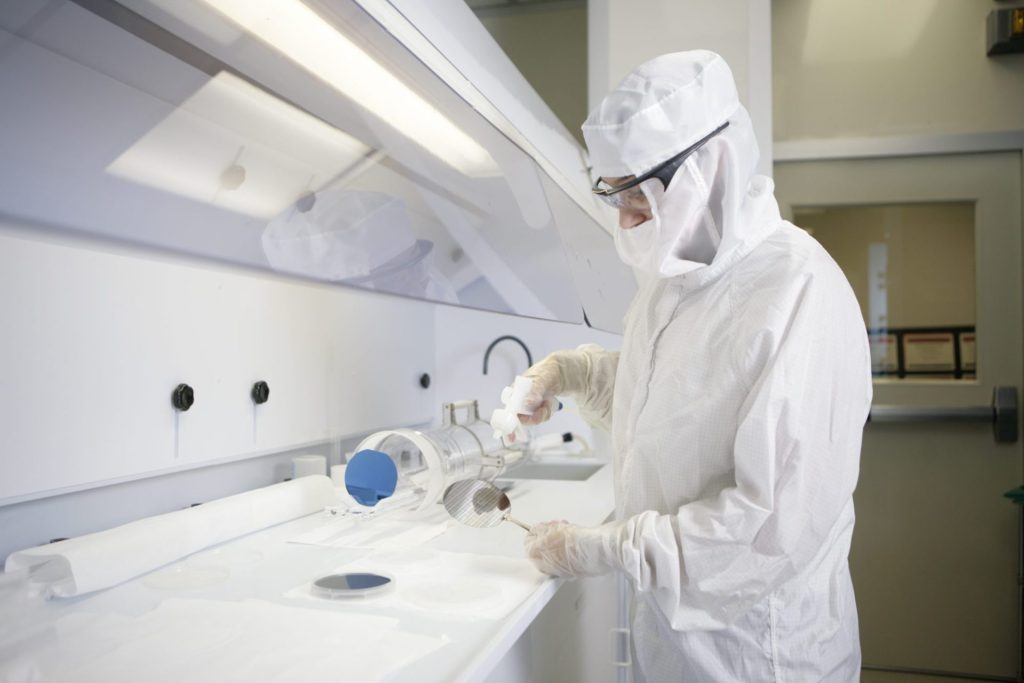
Carleton’s quantum researchers are tackling projects that range from the deeply theoretical to the highly applied. In the Department of Electronics, Professor Winnie Ye is designing photonics microchips that manipulate light at the quantum level — a technology that could one day enable faster, energy-efficient data processing. In the School of Computer Science, Professor Michel Barbeau is exploring quantum-optimized network architectures aimed at strengthening the security and resilience of future communications systems.
In the School of Mathematics and Statistics, Professor Matthias Neufang is examining the mathematical foundations of quantum mechanics, connecting the abstract principles that underpin discovery with the applied research driving Canada’s emerging quantum economy.
Together, these and other initiatives make Carleton a significant contributor to the national quantum research landscape, with more than 60 active projects advancing Canada’s capabilities in secure communication, sensing, and computation.
International collaboration driving innovation
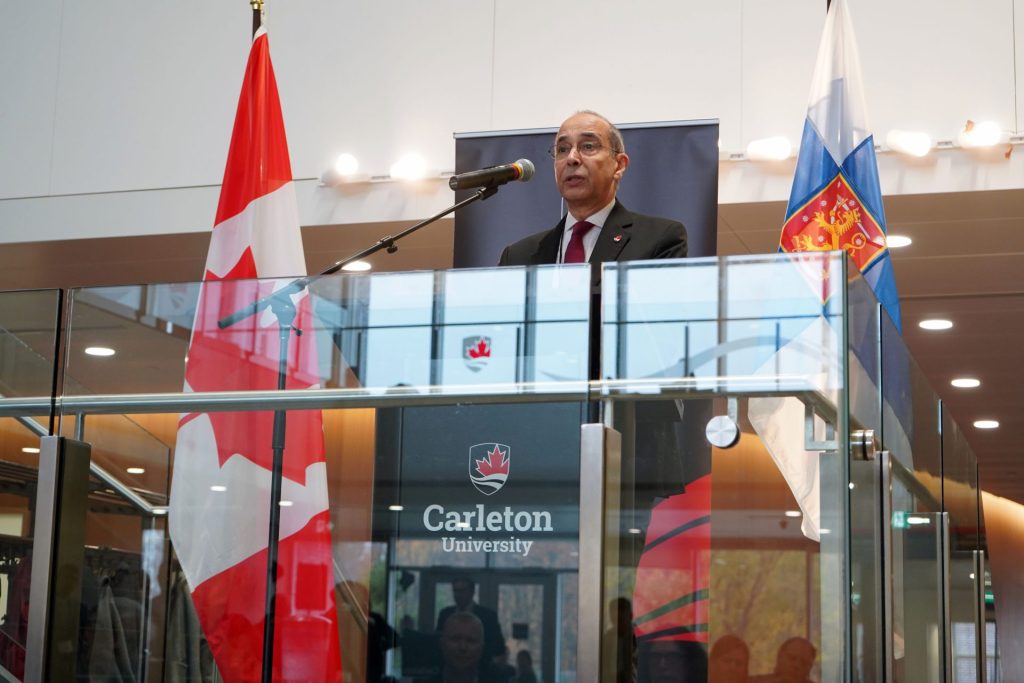
This fall, Carleton hosted the official launch of Northern Entanglement — a new Canada–Finland strategic partnership in quantum science that brings together researchers, government representatives, and industry leaders from both countries to advance collaborative research and strengthen technological security.
The announcement gathered officials from Canada and Finland, including Canada’s Minister of Innovation, Science and Industry Mélanie Joly and Finland’s Minister for Foreign Trade and Development Ville Tavio, and featured a panel with Carleton and industry experts highlighting the importance of international cooperation in shaping the future of quantum science.

“Innovation, by nature, thrives through collaboration,” says Prosenjit Bose, Carleton’s Associate Vice-President (Research). “Initiatives like Northern Entanglement highlight the value of connecting government, industry, and academia to advance shared goals and strengthen Canada’s role in the global quantum landscape.”
Within the National Capital Region, Carleton maintains strong ties across Ottawa’s tech sector — including work with Nokia and other partners on next-generation networks and communications — supporting the development of the secure, high-performance infrastructure that future quantum systems will rely on.
As quantum technologies mature, they’re set to underpin the next generation of communication, computing, and data systems. In this rapidly evolving landscape, Carleton is helping Canada stay connected to global advances while training the talent needed to drive them forward.
“The quantum era isn’t a distant horizon — it’s unfolding now,” says Goubran. “By bringing people and ideas together across disciplines and borders, Carleton is helping shape the foundations of Canada’s quantum future.”
For more information on Carleton University’s activities in quantum research, education, and partnerships, visit carleton.ca/quantum.