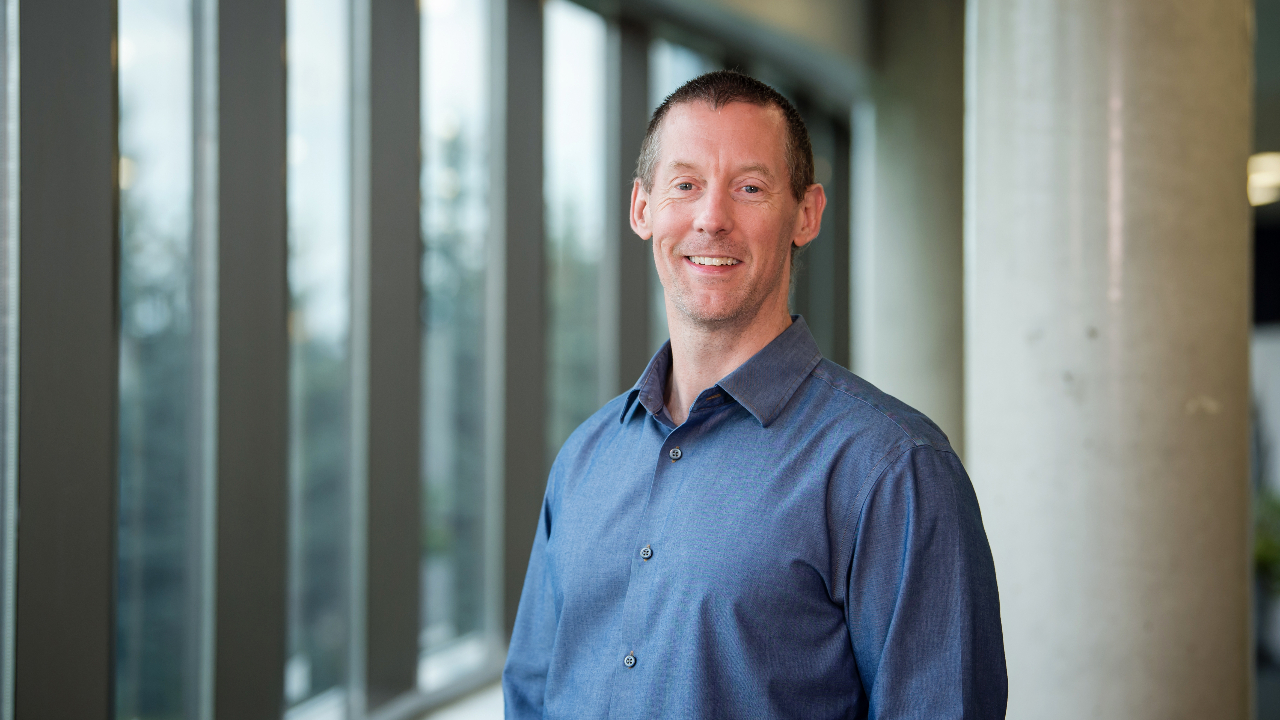
Fidus Systems, a Kanata firm whose 500-plus customers include some of the world’s biggest companies, has never been one to toot its own horn.
Already a Subscriber? Log in
Get Instant Access to This Article
Become an Ottawa Business Journal Insider and get immediate access to all of our Insider-only content and much more.
When a company earns praise from tech leaders like Assent executive chairman Andrew Waitman, Ottawa’s CEO of the Year for 2024, it must be doing something right.
But Fidus Systems, a Kanata firm whose 500-plus customers include some of the world’s biggest companies, has never been one to toot its own horn. The 200-person company designs hardware and embedded software that can be found in everything from satellites to self-driving cars.
“That is our style,” Fidus chief executive Alan Coady, who’s held the job since 2018, says matter-of-factly. “We just like to fly under the radar. We don’t really like to make a big fuss about anything.”
This week, New York-based private equity firm Catchment Capital announced it has agreed to purchase a majority ownership stake in Fidus in a deal that’s expected to close later this month.
As is often the case in transactions like this, the organizations were mum on financial specifics. But Coady – a University of New Brunswick electrical engineering grad who, like so many Ottawa tech execs, cut his teeth at Nortel and its predecessor, Bell Northern Research – thinks Catchment is the perfect partner to take Fidus to a new level of growth.
Not that the company, which was founded in 2001, was struggling before the deal. Coady says the firm’s revenues have risen “several hundred per cent” over the past five years and its profitability has increased at an even greater rate as it taps into new markets for its embedded design services that include engineering complex software, hardware, layout and printed circuit boards and more.
“We have had a good run as far as our growth and what we’ve been able to do with the company over the last five or six years,” he says, explaining that Fidus crafts “high-speed, low-latency, high-complexity” components that make up the “guts” of embedded systems in autonomous vehicles, satellites, data centres and other environments that rely on powerful computing and sensor technologies.
“We wouldn’t do the screen display – rather, we would do all the horsepower underneath,” Coady adds. “We do very high-end, complicated things. Just think of the best, most advanced companies in the world in high tech, in automobiles, in finance, in medical. That’s our customers.”
Catchment investment partner Robby Berner echoed those thoughts in a statement Tuesday, saying Fidus “has earned a stellar reputation with customers and partners as a highly technical service provider with a long track record of delivering creative solutions to complex problems.”
Coady says the company now has the financial warchest to make its operations better.
He and his management team began courting potential new investors a couple of years ago when some of the firm’s longstanding shareholders decided they wanted to exit. Fidus hired local M&A advisory firm Sampford Advisors to scour the market and Sampford ultimately contacted more than 100 potential suitors.
That group eventually got whittled down to a handful of companies, but Coady says Catchment stood out from the get-go. Even then, the process still took many months to complete.
“We were very, very picky,” Coady explains. “We didn’t need to do this, so we had all the time and luxury to be selective.
“But this is absolutely by a large margin our preferred route. We landed on exactly what we wanted. (Catchment is) just so similar to us in culture and belief in how to build things and respect – it’s a seamless integration with them and us. They’re looking to be part of building something bigger and better and they’re looking at doing it in a very respectful manner, the same way we are. Through the whole process, we could finish each other’s sentences. It was just like, ‘This is natural.’”
While Catchment’s partners will now occupy some seats on Fidus’s board of directors, Coady says the private equity firm has no intention of meddling with a formula that’s worked well to this point. The company will remain headquartered in the National Capital Region and its executive team isn’t going anywhere, he adds.
“Fidus is still Fidus,” he says. “Nothing changes there. We’re just swapping out inactive shareholders for active ones.”
The new majority owners have deep pockets, giving Fidus more freedom to delve into a growth stream it’s never really explored before: M&A. Coady says he already has “a number of target companies” in mind to help his firm expand its services and customer base through acquisitions.
“They have similar cultures to ours, similar ways of working. I’ve known some of these companies for two decades.”
Meanwhile, Fidus, a firm Coady describes as being “comfortable with risk-taking,” will now have the financial wherewithal to explore new products and concepts on a scale it simply couldn’t in the past.
“We absolutely have a company culture of (making) continuous improvements every week, every month in all departments,” he says. “It’s just fun to do that rather than being stagnant. Anybody can come up with any idea and we’ll put a team on it and decide very quickly (if we) do or don’t do it depending on if it fits in at this time. If it doesn’t, we just keep it on the list and maybe look at it next year.”
Fidus already had a knack for complex engineering that caught the eye of Waitman, who serves on the firm's board, and many others in Ottawa’s tech community. Now, its CEO says it has the rocket fuel to push its ascent into overdrive.
“We have all that stuff lined up,” he says, referring to Fidus’s culture of innovation. “It’s more about looking at growth opportunities. (Catchment) can help us define some of them, they can help us identify good (acquisition) targets. They’ll be able to bring other expertise if we need it. That’s the kind of stuff they bring to the table.
“I’m just excited. We have many ideas that are really good ideas and we just need some coin to spark them. I’m excited to have a partner that’s going to be able to bring other ideas, other consultants, their own experience, to take our ideas and make them better ideas.”