Founded in 1995 by former Canadian Space Agency employee George DiNardo, Larus Technologies specializes in artificial intelligence and machine learning platforms for the defence sector – primarily the Canadian Armed Forces, global defence contractors and other militaries.
Get Instant Access to This Article
Become an Ottawa Business Journal Insider and get immediate access to all of our Insider-only content and much more.
An Ottawa company that has been developing AI tools for the military for nearly two decades is poised to go on a hiring spree over the next 12 months as rising defence spending in Canada and other Western countries creates a “once-in-a-lifetime opportunity” for growth.
Founded in 1995 by former Canadian Space Agency employee George DiNardo, Larus Technologies specializes in artificial intelligence and machine learning platforms for the defence sector – primarily the Canadian Armed Forces, global defence contractors and other militaries.
Launched as a consulting firm, Larus began delving into early forms of AI products in 2007, when DiNardo hired Rami Abielmona – a computer and electrical engineer who’d recently earned his PhD from the University of Ottawa and is now the firm’s chief technology officer – to develop products that used intelligent computer processing systems to crunch data long before anyone had heard of chatbots.
The firm DiNardo jokingly refers to as a “30-year startup” now works with the Canadian Armed Forces and two other militaries. But the little-known business believes it’s ready for a breakout.
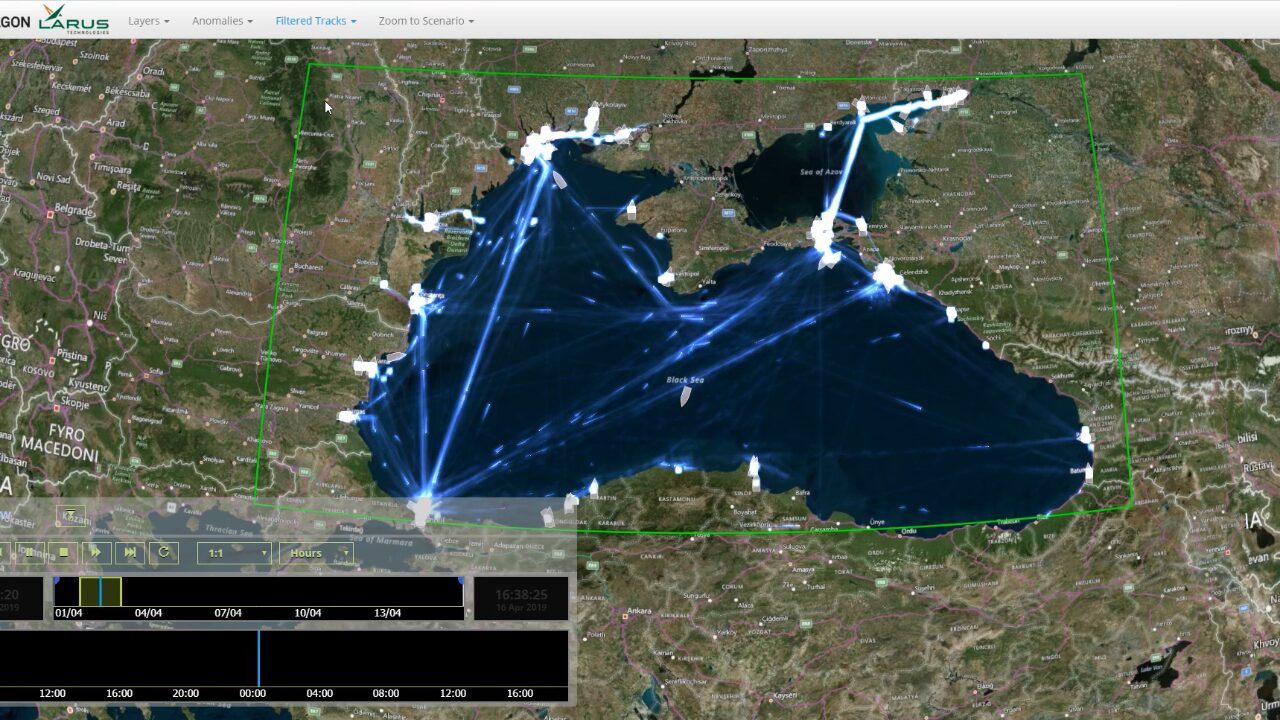
This week, Larus announced it has been awarded a three-year, $2.5-million contract from the Royal Canadian Navy. Larus’ customized AI and machine learning tools will sift through reams of positional data from vessels located near Canada’s coasts in an effort to detect unusual activity and pinpoint potential threats such as foreign ships entering Canadian waters.
Headquartered in downtown Ottawa, Larus has mostly stayed under the radar despite being a local AI trailblazer. DiNardo is hoping that will change now that defence spending is suddenly in vogue, with Prime Minister Mark Carney pledging to boost the Canadian Armed Forces’ budget by $9 billion this year in a bid to meet NATO's defence spending target of two per cent of GDP.
“We do see this as an inflection point,” DiNardo told OBJ on Wednesday. “It’s something that we’ve been building towards for a number of years and we are ready.”
“We see this as a generational change for Larus – and not just Larus, but other Canadian AI/ML companies as well.”
The longtime tech exec says he’s glad the feds seem to be serious about committing more funding to defence with a focus on Canadian solutions, pointing to initiatives such as a plan announced earlier this year to create the Bureau of Research, Engineering and Advanced Leadership in Innovation and Science (BOREALIS), an agency aimed at bolstering knowledge in areas such as AI, quantum computing and cybersecurity.
DiNardo also cited the artificial intelligence Compute Access Fund, a new $300-million fund aimed at helping small and medium-sized enterprises finance AI computing infrastructure, as another tool that could help Larus compete against the big players. And he’s encouraged that PM Carney has touted the need to make it easier for Canadian companies to win Canadian defence contracts.
Larus landed its first contract with the Royal Canadian Navy in 2018, and it took the company another seven years to sign a second deal. But DiNardo said now that the firm has a track record with the armed forces, more business is already coming down the pipeline.
“Canada has been leading in the AI/ML space for years,” he said. “Now that establishment of being able to procure, being able to support and being able to use Canadian technologies has really helped us.”
While military customers remain Larus’s bread and butter, the company has been branching out to diversify its revenues.
Its growing roster of corporate clients includes Unilever, the consumer package goods giant behind brands like Dove soap and Hellmann’s mayonnaise. The company is tapping into Larus’s AI and ML know-how to help it set prices and calculate how long it should run discounts and other promotions in order to maximize revenues.
Eyeing foreign markets
“The big issue has always been that many AI products have failed and the clients that we’ve worked with have always brought that up,” DiNardo said. “We’ve been able to prove to them that our systems do work. The return on investment has been spectacular for our clients – we’re offering AI that works.”
Larus has also moved into the public safety space, where its platforms are being used to analyze data from drones to help detect wildfire hotpots in Alberta.
Non-military clients now account for nearly 25 per cent of Larus’s revenues. Still, most of its sales come from within Canada, and Larus executives are keen to make bigger inroads in foreign markets.
Alex Hayman, Larus’s vice-president of business development, says the firm hopes to capitalize on what he describes as a growing shift away from a “U.S.-centric approach” to military procurement in NATO and NATO partner countries.
“We think that will create some really interesting tailwinds, particularly in Europe and Asia where Canada is seen as a trusted partner,” said Hayman, calling it a “once in-a-lifetime opportunity as the West is re-arming.”
With everything seemingly falling into place, Larus is projecting a big year ahead. DiNardo said the company, which now has about 50 employees, plans to hire dozens of additional workers in the months ahead as its contract backlog continues to swell and more opportunities in other markets and industries arise.
Meanwhile, Larus’s industry peers are taking notice. Hayman said the firm is considering partnerships with a growing number of global defence contractors looking to integrate its technology into their systems.
“We’re happy that we’re getting a lot of calls from really big players that see what we’re doing and want to get involved with us and build advanced AI/ML into their products,” he said. “It’s a good position to be in, and we’re excited about forming new strategic partnerships both in Canada and globally.”
As the defence boom takes hold, Larus also faces growing competition for skilled talent and market share.
“Everybody is getting into this space now,” Hayman said. “So it is getting crowded, and we hope to stand out with our experienced pedigree in this sector. But there are big players with big budgets that are moving fast, coming in to try and get those dollars, too. It is going to be a very competitive landscape, especially in the next few years.”
Still, he likes Larus’s chances of being on the winning end more often than not.
“We’re feeling good about the future,” Hayman said. “There’s a lot of good things happening. We really like the focus on made-in-Canada that’s happening. We feel like there will be a lot more success to come in the years ahead.”