As many private-sector and government employees spend more time in the office, what are organizations in the charity and non-profit sector deciding to do? Choosing between various work models can be a difficult decision for any organization, but, according to those in the field, charities have unique factors to consider.
Get Instant Access to This Article
Become an Ottawa Business Journal Insider and get immediate access to all of our Insider-only content and much more.
As many private-sector and government employees spend more time in the office, what are organizations in the charity and non-profit sector deciding to do? Choosing between various work models can be a difficult decision for any organization, but, according to those in the field, charities have unique factors to consider.
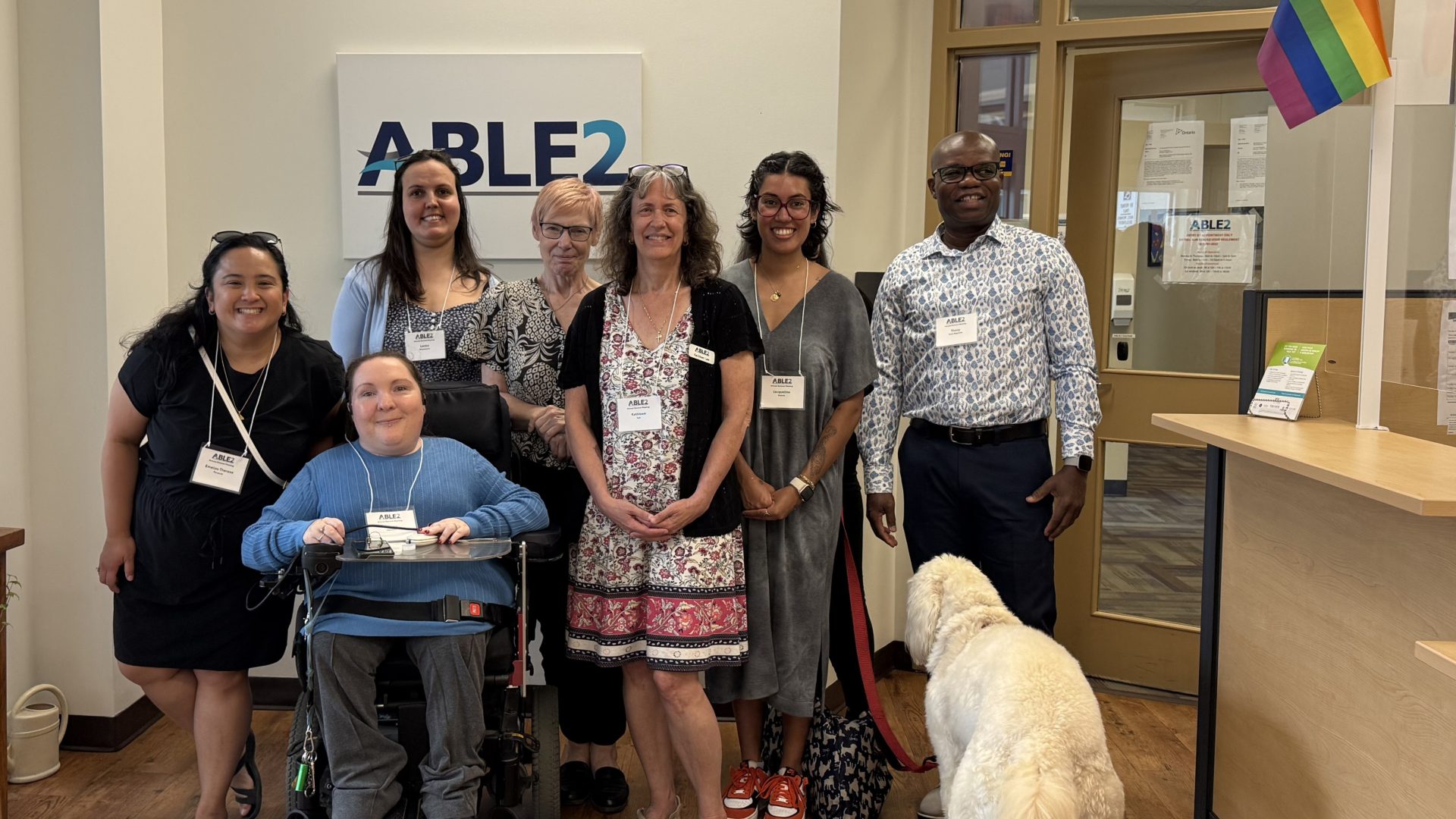
After more than two decades in an office on Parkdale Avenue, ABLE2, which provides services and programming for people with disabilities, made the decision to go fully remote.
According to executive director Heather Lacey, it’s a decision that will reduce overhead costs, with savings reinvested directly into programs and services. Also, rather than selling the Parkdale property, she said the office has been leased to another organization.
But costs aren’t the only reason the organization decided to go fully remote.
“I think people are ready for a change,” Lacey said. “We weren’t using the office. Not that it was a bad office or anything, but I think your environment also helps to bring creativity out in people and I don’t think our office was doing that. I think it was time to move forward.”
Lacey joined the organization near the beginning of the pandemic, when it was forced, like most organizations, to go virtual “on a dime.” It’s a process she said was difficult at first but over time came to suit the team well.
So when it came time to transition back, Lacey said it was clear the old in-office model wasn’t going to work anymore.
“When we came back hybrid, we were finding that we weren’t really delivering programs within our office; all of our programs were delivered in the community,” she said.
Staff, she said, weren’t using the office to work and they certainly weren’t using it to meet clients. Instead, staff were choosing to go to their clients, rather than have clients come to them.
“Over the past couple years, we’ve seen that nobody is coming into the office,” she said. “The utilization of our office was on the decline. It was like, really, what are we using this space for? It just didn’t seem efficient. It was kind of an evolution, once the pandemic hit. I think we were on our way to that, but (the pandemic) accelerated it.”
In 2023, fundraising platform CanadaHelps found in its annual Giving Report that 39 per cent of charities were fully in-person, while 12 per cent were remote. Almost half, 49 per cent, remained with a hybrid model.
For an organization like ABLE2, Lacey said being able to “meet clients where they are” is a necessity. As a result, working fully remote has been an asset for her staff.
“I think the pandemic, as bad as it was, did teach us some really valuable lessons about how to move forward and what’s really important,” she said. “Is it really important to deliver the programs from an office or is it really important to deliver programs of high quality with flexibility? We do the same thing; we’re just not doing it from the same place.”
In-person all the time a necessity for some charities
On the other end of the spectrum, the Ottawa Humane Society is one of many charities that never went remote during the pandemic.
President and CEO Sharon Miko said organizations like hers were classified as essential services and the nature of the work necessitated keeping staff on-site. Soup kitchens, food banks, shelters and some educational, emergency and direct support providers also fell into that category.
As a result, all staff have continued working in-person over the past five years.
“We never really moved off-site during the pandemic. We did have some teams doing some remote work but, to be honest, a lot of it didn’t work very well,” she told OBJ. “During the pandemic, we had a very on-site approach to our work. We needed people here to be accepting cheques and processing money. And we felt it was really important for managers to be here to support their team. It’s hard to do that remotely.”
At OHS, Miko said the need for in-person work extends beyond animal care.
“When we have a donor show up here with a cheque, it’s not helpful for us to have someone working from home who we have to call and say, can you come in to meet with this donor?” she said. “Even our comms team, they’re out on the floor every day, taking pictures of animals and doing social reels.”
While Miko said in-person work helps with training, teamwork and the organization’s overall culture, it also led to recruiting challenges at the height of the pandemic.
“Because so many people were looking for remote positions, it became difficult for us to attract candidates because we were in-person,” she said. “That was a very significant challenge. A lot of people had worked remotely throughout the pandemic. And the reality is that so much of our work requires being physically present.”
Recruitment is a concern for charities at the best of times, according to Deirdre Freiheit, an executive and leadership coach with Pourquoi Pas Coaching International, who has 30 years of experience in the charitable sector.
When it comes to deciding between in-person or remote, Freiheit said charities often need to give hiring concerns more weight than a private company might.
“The charitable sector can’t always compete,” she said. “Some organizations can, but many can’t. You can’t recruit and retain people in the ways the private sector and government (organizations) can, where there’s more available funding. The challenge for the charitable sector is, how do we encourage people to join?”
In the case of OHS, Miko said the organization was able to adopt policies to allow staff to occasionally work from home. Working face-to-face, she said, created a greater level of trust within the team that made that decision easier.
“Now our philosophy is that we accommodate remote work that is project-based,” she said. “Some individuals may work from home for a day because they’re working on something and they’ll be able to think better at home. We like to have that level of flexibility where we can. But we’ve really found that we thrive as an organization by building those relationships with people on-site.”
Challenges aside, Miko said remaining in-person had the added advantage of avoiding the hard decision many charities are now making: whether to go back to the office or stay at home.
“We weren’t in a situation where we preferred for people to be present but extended a remote work offer and then had to deal with backlash over a couple of years if we decided to have people come back on-site,” she said.
Hybrid flexibility an advantage for charities
The push to get workers back into the office has been significant in Ottawa, as some private-sector businesses and, more recently, municipal and provincial staff return to increased in-person work. Federal employees remain hybrid, commuting to the office at least three days a week.
In the charitable sector, the hybrid model may be here to stay.
The University of Ottawa Heart Institute Foundation is one organization that remains hybrid. According to president Lianne Laing, the model provides a flexibility that is ideal for charities like hers.
During the pandemic, Laing said the foundation’s office was moved from a separate building into the heart institute itself. With modern work models in mind, she said it was designed for the team to work hybrid. That meant a boardroom for collaborative work was a priority, rather than individual offices or workspaces for staff. As a result, teams rotate in and out of the office.
It’s a model Laing said has been a great fit for the organization.
“It’s fantastic,” she said. “It gives (the teams) space to be able to have their full teams on-hand so they can have that face-to-face interaction, which I truly believe they need. And I’m at the office every day, so I get to be involved and connect with the teams.”
For charities like the foundation, Laing said time working from home can be just as necessary. For example, the foundation’s major gifts team spends much of its time on the phone with donors, some of whom are patients. Those conversations, Laing said, can be emotional and require a level of privacy not easily found in an open office.
“You don’t want to have that conversation with a whole bunch of people in the background,” she said. “It works better for us, knowing they have the ability to leave home to go have coffee at someone’s home. That’s the better environment for them.”
In a small to mid-size organization like the foundation, Laing said hybrid models allow her to provide conditions that work best for individual team members. For herself, Laing said in-person work is her preference, which isn’t true of all her staff.
Still, spending any time on-site can help remind staff of the importance of the work, she said.
“I’m at the office but I get a feel for what is happening at the institute every day,” she said. “I hear the code STEMIs, I hear the calls on the intercom, I feel the pulse of the institute. For me, that’s really important.”
Changing models? Charities should be clear on why
With many businesses and public servants going back to full-time office hours, Freiheit said charities might feel the pressure to do the same. But her advice to leaders in the sector is to have a reason to make a change.
“Right off the top, is it necessary?” she said. “Are you going to disenfranchise somebody by forcing them to come into the office a certain number of days? If it’s non-essential, if they’re doing a great job for you and they don’t necessarily need to be there, then it has to work for both (parties). It can’t be one or the other.”
Retention, she said, is an especially important part of the conversation for charities, which may not have the resources to recruit new talent or offer significant incentives to existing employees.
And, as the private and public sectors go back to a more in-person model, hybrid or remote work could give charities a competitive edge, she said.
“If you can’t always pay competitive wages, you can look at other options to entice people,” she said. “Those are the kinds of things people need to be thinking about. Flexibility is something you can do.”