
With a reputation for cutting-edge research and a deep commitment to industry collaboration, Carleton University is helping shape the future of information and communications technology (ICT) from the heart of Canada’s tech capital.
From advanced wireless research to AI-enabled video systems and secure satellite networks, Carleton is establishing itself as a leader in applied research and innovation, working alongside major industry partners to build smarter ICT systems, train the next generation of engineers, and bring real-world solutions to market.
“We’re not here to simply respond to industry needs, but rather anticipate those needs and help define what comes next,” says Sandra Crocker, Carleton’s Associate Vice-President (Strategic Initiatives and Operations). “Through long-term partnerships and a focus on real-world impact, we’re generating solutions, training talent, and co-developing technology that will shape Canada’s digital future.”
Recent global rankings affirm Carleton’s strength in the field. In the 2024 ShanghaiRanking of Academic Subjects, Carleton placed 28th in the world and third within Canada in communications engineering—a rise of 16 spots over the previous two years and a clear signal of Carleton’s growing impact in the ICT space.
Nowhere is that impact more visible than in Ottawa’s Kanata North— home to Canada’s largest technology park — where the university has become a trusted partner to leading ICT companies.
Enhancing wireless innovation through integration
Carleton’s holistic partnership with global telecommunications leader Ericsson represents one of Canada’s most integrated university–industry collaborations. Together, they’re tackling challenges in next-generation wireless systems — from intelligent network design to drone-enabled communications — offering a blueprint for embedding academic expertise within industry innovation.
“Carleton has emerged as a key academic partner as we shape the future of connectivity,” says Marcos Cavaletti, Senior Advisor & Head of Ottawa Site for Ericsson Canada. “Their technical expertise and emerging talent are integral to our R&D efforts, helping us accelerate real-world solutions in a rapidly evolving wireless landscape.”
The partnership extends into education, with a co-developed Ericsson 5G Networks course giving graduate students direct exposure to advanced wireless challenges. Since its launch, 104 students have completed the course, and in January 2026, a new 6G-focused version will debut, underscoring the partners’ shared commitment to preparing the next generation of innovators.
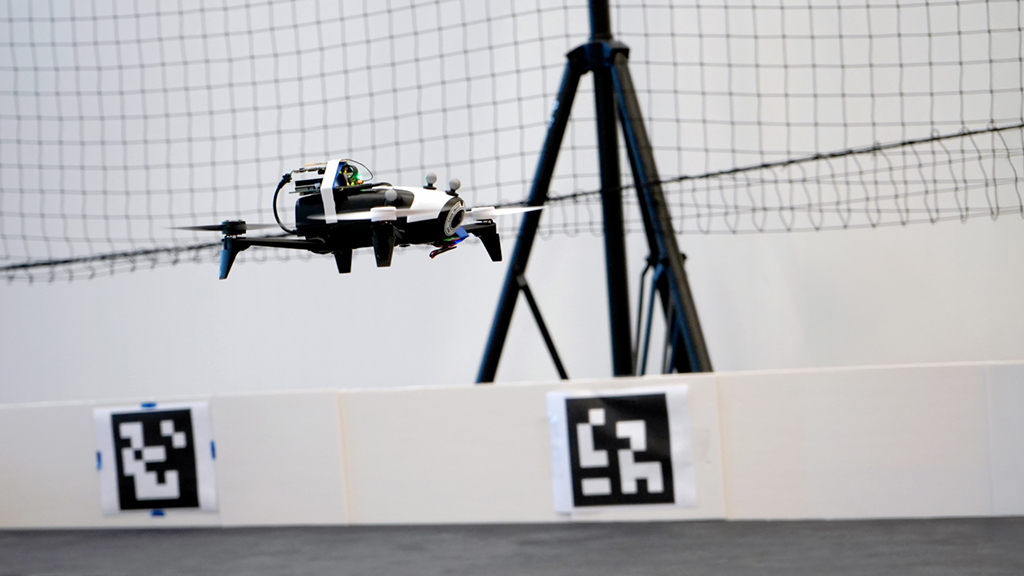
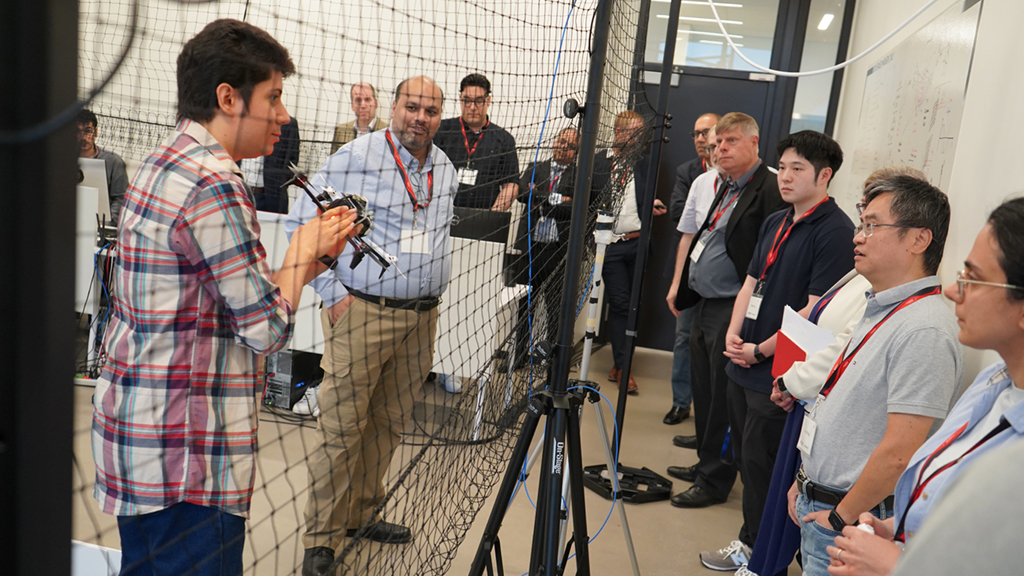
In 2024, Carleton and Ericsson also opened a specialized 5G Drone Lab within the university’s Advanced Research and Innovation in Smart Environments (ARISE) building— a flexible space where researchers and engineers work side by side to test and refine wireless innovations.
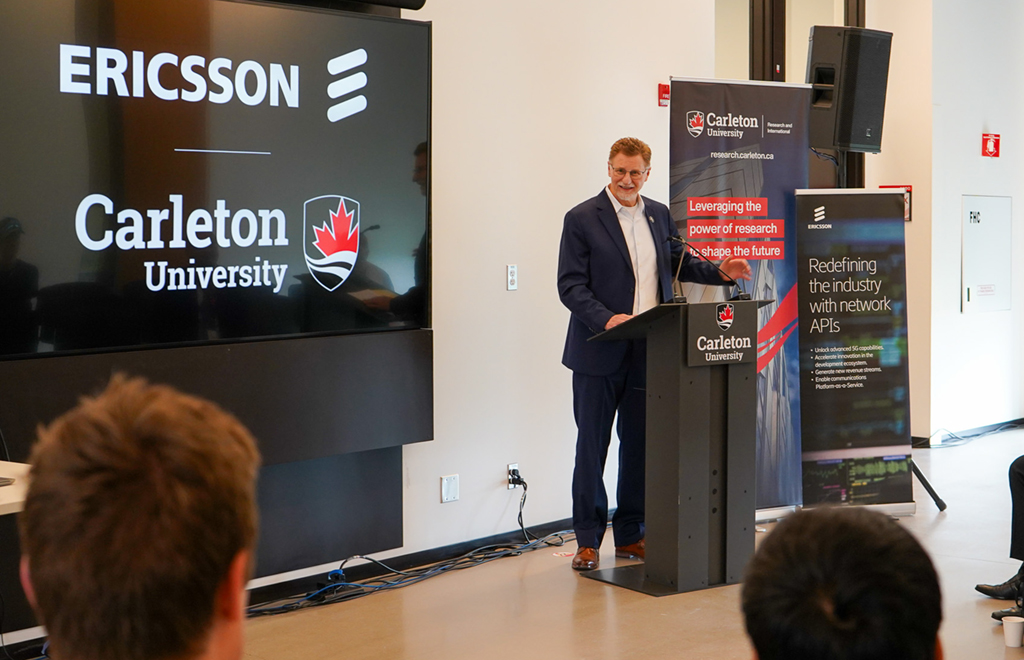
“This is what the future of collaboration looks like — shared infrastructure, shared ideas, and shared outcomes,” says Rafik Goubran, Carleton’s Vice-President (Research and International). “Together, we’re building the technologies that will shape the next generation of wireless communications.”
Expanding impact through diverse partnerships
Beyond Ericsson, Carleton’s collaborations extend to a range of partners across the ICT spectrum.
With Ross Video, a global leader in live production technology, Carleton has built a talent and innovation pipeline spanning three decades, comprised of nearly 400 completed student co-op terms and dozens of alumni hires. In 2023, the two organizations launched a three-year integrated partnership focused on collaborative research, co-development, and expanded support for equity initiatives such as Carleton’s Women in Engineering & IT (WiE&IT) program.
March Networks, another Kanata-based firm, marked its 25th anniversary by launching a strategic partnership with Carleton to advance generative AI business solutions, including its new AI Smart Search platform. The company has supported students through the March Networks Scholarship in Software Engineering since 2017 and is also a partner of the WiE&IT program.

Carleton’s collaboration with MDA Space is also pushing the boundaries of satellite communications. The Canadian space technology leader is working with the university’s experts to transform low Earth orbit (LEO) networks to deliver broadband connectivity to remote and underserved communities. Recognized with Carleton’s inaugural Intellectual Property (IP) Impact Award in 2025, the venture is helping lay the groundwork for ubiquitous, secure connectivity across Canada and beyond.
Supporting these partnerships is CU@Kanata, Carleton’s satellite campus in Kanata North’s tech hub. Designed to foster collaboration, CU@Kanata hosts events, workshops and showcases that bring students, researchers and companies together — often sparking new projects, commercialization pathways and co-funded research.
“Being a part of this ecosystem allows us to move faster,” says Travis Flieler, Director of Operations for CU@Kanata. “We’re not working in silos — we’re sitting at the same tables, having the same conversations, and driving innovation forward together.”
Through co-designed curriculum, shared research labs, and inclusive talent initiatives, Carleton is showing how universities can be central drivers of the innovation economy — not just educators within it.
And in a world where connectivity, speed and reliable tech are everything, that model may be one of Canada’s most important competitive advantages.
Interested in partnering with Carleton on ICT research, talent development or commercialization?
Visit carleton.ca/kanata or contact cukanata@carleton.ca to explore opportunities.