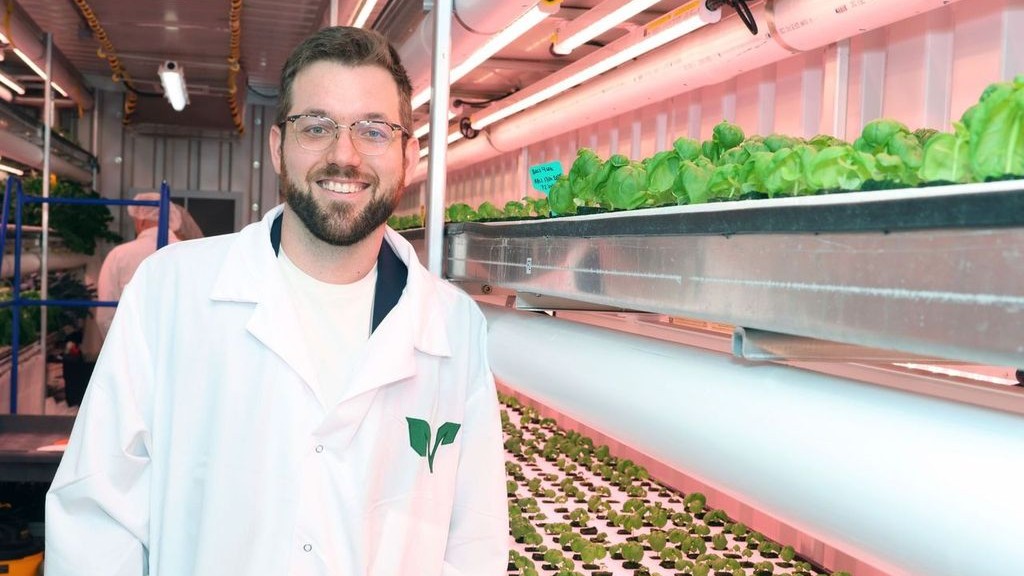
As demand for its indoor farms surges across Canada, Ottawa-based Growcer has dramatically expanded its international customer base after acquiring the assets of a bankrupt U.S. competitor. Growcer bid US$2.6 million at auction earlier this month to purchase vertical farming containers produced by Freight Farms, a Boston-based business that ceased operations last spring. Growcer also […]
Already a Subscriber? Log in
Get Instant Access to This Article
Become an Ottawa Business Journal Insider and get immediate access to all of our Insider-only content and much more.
As demand for its indoor farms surges across Canada, Ottawa-based Growcer has dramatically expanded its international customer base after acquiring the assets of a bankrupt U.S. competitor.
Growcer bid US$2.6 million at auction earlier this month to purchase vertical farming containers produced by Freight Farms, a Boston-based business that ceased operations last spring. Growcer also bought the U.S. firm’s intellectual property, including its proprietary software.
The deal immediately springboards Growcer, which has already supplied modular vertical farming units to 125 customers across Canada, into a position of global prominence in the emerging industry. Freight Farms manufactured more than 800 vertical farming containers for customers in 30 countries – units that will now be under Growcer’s umbrella.
“Our No. 1 priority was to ensure continuity for their (customers), and we realized that the best way to do that was going to be to put a bid in to acquire the assets,” Growcer co-founder and CEO Corey Ellis told Techopia this week.
Launched in 2011, Freight Farms was among the first companies to manufacture and sell container farms that grow produce indoors rather than underground.
But despite raising more than US$43 million in funding, the company struggled to capitalize on its first-mover advantage. Last year, Freight Farms scrapped a plan to go public on the Toronto Stock Exchange via a special-purpose acquisition company, and the firm ultimately ran out of cash.
Freight Farms joins the ranks of other high-profile U.S. vertical farming operations such as Plenty and Bowery Farming that collapsed under the strain of rising energy costs and razor-thin margins.
Still, Ellis is confident Growcer has made a good buy. He said Freight Farms’ staffing and overhead costs “were far too big for their current needs and the current size of their revenues,” adding he believes the company’s units can be money-makers under the stewardship of Growcer, which has been profitable for the past 18 months.
“We know this industry is viable if the business is managed in a prudent, judicious way,” Ellis said. “We felt a responsibility to their customers to take the baton and continue the mission that Freight Farms originally set out. Freight Farms was the pioneer in our industry. They really created the industry and the idea that you could put a farm inside a box and ship it pretty fast anywhere in the world. We wanted to carry that baton. We strongly believe in that vision for the world – that more local food is a good thing.”
While the two companies use similar growing technology, the units have their differences – for example, produce in Freight Farms’ modules is grown on “walls” rather than the horizontally stacked racks found in Growcer farms.
Ellis says Growcer will continue to sell both models, describing them as “complementary products” with their own particular appeal.
“We’ll give people the power of choice in this one,” he said.