As local officials search for ways to bring downtown Ottawa to life after the sun goes down, businesses outside of the city centre are on a mission of their own to create a vibrant rural nightlife scene.
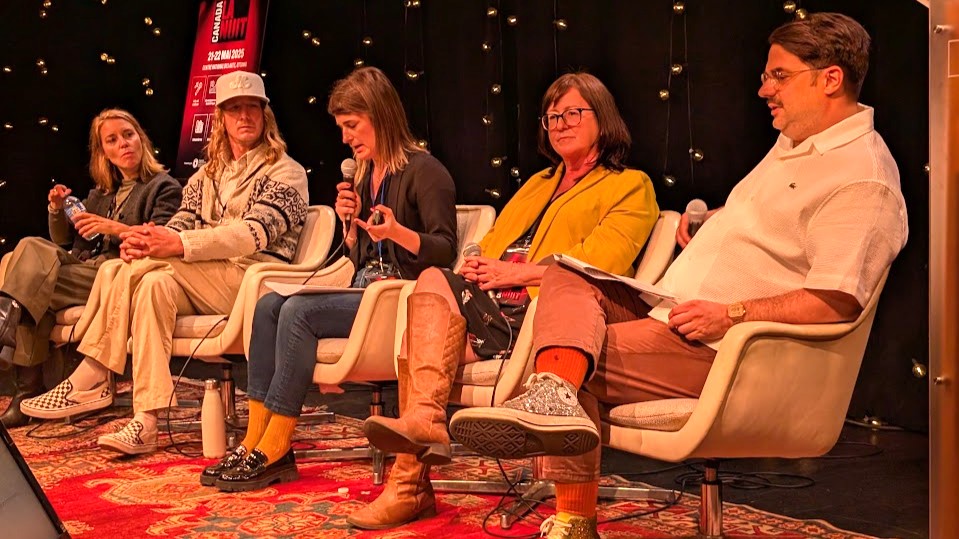
Last Thursday, a panel of local stakeholders sat down to discuss how farms and rural Crown lands are “activating” year-round, by attracting visitors and providing opportunities for community engagement. The discussion was part of the two-day Canada After Dark conference hosted by the city, nightlife commissioner Mathieu Grondin and the Ottawa Music Industry Coalition.
“This is one (issue) that is not so left field for Ottawa,” Grondin said of rural activation. “It is part of the DNA of the city. And as much as people think my mandate is limited to the ByWard Market … there’s this idea of developing pockets of nightlife and culture, having restaurants and venues outside of the Market, around the city and also beyond.”
Rideau Pines Farm is one business taking rural activation to the next level.
Panelist Matthew Vandenberg, the farm’s manager and event host, said the 40-acre property is best known for supplying foods and vegetables to local chefs but in recent years live music has become an equally exciting new frontier.
“I built this small 500-plus person venue,” he said. “It’s been pretty neat. You’re listening to music while (guests) are actually picking strawberries and peppers and carrots. You see families out in the field, feeling the music in the ground while taking vegetables. It’s a really powerful thing.”
The venue has enabled the farm to host events such as corporate dinners and weddings, but Vandenberg said he’s really embraced live music festivals. So far, Rideau Pines Farm has hosted an electronic dance music festival and a bluegrass festival. These kinds of activities provide nightlife activities for the farm’s neighbours as well as residents across the city, while also attracting more tourism to the area.
Geneviève Marquis, property management officer for the National Capital Commission, said Ottawa has the unique advantage of proximity compared to big cities like Toronto, with many rural destinations only a short drive from the downtown core.
The Greenbelt, she said, surrounds the city, accounting for 20,000 hectares of land that ranges in use from agriculture and conservation to recreation.
“That’s one of the huge advantages,” she said. “You have farms that feel very rural when you’re there but they’re 15 minutes from downtown. Some of them are on our light-rail transit system or a short walk away.”
Though many properties have had multi-generational tenants, Marquis said recent successors and newcomers have opened Ottawa’s rural lands to the public, day and night.
“We have a little bit of everything,” she said. “And we have many superstar tenants who are very public-facing and have really opened their doors to the community and made the most of their proximity. They have these multi-faceted offerings, like community-supported agriculture, farm stores, classes, workshops, farm schools – which really create this connectivity between urban and rural in a very unique way.”
Currently, she said around 20 local farms have offerings designed to attract and engage tourists and locals alike.
Ottawa Farm Fresh, for example, hosts seasonal harvests and a “barn-warming” event to refit its barn, bringing in live music and food trucks and gathering guests from across the city.
Marquis also pointed to Gees Bees, a local beekeeping company, which has urban hives across downtown Ottawa and has grown a large social media presence that has increased its connectivity outside of its rural community. Its property has hosted private events like weddings but also puts on farm-to-table dinner events and workshops.
“(Our farms) are expanding all the time,” said Marquis. “Each time a property turns over, we’re really trying to attract new tenants that are really going to have these agritourism offerings. Not just operating a closed business, but creating these points of connection for the local community.”
Mādahòkì Farm is a more recent addition to the rural landscape. Since opening on Hunt Club Road in 2021, the farm has expanded its offerings to include unique nighttime events, according to Trina Mather-Simard, CEO of Indigenous experiences.
“For about 19 years, we were downtown, an urban space on Victoria Island, and we offered Indigenous powwow dances, foods and cultural experiences,” said Mather-Simard. “But we were really excited to move all that to Mādahòkì Farm. Mādahòkì means to share the land. So it’s been a great move.”
The 164-acre property has allowed the organization to expand its programming and draw in more visitors, who can take part in activities that teach them about connecting to the land and celebrating the seasons.
Home to the former Lone Star Ranch, she said the property was already equipped with some infrastructure to enable tourism, including a lodge with a stage and plenty of public areas designed for programming.
While Mather-Simard said it’s a space ideal for daytime activities and events for school groups, corporate gatherings and busloads of tourists, Mādahòkì Farm has also embraced the night.
“Our Summer Solstice Indigenous Festival is one of Canada’s largest Indigenous events. It’s really anchored by a competition powwow with dancers from across all of North America. We do family fun programming and culinary experiences and there’s a lot of live music,” she said.
“Last year we did a really fun new program that’s going to continue, which is a glow-in-the-dark powwow. We gave everyone glow sticks and our dancers had wings and everybody just had a really fun dance party.”
In partnership with Indigenous Tourism Ontario, Mādahòkì Farm has also hosted drone shows for the past couple years, something Mather-Simard describes as “storytelling in the sky.” This year’s event will feature 250 drones recounting the seven grandfather teachings.
“We’re always trying to find unique ways to bring nightlight activities to our festival and to the farm,” she said.
Rural nightlife operators are not without their challenges.
Mather-Simard, for example, said most visitors to Mādahòkì Farm either drive or arrive by tour bus since there are no nearby transit routes.
“It’s probably our largest obstacle,” she said. “We are so close, just outside of Barrhaven, but we have no OC Transpo there.”
And for Vandenberg, even though his neighbours are far away, noise complaints can be an issue, especially when his farm is hosting an EDM festival that goes late into the night.
But fostering tight-knit relationships, something that he said comes easier in rural areas, can combat those issues.
“It’s very important to involve your community (with events),” he said. “By knocking on their door, letting them know, hey, next week it’s going to be a little bit bass-y – lock up your horses! – it brings the community into it.”