Incoming U.S. president Donald Trump has threatened high tariffs on imports from countries including Canada, raising concerns about inflation within the U.S. but also the potentially devastating impact on Canadian agriculture and food companies as well as consumers.
Get Instant Access to This Article
Become an Ottawa Business Journal Insider and get immediate access to all of our Insider-only content and much more.
Ottawa agritech companies say a potential tariff war between Canada and the United States puts a spotlight on the urgent need to bolster the country’s domestic food production capacity.
Incoming U.S. president Donald Trump has threatened high tariffs on imports from countries including Canada, raising concerns about inflation within the U.S. but also the potentially devastating impact on Canadian agriculture and food companies as well as consumers.
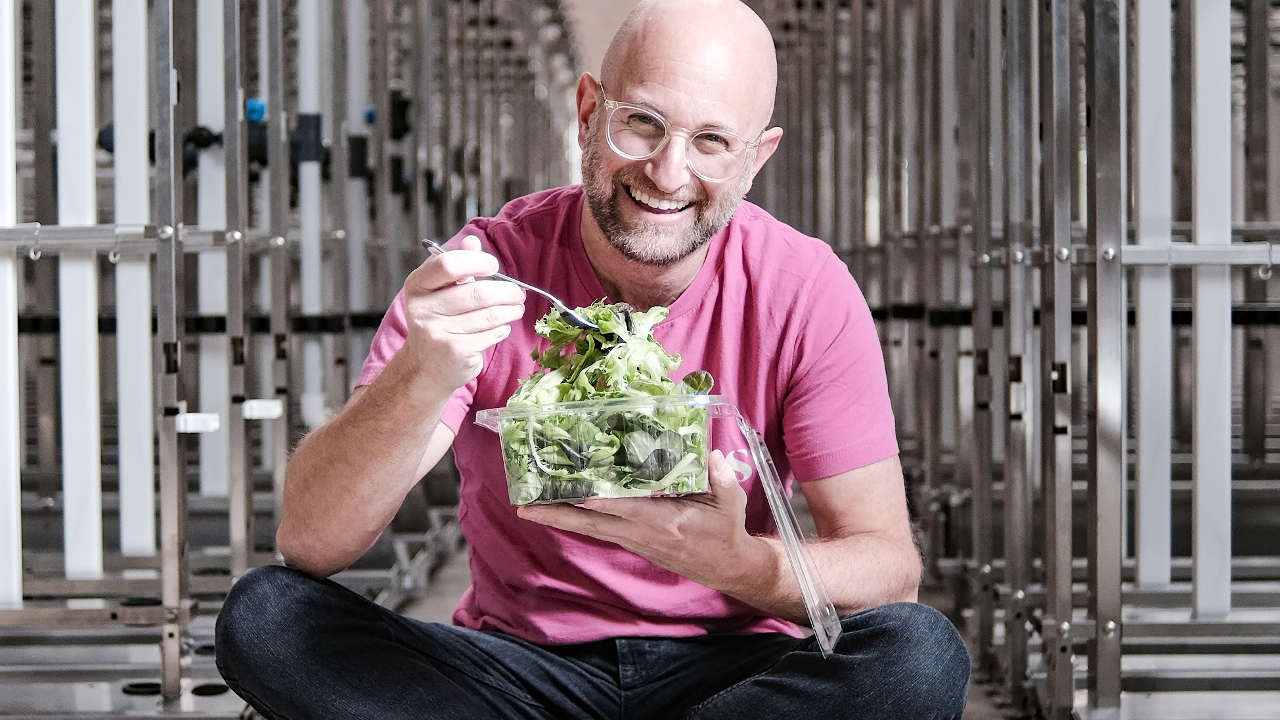
Noting that 95 per cent of leafy greens consumed in Canada are imported from the U.S., Jon Lomow, the co-founder and president of Ottawa-based Fieldless Farms, said a trade war between the two countries would hit Canadian consumers hard.
“We rely on other countries to feed us, and that’s hugely risky,” said Lomow, whose company operates a 60,000-square-foot indoor facility in Cornwall that uses renewable energy to grow lettuce, kale, spinach and mushrooms. “As a country, we’re not ready for this.”
Fieldless Farms, which has raised more than $20 million in venture capital since it was founded in 2019, employs about 40 people and supplies produce to various Ontario grocery chains, including Farm Boy and Loblaws.
Lomow said he expects sales to increase if Canada and the U.S. follow through on their tariff threats.
“If there are retaliatory tariffs, obviously that’s going to make (produce) more expensive, and it’s going to make us far more competitive, that’s for sure,” he said. “We’re getting emails now saying, ‘Thank you so much. I want to stop buying American products because of what’s going on, and you let me do that.’”
Experts say U.S. tariffs on Canadian goods could accelerate a push to ramp up domestic food processing and manufacturing, even as some companies consider moving operations south.
But if real change is to happen, they say more government support is needed.
“Until ... we actually focus our attention on a strong manufacturing strategy for food in this country, we're just going to continue to try to incentivize people to do things, but not necessarily have a strong plan in place,” Michael Graydon, CEO of Food, Health and Consumer Products of Canada, recently told The Canadian Press.
Canada’s food processing and manufacturing capacity has declined significantly in recent decades as the country's reliance on imported products rose, said Graydon. But after the supply chain struggles of the COVID-19 pandemic and other disruptions, “I think there is a resurrection of this desire to be more self-sufficient."
Canada generally has a trade surplus with the U.S. when it comes to food, meaning it exports more than it imports, said Tyler McCann, managing director of the Canadian Agri-Food Policy Institute. But there are some products where Canada relies heavily on imports from the U.S., he said.
Experts said Canada is particularly vulnerable when it comes to those products, such as fruits and vegetables, and processed foods like jams, sauces and snacks. Those areas could be good targets for boosting domestic capacity, said McCann.
Today, there are several "pushes and pulls" sparking interest in reinvesting in domestic operations, said Evan Fraser, director of the Arrell Food Institute at the University of Guelph.
Technology is one of them, he said, as Canada now has more tools to grow fresh produce year-round. But on a broader level, he said supply chain disruptions and geopolitical tensions are sparking more interest in so-called “nearshoring," or moving operations closer to home.
'International trade is breaking down'
Roderick MacRae, a retired associate professor at York University’s Faculty of Environmental and Urban Change, agrees there’s a larger shift happening, one that makes it crucial to build back resilience into the domestic food system.
“I think international trade is breaking down,” he said.
Local agritech entrepreneurs such as Corey Ellis, co-founder and CEO of Ottawa-based vertical farming startup The Growcer, agree.
“We’ve been sounding the alarm for a long time that the country’s at risk from the fact that we depend so much on imports,” Ellis told OBJ on Friday.
“It becomes a question of how many more crises like this do we need to have before this becomes a political imperative that we as a country decide we need to be more food sovereign.”
Some recent investments on Canadian soil include a soy processing facility in Ontario expected to open next year; Hershey returning to the Ontario facility in Smiths Falls it vacated in 2007; U.S. company Blommer Chocolate expanding its Ontario site; and an investment by McCain Foods to double the size and output of a processing facility in Alberta.
The Canola Council of Canada previously told The Canadian Press that the industry has been expanding its domestic processing in recent years to mitigate potential trade or supply chain disruptions.
More domestic capacity would help keep prices on some items stable, said Fraser.
But it’s easier said than done to build up that capacity, said Graydon. The costly, multi-year projects need more government support in order for there to be a real shift, he said – and not just government money, but a “strong food manufacturing strategy.”
In other areas of the industry where there's a significant trade surplus with the U.S., tariffs may make companies wary of investing further in Canadian operations, said McCann.
“It seems like the uncertainty will really put an investment chill on Canadian food processing,” he said, which could include companies holding off on expanding or upgrading existing plants.
McCann said it's more likely that for now, major companies will delay investing in their current facilities rather than packing up shop and moving capacity south of the border.
“But if we get into a world with 25 per cent tariffs that look like they’re going to be in place for an extended period of time, the likelihood of that increases over time.”
Call for more government incentives
McCann agreed the government should be doing more to prevent that from happening.
“I think we need to see more of a comprehensive approach from the government around how are they going to support those businesses that are at risk of moving to the United States,” he said.
Lomow said Fieldless Farms has received funding from the Federal Economic Development Agency for Southern Ontario, but he believes more comprehensive strategies are needed to boost Canada’s domestic agri-food industry.
“There’s money for companies that are doing innovative things, but there isn’t a concerted effort to improve food sovereignty. That doesn’t really exist yet,” he said.
Lomow argues there should be “incentives for companies to be innovative” so Canadian consumers don’t have to rely so heavily on food imports.
“We have policies to do that on all kinds of things to drive innovation in Canada. I think we need to apply some of that thinking to food.”
Several business groups this week called on the government to help Canadian firms mitigate the harmful effects of potential tariffs and retaliation.
Dennis Darby, Canadian Manufacturers and Exporters president and CEO, said businesses are responding to the uncertainty by pausing plans to invest in operations or expand, and he's concerned some could move production to the U.S.
“We’re already seeing … a bit of a chill on investment and expansion and a chill on hiring,” he said.
MacRae said Canadian companies may be concerned about Trump’s promises, but they won’t be hasty with their decisions.
“I’d be surprised if somebody’s prepared to make major shifts in their production capacity based on what Trump says,” he said. “I mean, that would be foolish.”
Ellis, whose company’s modular farms are now found in 100 locations across Canada, said the best thing governments can do to help ventures like The Growcer is get out of the way.
He said it typically takes anywhere from six to 12 months for his company to receive the necessary permits and approvals to set up its units, while some municipalities refuse to allow them at all.
“I personally think (food production) is a problem private enterprise can solve,” Ellis said.
“We don’t need government subsidies or government support to do this. What we need is fast-tracked permitting to put these projects in the ground to produce food as fast as possible. We’re in a food security emergency. We need to act like it.”
Lomow, meanwhile, said he hopes the tariff kerfuffle is a wakeup call to a Canadian economy that’s come to rely on cheap food from other countries.
“There’s going to be a whole bunch of negative stuff that comes from this,” he said. “But hopefully that could be a silver lining, where we start to realize how important it is to focus on food sovereignty.”
– With additional reporting from The Canadian Press