


Of all the many intricacies that come with running an international airport, one of the most fascinating, says Airport Authority President and Chief Executive Officer Susan Margles, is the remarkably close collaboration between hundreds of stakeholders needed to keep things running smoothly.
“There’s a remarkable web of interdependencies woven throughout the airport ecosystem,” she explains, adding that she was immediately struck by the Ottawa International Airport (YOW)’s culture of safety across its many teams. “From airlines and ground handlers to fueling and de-icing operations, air cargo, and multiple government partners, success hinges on close collaboration, seamless coordination, and safe operations.
“I’m fortunate to work alongside an experienced and committed team, which has greatly accelerated my understanding of how it all comes together.”
It’s just one of many elements of airport life Margles has come to know intimately in her slightly more than six months in the role since assuming the position this past January.
Navigating the intricacies of an international airport
Prior to taking the reins at the Ottawa International Airport Authority, Margles spent two decades at Canada Post serving in senior leadership roles across strategy, operations, and human resources. Prior to that she held senior positions at Transport Canada and the Department of Finance.
But she’s always been drawn to the complexity and vibrancy of the aviation industry, she says. Combine that with her experience navigating a large, multifaceted organization; the public’s passion for air travel; and the airport’s mandate for economic development, and it made the opportunity to lead the Airport Authority too compelling to pass up.
Needless to say, it’s been a busy first six months.
“The first and most important stakeholder group I met with was the Airport Authority team,” Margles recalls. Through a series of town hall and other meetings, I believe I met everyone in the organization within my first two weeks.”
From there, she met one-on-one with board members and the organizations that nominate to the board, along with representatives from the campus community, including airlines and multiple government partners.
‘Their success fuels ours’
Margles says each interaction helped identify priorities and opportunities for collaboration aimed at bolstering economic prosperity for the region without losing sight of the importance of the YOW passenger experience.
“Each conversation offered a unique perspective, but shared a common thread – a desire to see Ottawa thrive,” she explains.
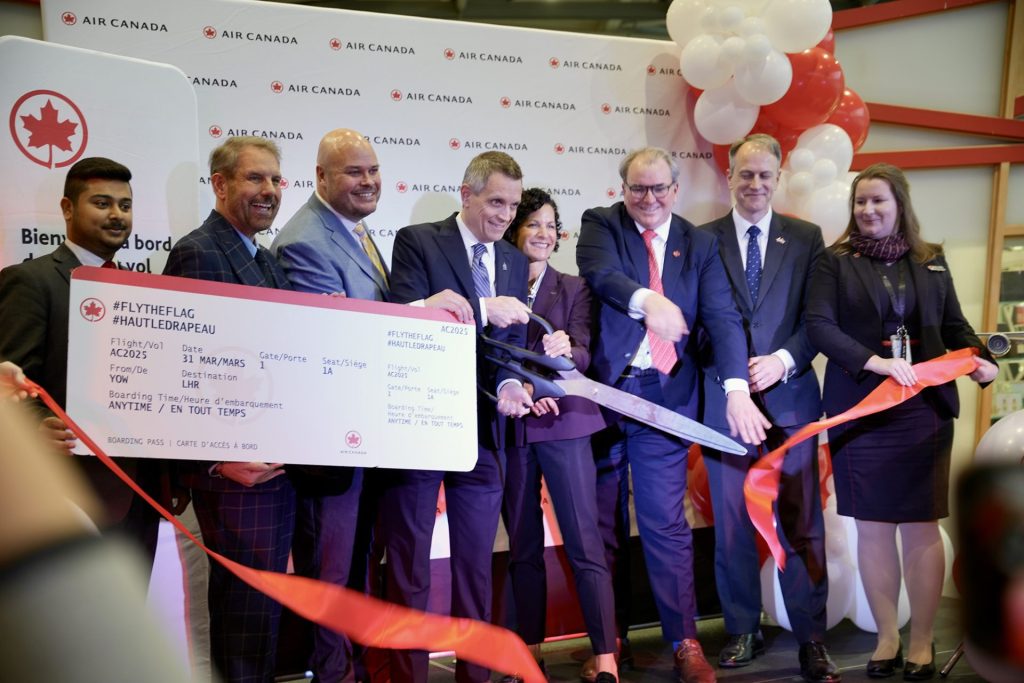
“When Air Canada relaunched its non-stop service to London-Heathrow, I joined a group of regional leaders including Ottawa Tourism, Ottawa Board of Trade, and Invest Ottawa on a trade mission to London. It was a great example of partners working together to attract business and visitors to the region.
“Their success fuels ours, and we’re proud to play a key role in supporting it.”
Meeting today’s – and tomorrow’s – challenges at YOW
Margles says one theme she’s heard consistently is the desire for transparency and collaboration: Stakeholders want to be part of the conversation and to understand how their contributions support the airport’s growth, and how YOW can play a part in theirs.
Airlines, in particular, want clarity around major projects and how those developments will improve efficiency for them, and ultimately service for passengers. That’s why the Airport Authority is focused on maintaining open communication and creating more opportunities for input as it shapes what’s next for the airport.
One of those items in the airport’s future is potential expansion while retaining the low-stress ease of journey for which YOW is known.
“It’s no secret that we’re looking at expanding,” Margles says. After all, the current terminal was built to accommodate approximately five million passengers a year – and is already close to exceeding that number and could reach eight million by 2035.
“That kind of growth demands increased capacity, which could include new gates, expanded processing centres like check-in, security screening, U.S. Customs and Border Protection pre-clearance, Canada Border Services Agency, plus more amenities to keep the passenger experience smooth and enjoyable,” Margles explains.
Along with volume pressures, the airport’s passenger profile is also changing. Historically, approximately 98 percent of its travellers either started or ended their journey at YOW, but now nearly 13 percent of travellers connect through Ottawa.
That’s got the airport looking at a dedicated connection centre to better serve this evolving mix of travellers.
In the meantime, there are exciting projects already underway at YOW: among them, the new Alt Hotel and Zak’s Diner – set to open in the domestic/international gate area – are scheduled to launch later this year.
“There’s a lot to look forward to at YOW.”