

From healthcare to aviation to architecture, simulation and visualization tools have become an essential part of training, analysis and decision-making in sectors that rely on precision.
At Carleton University, researchers are addressing a growing demand for advanced systems that enable learners to practice complex skills without risk, deepen understanding of human behaviour, and provide industry professionals with accurate, data-rich models for planning and design — from innovations in clinical training to advances in modelling, cognition and immersive learning.
Advancing paediatric surgical training through AI-enabled simulation
Laparoscopic surgery is now the preferred approach for many paediatric procedures because it reduces pain, scarring and recovery time for young patients. The technique, however, requires surgeons to manipulate fine instruments in a small operating space while viewing the procedure only through a video feed — a demanding skill that calls for strong coordination and spatial reasoning.
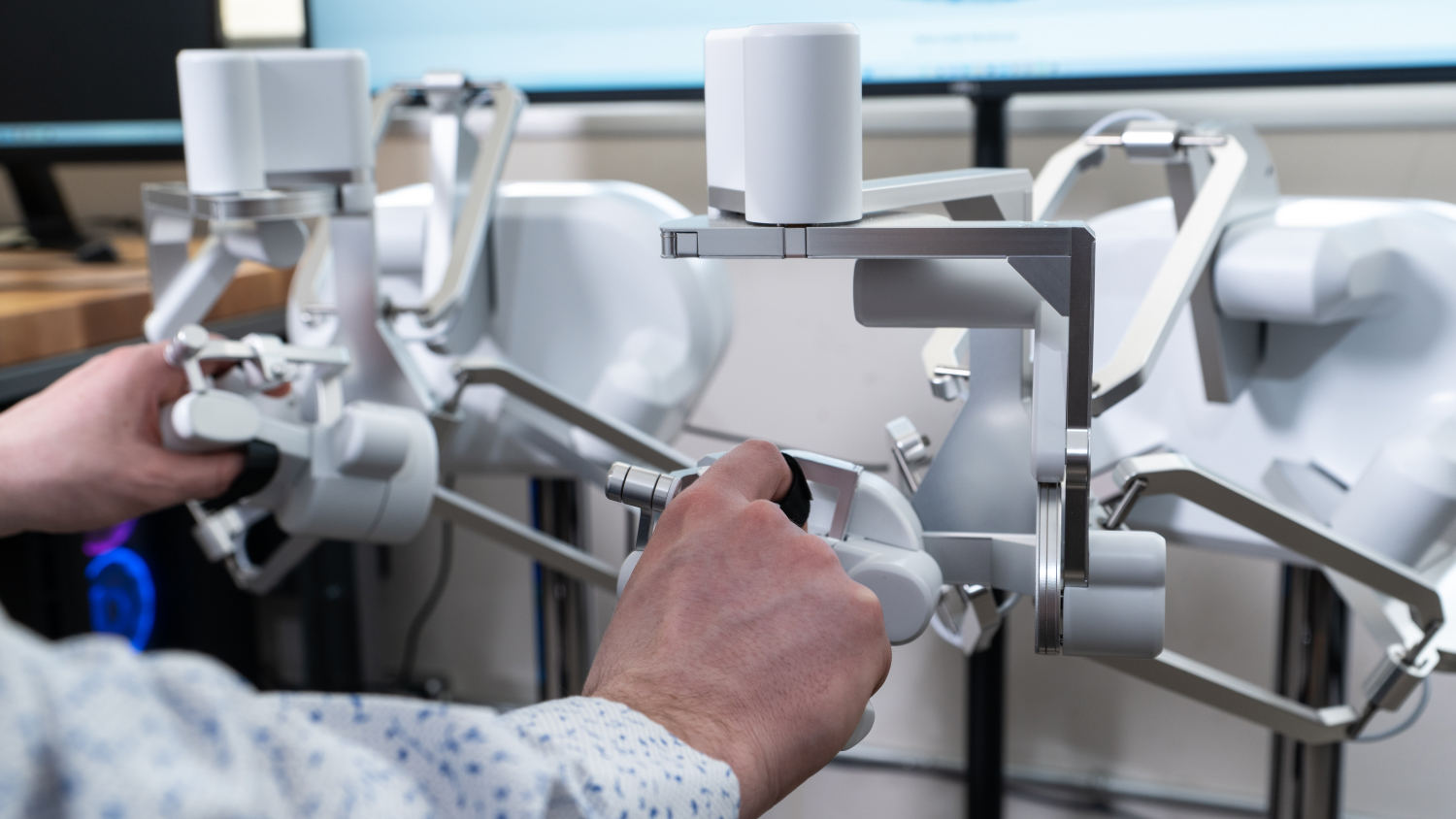
To support trainees, Carleton professor Carlos Rossa from the Department of Systems and Computer Engineering and his students are working with paediatric surgeons at the Children’s Hospital of Eastern Ontario (CHEO) to develop a cyber-physical simulator that combines robotics, sensing and machine learning. The system is designed to give medical residents a realistic way to practice laparoscopic techniques before moving into the operating room.
“When performing laparoscopic surgery, you’re looking at a two-dimensional image but operating in three-dimensional space,” says Rossa. “Our simulator helps learners develop the mental model and dexterity they need before they’re working with actual patients.”
Rossa and a team of engineering students — many contributing through their fourth-year capstone projects — have developed several iterations of the simulator. The platform captures and analyzes tool movements using computer vision and machine learning, comparing a trainee’s technique to that of an experienced surgeon.
This allows trainees to practice core laparoscopic skills independently, easing demands on clinical training time.
Building on this work, Rossa’s team is also developing a robotic version of the trainer that pairs ultra-precise robotic arms with advanced haptic devices to support more controlled surgical motion and improved tissue handling in confined spaces, such as in newborn procedures.
“Our students have introduced key design ideas we hadn’t considered,” Rossa adds. “Their contributions have meaningfully shaped the prototype and strengthened its potential as a training tool.”
Documenting the built environment through visualization and modelling
Beyond clinical training, Carleton researchers are applying visualization technologies to digitally recreate and interpret real-world locations.
For more than two decades, the Carleton Immersive Media Studio (CIMS) has advanced research in digital documentation of the built environment. Bringing together students and researchers in architecture, engineering, computer science, and interactive media design, its interdisciplinary team uses laser scanning, photogrammetry, thermal imaging and building information modelling to create detailed digital replicas of structures and landscapes.
“The models developed by our team provide a reliable, shared understanding of complex spaces,” says professor Stephen Fai, Director of CIMS. “By bridging multiple layers of data together in one environment, these digital representations help planners, designers and communities coordinate their work more effectively.”
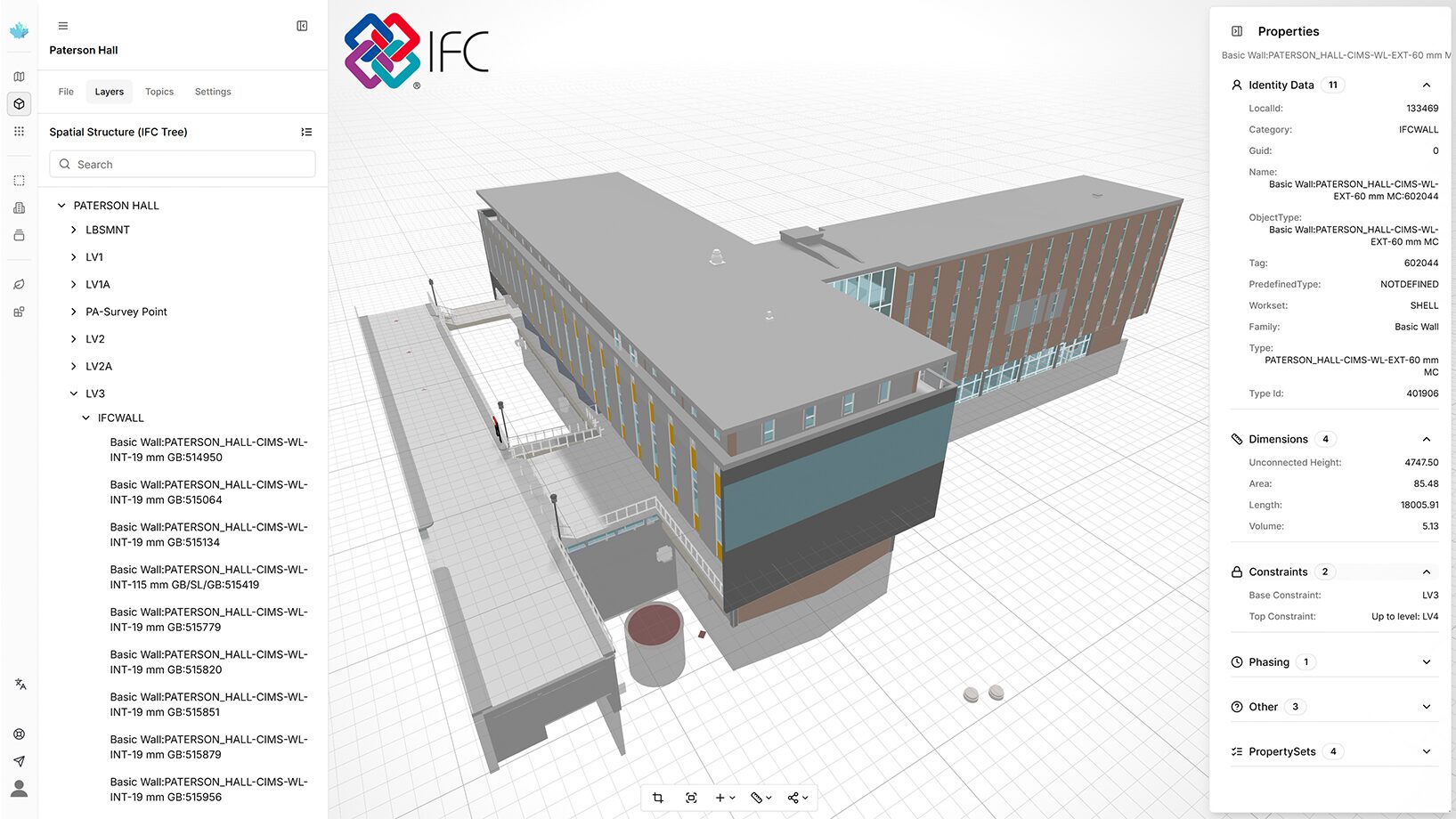
CIMS works with government partners, community groups, architects and engineers to support design coordination, heritage conservation and infrastructure assessment within Canada and internationally.
In 2025, professor Mario Santana Quintero, who leads CIMS’ NSERC Create Heritage Engineering Program, was appointed UNESCO Chair in Digital Twins for World Heritage Conservation — Carleton’s first UNESCO Chair and the first in Canada focused on the World Heritage Convention.
His work treats heritage as more than the preservation of physical structures, examining how digital tools can capture memory, identity and cultural meaning while recognizing the importance of Indigenous and traditional knowledge systems.
“Digital twins give communities new ways to understand, manage and protect places that matter to them,” says Santana. “Our focus is on developing shared frameworks and tools that allow data to be used collaboratively — not just to document heritage, but to support long-term stewardship and care.”
Improving human performance through advanced simulation
While visualization at Carleton is used to document and care for physical places, researchers are also using simulation to better understand how people respond in dynamic, real-world scenarios.
Carleton’s Advanced Cognitive Engineering (ACE) Laboratory examines how people process information and perform under pressure in complex environments. Using aviation, driving and remotely operated system simulators, researchers study how factors such as workload, attention and interface design influence human performance.
“Simulation lets us isolate the variables that matter while still capturing the complexity of real tasks,” says professor Chris Herdman, Director of ACE. “We can adjust conditions and see how they shape behaviour in a way that wouldn’t be practical or safe in operational settings.”
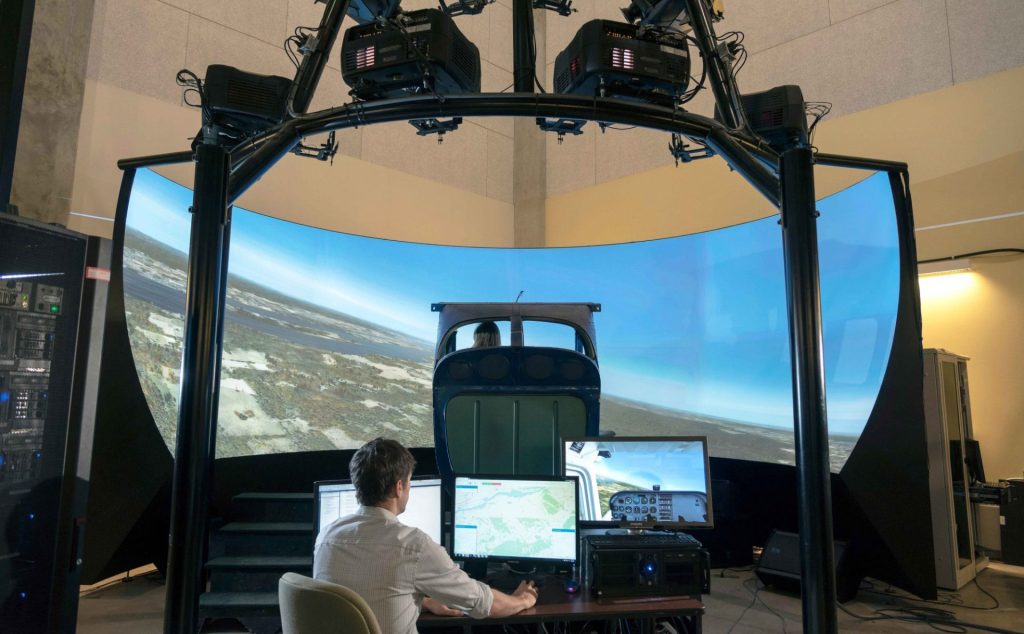
A major focus of the lab is CANFLY, a long-running research program led by ACE senior research scientist and adjunct research professor Kathleen Van Benthem. The study examines how general aviation (GA) pilots maintain situational awareness — detecting key information, interpreting what it means, and anticipating what will happen next — and how these abilities may change over a pilot’s lifespan.
“We’re interested in how cognition evolves with experience and age,” Herdman says. “The aim is to support pilots in understanding their own decision-making and maintaining safety across their flying careers.”
Within the program, pilots complete simulated flight scenarios that mirror the cognitive demands of flying, allowing researchers to observe how they prioritize tasks, manage workload and respond to interruptions.
With more than 250 participants to date, CANFLY is one of the largest cognition-focused GA studies in Canada — highlighting how immersive simulation research at Carleton is informing safer training and operational practices.
For more information on Carleton University’s activities in simulation and visualization, visit carleton.ca/research.