

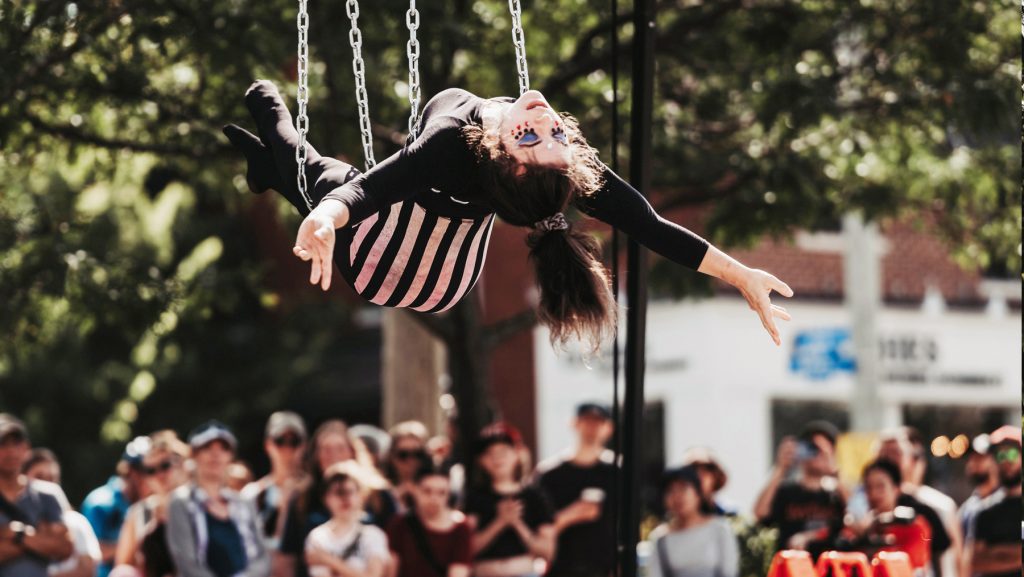
Ask anyone what their local business improvement area (BIA) does, and you’ll likely get the standard answers: They promote hyperlocal businesses. They help enhance their designated district. And they beautify their neighbourhoods.
While that’s all true, what many may not appreciate is the impact BIAs have on local cultural tourism through events like Taste of Manotick and Taste of Wellington – and the ways those events have evolved to both define their areas and drive more regional visitors to them.
“Our local businesses and BIAs are catalysts of culture in our neighbourhoods,” explains Ottawa Coalition of Business Improvement Areas (OCOBIA) Chief Advocate Michelle Groulx. “BIAs help build places that reflect the culture and identity of the businesses in their neighbourhood, but they also bring people together with cultural events and festivals.
“When we talk about cultural economy, these kinds of events are catalysts – they attract people in the tens of thousands to their area.”
Evolving from hyperlocal street festivals to regional tourism draws
That hasn’t always been the case, however. Organizations such as the Manotick BIA and Wellington West BIA have worked hand-in-hand with member businesses to attract more people to their areas through various changes and upgrades to their events.
“In years past, Taste of Manotick was a bit like a high school reunion,” laughs Manotick BIA Executive Director Kelly Belair. While locals still attend, it’s not hyperlocal anymore: The Taste of Manotick has experienced recent significant growth, evolving into a major regional event with record-breaking attendance in 2025.
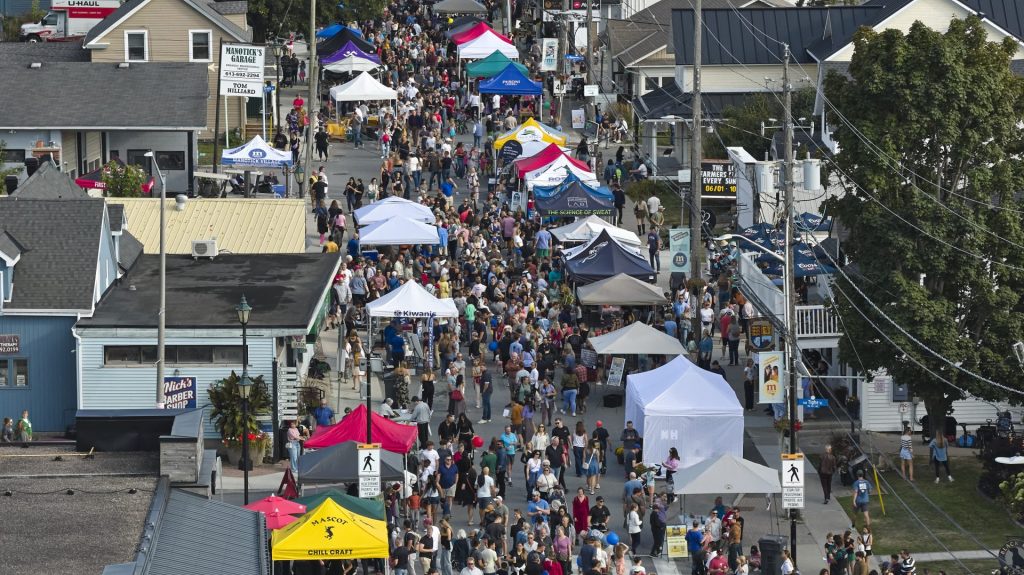
Belair says there were two main drivers behind this improvement: Changing the event’s model from free food samples to a more formal, ticket-based system, and engaging social media influencers to generate online excitement.
The ticketing change enabled local restaurants to recoup some of their costs while also serving more elaborate dishes that attract a wider (and potentially more upscale) clientele.
There’s been a similar evolution in Wellington West, where the BIA also implemented paid ticketing for its annual Taste of Wellington – an event Executive Director Aron Slipacoff says is “The world’s longest street festival.” (The event spans 2.3 km from end to end).
Taste of Wellington was traditionally where locals would drop by for free food samples, he says. “But in today’s business environment, that’s not sustainable. We wanted our restaurants to come up with special menus, meals, and drinks for the day, and also charge a few bucks.”
The elevated fare and other improvements helped Wellington West’s local businesses draw a bigger crowd than ever in 2025, with a large contingent coming from outside the neighbourhood.
Measuring the impact of ‘near-far’ visitors
Slipacoff says the difference in the makeup of attendees has been noticeable. Using data from the Canadian Urban Institute’s Mainstreet Dashboard analytics platform, he says more than half of last year’s 40,000-strong crowd travelled to the event from between six and 30 km away. And nearly 10 per cent came from 40 km away or farther.
The festival has also grown at a steady five per cent, year over year, over the past couple of years.
“The vast majority of people coming to this festival are not people from the neighborhood,” he says. “This is not a neighborhood festival – and this data gives us a way to start building a real narrative about that, as opposed to an anecdotal one.”
Taste of Manotick experienced similar success in 2025, attracting around 20,000 attendees and selling $40,000 worth of sampling tickets in just four hours. It also raised $12,000 for charity.
The impact of those visitors, Belair and Slipacoff add, extends further than just a one-day event. That’s because many people who experience the area’s restaurants and other businesses come back – in some cases even as new residents or business owners. “You’re showcasing the area to a whole new group of people from across the area,” says Belair.
‘Placemakers at their core’
OCOBIA’s Groulx says the city’s BIAs and local businesses are perfectly situated to both define the essence of their neighbourhoods and help spread the word.
“Those relationships, between residents and local businesses, are what attract and sustain main street businesses,” she explains. “BIAs build on a culture rooted in the authenticity of each neighbourhood and its businesses. From public art to festivals, they create experiences that showcase what makes every district unique.”
Belair agrees, adding that part of her mission is to “turn main streets into destinations.
“BIAs are placemakers at their core,” she says. “These events don’t just bring people to the area. They shape how the community connects to the village. And when people feel connected, they spend locally, and then come back.”