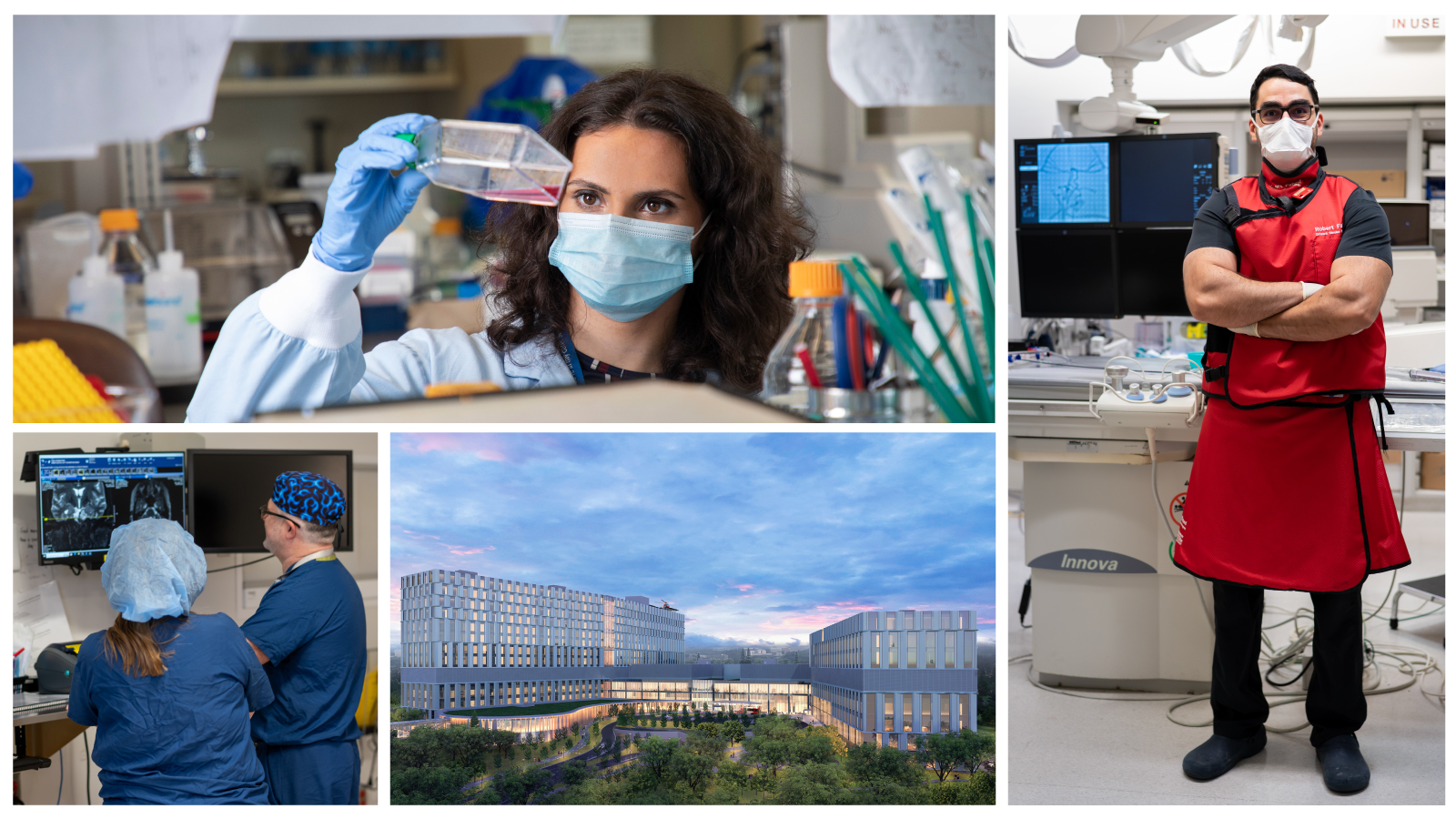

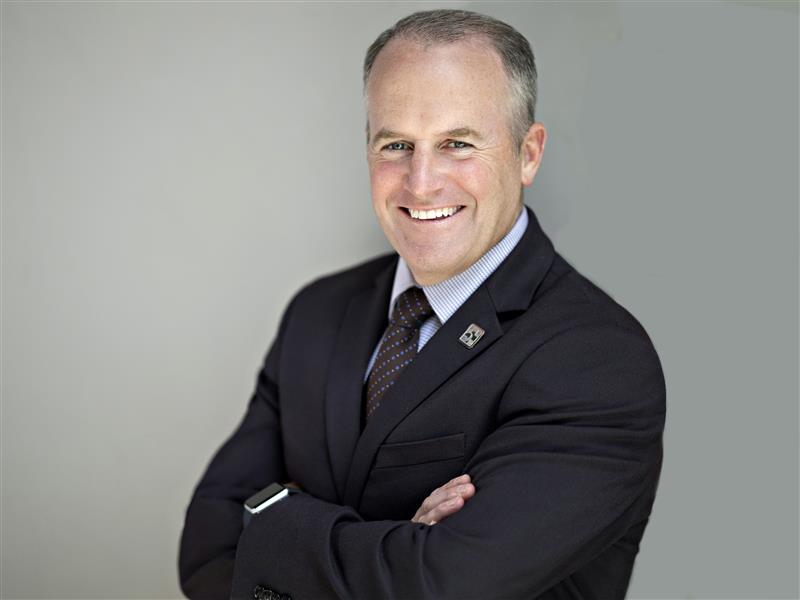
Cameron Love has seen a lot since he joined the healthcare sector nearly 30 years ago. But of everything he’s seen come and go, he says what is the most incredible is the sector’s sheer – and constant – pace of change.
“If you go back 30 years, patients were admitted to hospital for procedures and treatments over the course of days” explains The Ottawa Hospital (TOH)’s president and chief executive officer. “And now, they are often treated and sent home with a 15-30 minute procedure.”
The availability of new tools, techniques, equipment, and medications is largely driven by the cutting-edge research that takes place at TOH and elsewhere. But Love says service effectiveness isn’t the only thing that’s changed: Populations have grown and are aging; hospitals must treat more people and more complex illnesses.
“And that’s why we’re trying to reshape the way healthcare works,” he says of TOH’s vision of the future of healthcare in the region, whose centrepiece is the construction of a new, state-of-the-art health and research campus. But the new hospital is just the start of TOH’s planned healthcare metamorphosis in the region.
Growing a regional healthcare system through integrated, community-based care
TOH now manages around 60-70 per cent of all adult hospital based care and 100% of complex advanced care, in an area of 1.3 million people. That includes around 60,000 surgical procedures each year – a number Love says needs to climb to over 90,000 in the next 5-10 years. And the large majority of patients we cared for need continued care after they leave the hospital.
It all adds up to significantly more demand on the healthcare system than when most of the current infrastructure was built.
“That means we need to build and expand more healthcare infrastructure” Love says. “You need health system infrastructure based on integrated care. The focus is on building a comprehensive health system, rather than just hospitals.”
While most adults will still have acute procedures such as trauma surgery or neurosurgery in hospital, follow-ups and minor surgeries can be performed in community-based clinics, surgical centres, and long-term care homes with the same specialists and care teams.
Like many countries around the globe an integrated health system can improve patient outcomes while taking pressure off physical infrastructure at The Ottawa Hospital’s three campuses, keeping them available for complex surgeries and treatments.
“In many instances patients return to hospitals as it is the only place where they can receive access to care. As we reshape healthcare and build more community-based infrastructure, patients can be supported for many ailments in community based settings ensuring hospitals have capacity to treat the most acutely ill,” he says. “You build more long-term and transitional care capacity, primary care capacity, surgical clinics and ambulatory centers in the community while making sure you’ve got state-of-the-art infrastructure at our hospital for critical programs like trauma and neurosurgery. We need to create capacity for the hospital programs to be effective and efficient.”
Love adds, “It’s more efficient, it provides better access, and it builds capacity without overburdening the sites you have to protect for complex procedures.”
The impact of research and innovation
Much of the region’s evolving healthcare sector will continue to be driven by research. As one of the top five healthcare research centres in the country, TOH facilitates around 750 clinical trials every year — crucial in developing new treatments, but also for providing hope to more than 11,000 patients and their families.
“If we’re going to improve the way treatment is provided, improve outcomes of care for surgery, if we’re going to find new treatments through things like stem cell therapies, then we’ve got to continue to expand research.”
Research also helps drive economic growth – something he says, as the city’s second-largest employer, TOH takes seriously. It helps the city attract greater government and industry investment, spurs startup activity, and allows TOH to recruit talented healthcare professionals from around the world.
“It improves the reputation, not only of the hospital, but of the city. And it also brings more revenue and income into the city.”
New tools, partnerships, and ways of teaching
TOH has a tradition of strong industry partnerships, something Love says is “critical” for driving innovation within the health system and for the evolution of healthcare in the region.
“You take the pace at which startups are creating new devices or new technology, the reality is industry is critical to being able to evolve healthcare,” he says.
“The technology that’s here today versus 10 years ago is a massive jump forward,” Love adds. “And the tech 5-10 years from now will make today look obsolete. But you can’t guess at these things – you’ve got to build partnerships with companies to help evolve that.”
Along with industry partnerships, TOH maintains relationships with local educational institutions such as uOttawa and Algonquin College for a steady supply of healthcare talent. As digital platforms evolve, TOH also uses a cutting-edge simulation centre to upskill current and new staff.
“Whereas before you might have sent them back for more education – and we still do those things – there’s a whole dimension of what you can do with a simulation to change the way education works.”
What the evolution of healthcare means for patients and families
As TOH grows the region’s integrated healthcare system through community-based care, an expanded research presence, deeper industry and educational partnerships, and new ways of learning, the upshot for local patients and families is simple: Greater access to life-saving care.
After all, no one likes waiting for hours at the emergency department (ED) for a relatively minor ailment – a currently all-too-common scenario across the country.
“ED teams do a really good job at prioritizing anybody that comes in who is acutely ill – they always go to the front of the line,” Love says. “Problem is, you come in with a very minor ailment, and you’re being triaged against more serious cases.
“You shouldn’t have to be there to begin with. And by focussing on building capacity in the system and options for patients, they won’t have to turn to the ED as the entry point for care, and they can get cared for in a timely manner.”