

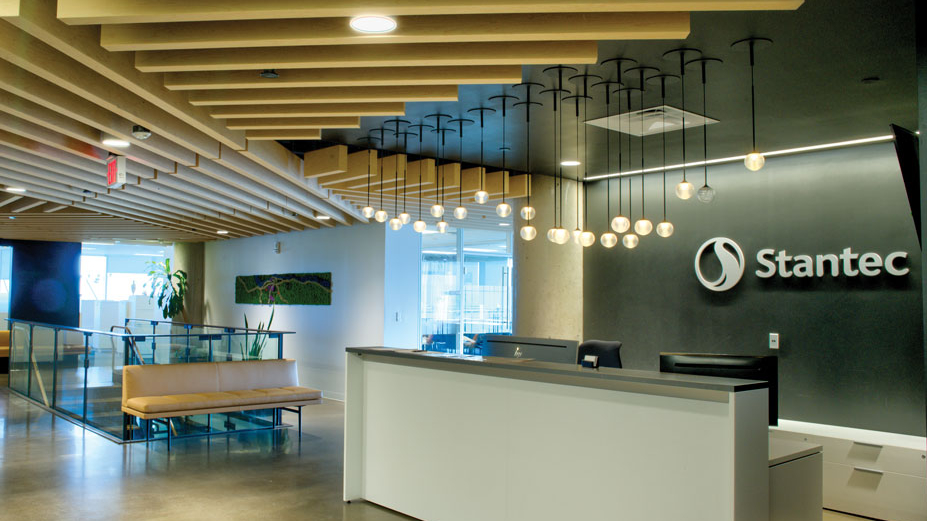
A MARANT Construction Ltd. office fit-up project for Stantec, a multi-disciplinary design and engineering firm, had a few requirements: Keep the budget in check, re-use fixtures the company had in its possession and follow the design specifications of this large corporation that has set design standards.
Sustainability initiatives were a key priority to the client, and this did create challenges in effectively ensuring the reuse of glass office partitions and millwork.
“Stantec’s in-house team had prepared the design of the space with significant re-use considerations. One of the key components included existing demountable partitions,” says Heidi Pershick, MARANT’s project manager and the person at the helm of this project. “We were able to take those down, catalog and re-use them in the new space and conduct simple repairs where needed to enable the construction of multiple large workspace areas. Reusability and sustainability considerations were key to the project.”
The two companies had worked on projects together in the past across MARANT’s many regions.
MARANT Construction Limited offers strategic and integrated services in the commercial interior sector; including pre-construction consulting, general contracting, pre-lease advisory and ongoing facility care while prioritizing sustainability, equity and employee ownership in its operations. Its commitment to quality, collaboration and responsible business practices has set a high standard in Canadian corporate construction since the firm’s inception in 1999.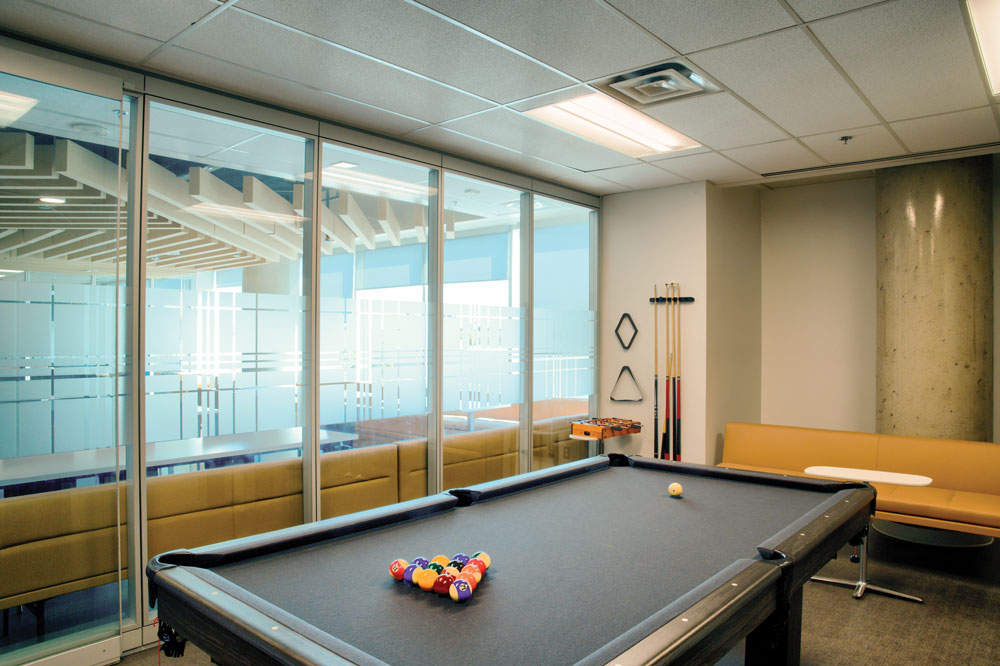
“With strong pre-existing relationships,” says Matthew DiCintio, regional director of operations for MARANT, “Stantec knew we would stand behind our delivery and there was a level of confidence from the get-go. We assembled a great team, and it shows in the results.”
Pershick says that over the course of the fit-up, the offices at the corner of Baseline Road and Clyde Avenue, next to Walmart, remained open. This in situ delivery offers its own challenges of segregating areas for renovation and working alongside those that must remain available to staff and end-users. Thankfully, MARANT is well accustomed to navigating logistical concerns and project parameters, considering its expertise in construction management and complex project executions. The company is very involved in pre-construction planning, and sequencing strategies are well explored before the work begins on the site.
“Challenges were mitigated through effective and clear communication with the existing staff regarding who required access to existing conference room spaces,” Pershick says. “Working to ensure Stantec staff could still work optimally while we continued to manage the workflow and the construction activities accordingly was paramount.”
Pershick says she’s proud of the efforts to re-use existing office materials on this project.
“Re-use of components offered them a new life and greatly reduced waste that would otherwise be diverted to landfill. The refresh to this office space was tailored to maximize changes in business functionality and flow,” she says.
The renovation meant the return to work for 200 Stantec staff members, some of whom were present over the course of the renovation while others worked offsite.
“We were trying to maximize on the use of what we had due to tight timelines and budget,” Pershick says. “Our goal was to turn out a functional space that was still inviting for staff.”
A lovely lobby-café area
One of Pershick’s proudest spaces in the project is the lobby-café area and she ensured a significant portion of the project’s finances were focused in this space because it’s located in a first-impression place within the tenant’s suite.
“It’s a nice, inviting space,” she says. “It’s very open — it opens to a large second-floor staircase that goes up to the third floor, adjacent to reception for Stantec Ottawa’s headquarters. “It’s inviting for their staff and it gives you that open feel.”
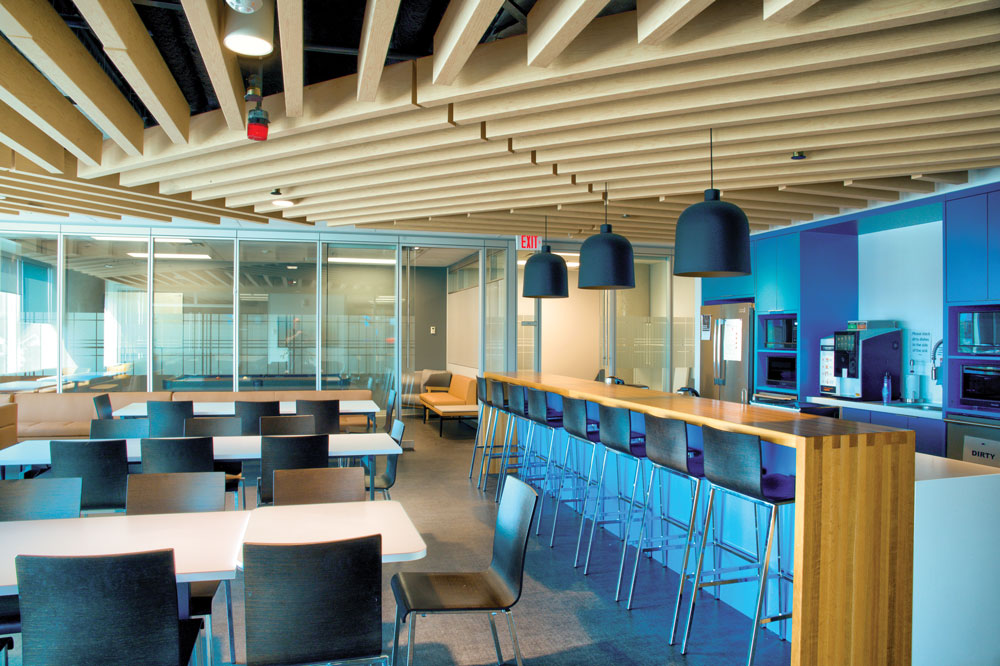
That area was treated with specialty ceiling baffle systems to mitigate noise transfer from social gathering spaces to those areas where focused work occurs.
“Major changes to the renovation included re-use and addition to existing servery and millwork. Alterations were to suit new requirements of staff,” Pershick says. “Changes to floor finishes and upgraded light fixtures were also components of the renovation.”
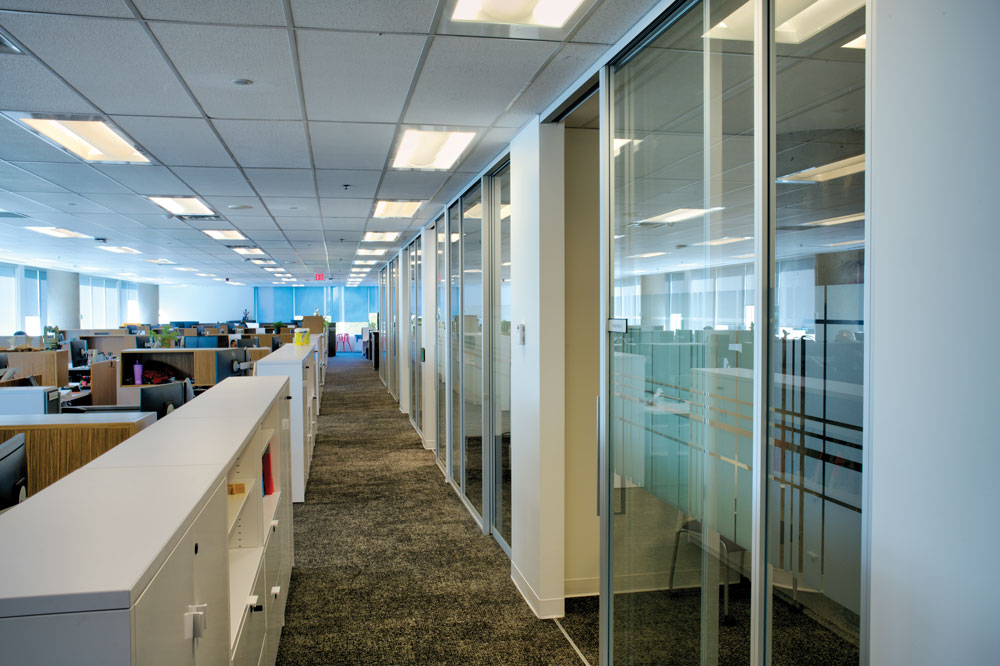
Regarding the reutilization of existing office fronts — they were dispersed throughout the space to create places where staff can engage in small meetings. Making places for focused work and privacy considerations were essential.
Communication was paramount
Throughout the project, the designer was based in Denver, DiCintio points out, making careful and clear communication essential every step of the way.
“There was definitely an extra level of communication required,” he says. “Obviously, there was confidence in MARANT managing from afar with no direct oversight.”
Pershick says it had its challenges, but technology helped bridge the gap of having a designer based in Colorado, the main point-person for Stantec based in Boston and the construction project based in Ottawa.
“You have to really ensure communication is clear,” she says. “It’s important to have a lot of calls, we sent a lot of photos and we would often do FaceTime to show the client what we were doing in a certain space.”
“Ensuring communication was clear is critical,” she says. “It was important to make outreach focused and clear, our team utilized calls and sharable 360-degree imagery of the renovations to navigate unforeseen site conditions and collaborate on solutions. There were times when a simple FaceTime call was helpful to convey and strategize steps forward.”
In addition to frequent communication with the client, MARANT had to work alongside SmartREITCentre, the owner of the property.
“There was also a need for collaboration with the existing property management company,” DiCintio says. “As there were retail tenants, the team needed to be cognizant to not impede business while allowing for material deliveries. It also had to adjust working hours to mitigate possible disruption to neighbouring tenants.”
Pershick says the biggest challenge was — as much as possible — not being disruptive for staff who remained on-site while the construction was going on.
“You’re always trying to navigate that,” she says. “It means working within an office and existing work environment, and making sure that we’re communicative, that we’re problem-solving and that we’re resolution-based.”
DiCintio says that’s one of the things the company is known for.
“That’s what we do — and what we do well. It’s how we bring this kind of project to fruition.”
This article first appeared in the September 2025 special “Best Offices Ottawa” issue of the Ottawa Business Journal. That publication is available in its digital edition below.
